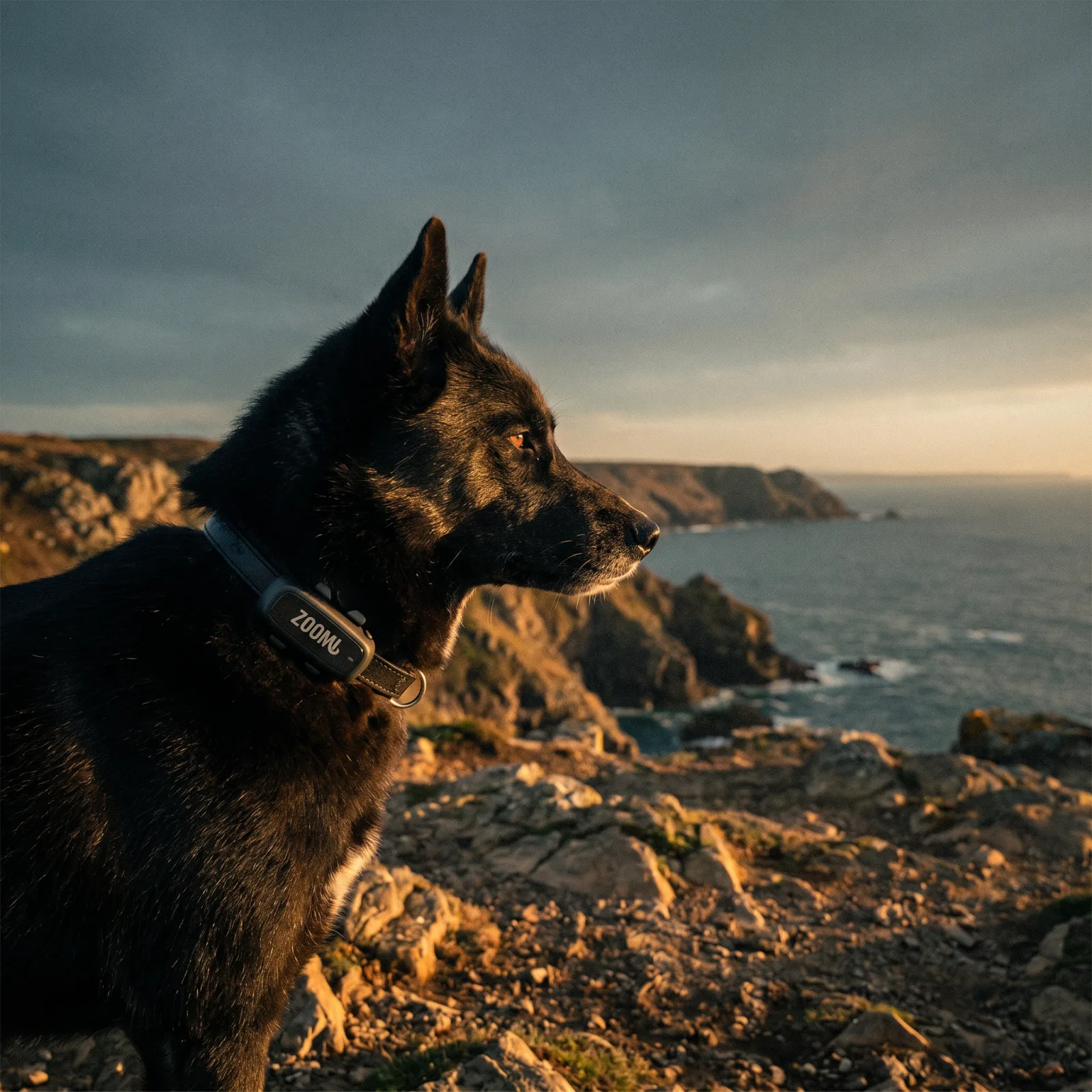
Every dog in Britain already wears a tag. It's the law, it's tradition, and for two centuries it has done exactly one thing: sit there, engraved and hopeful, waiting for a stranger to catch your dog and read it. A GPS dog tag keeps the shape and the job — and adds the thing every owner actually wants in that moment: a live dot on a map showing where the dog is right now.
If you've been searching for a "smart dog tag", a "dog tag tracker" or a "GPS tag for dogs", you've probably noticed the category is a muddle — Bluetooth trinkets, QR-code discs and true GPS trackers all wearing the same name. This guide untangles it: what a genuine GPS dog tag is, how it works, what it can do that engraved tags, microchips and AirTags can't, and the short checklist that separates the good ones from the gadgets.
What a GPS Dog Tag Actually Is
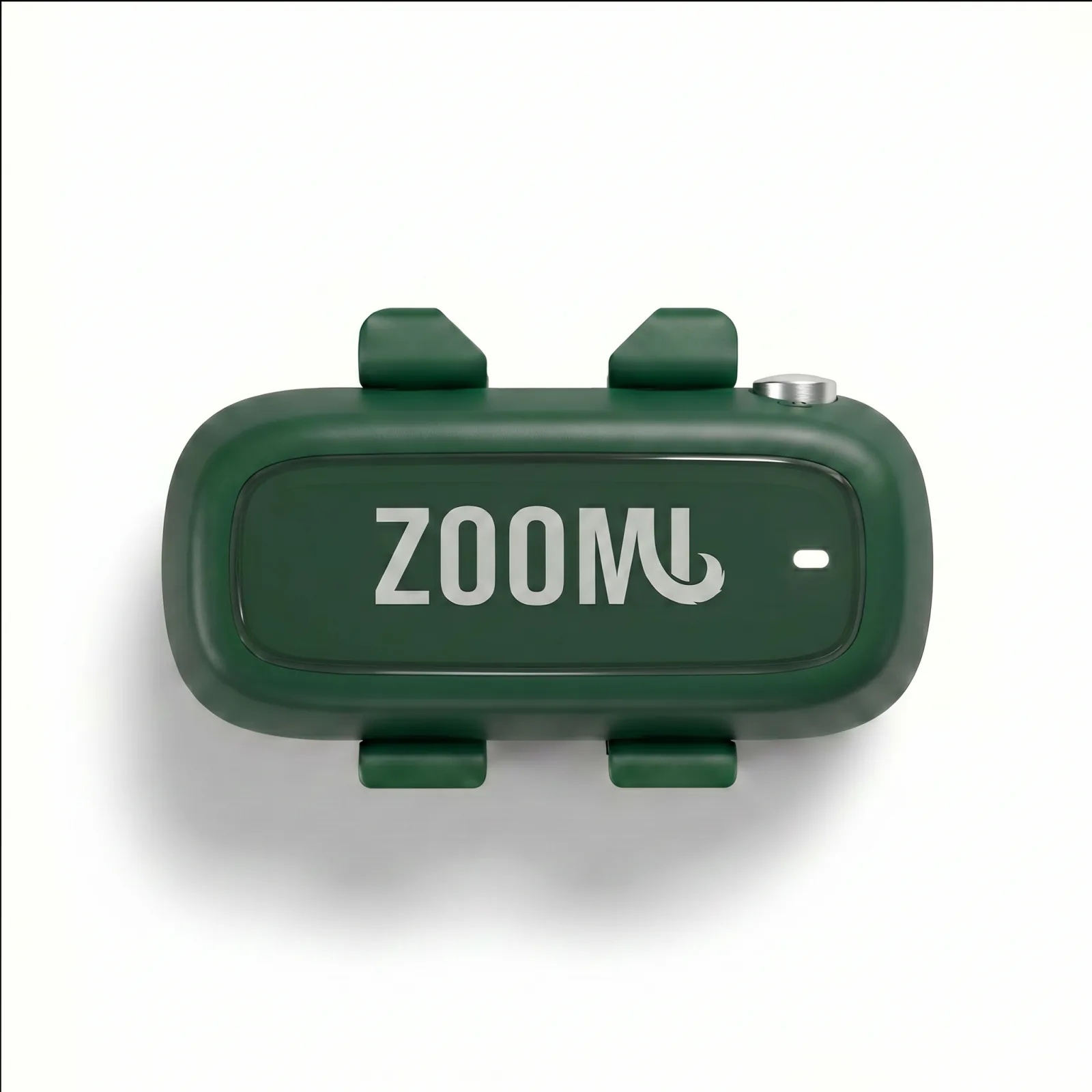
A GPS dog tag is a tag-shaped tracker: a device the size and weight of a chunky ID tag that hangs from the collar your dog already wears. Inside is the same core hardware as a phone's location system — a GPS receiver that calculates the tag's position from satellites, and a mobile data connection that reports that position to an app. When your dog is where they should be, the tag sits quietly checking in. The moment they're not, you open the app and watch them move on the map, live.
The better ones close the loop on identification too. ZoomiTag pairs the GPS with a scannable digital pet ID — a finder taps the tag with any phone (NFC) or scans the QR code and instantly sees your contact details, your dog's medical notes, and a way to reach you. So both halves of a lost-dog story are covered at once: you know where the dog is, and whoever finds them knows who to call. For what the law still requires engraved alongside all of this, see our guide to what to put on a dog tag.
Most are recovered — but almost always by luck and legwork: posters, park searches, somebody kind with a phone. A GPS tag's whole purpose is to replace that luck with a location.
How the Tracking Works (and Why There's a Subscription)
Three systems cooperate every time you check the map:
- GPS satellites give the tag its position — accurate to a few metres in the open, and independent of anyone else's phone being nearby.
- A 4G mobile connection carries that position from the collar to your app. This is the part people miss: the tag is, in effect, a tiny phone, with its own network access.
- The app turns the feed into the things you actually use — the live map, safe-zone alerts when your dog leaves the garden (see our virtual fence guide), and history of where they've been.
That middle layer is why genuine GPS trackers carry a subscription: mobile networks charge for data, and "GPS tracker, no subscription" is almost always code for "Bluetooth tag with a range of one street". It's also why the honest cost of the category is best judged over years, not at checkout — ZoomiTag is £38.99 for the tag and £49 a year (about £4 a month) for unlimited UK tracking, and our tags-vs-trackers comparison works through the three-year maths across the alternatives.
GPS Tag vs Engraved Tag vs Microchip vs AirTag
These four get lumped together constantly, and they are not rivals — they're layers doing different jobs. The honest comparison:
| Engraved tag | Microchip | Bluetooth tag (AirTag) | GPS smart tag | |
|---|---|---|---|---|
| Shows live location | No | No | Only near other phones | Yes — anywhere with mobile signal |
| Works while the dog is still running | No | No | Rarely — needs passers-by | Yes — that's the point |
| Who it depends on | A stranger catching the dog | A vet or warden with a scanner | Nearby compatible phones | Satellites + the mobile network |
| Satisfies UK collar-ID law | Yes | No (required separately) | No | Alongside engraved details |
| Typical cost | ~£10 once | ~£15–25 once | ~£29–35 once | Tag + modest subscription |
The pattern worth noticing: the first three layers all activate after your dog has stopped — caught, cornered, or handed in. Only GPS works during the part that ages you: the hour they're actually missing. The AirTag row deserves its own honesty, and gets it in our full AirTag-for-dogs breakdown — the short version is that AirTags borrow the location of passing iPhones, which is a fine trick on a busy street and a poor one in the field, wood or riverbank where dogs actually disappear.
One Tag, Both Jobs
ZoomiTag is a GPS tracker and a digital pet ID in a single tag — live 4G tracking and safe-zone alerts for you, a tap-to-scan profile for whoever finds them. £38.99, then £49/year for unlimited UK tracking.
See ZoomiTagChoosing a GPS Dog Tag: the Six Checks That Matter
Once you've ruled out the Bluetooth pretenders, real GPS tags differ in ways the listings don't always make obvious. Six things to check:
- True GPS + mobile data — the spec should name GPS (or GNSS) and a network (4G/LTE). If either is missing, it isn't a tracker.
- Weight, in grams, against your dog — the working rule is under roughly 5% of body weight. Tag-format devices suit far smaller dogs than the old box-on-a-strap trackers ever did.
- Battery behaviour, honestly stated — days in standby, hours in continuous live mode. Anyone quoting one big number for both is rounding in their own favour.
- Waterproofing — dogs swim, mostly without consulting you. IP67 or better.
- UK network coverage — a tracker built for another market can roam badly here. Buy something that treats the UK as home turf.
- Subscription terms in plain sight — a fair annual price beats a "free" tracker with an expensive contract hiding in the app. If the pricing takes effort to find, that's your answer.
And one soft factor that turns out to matter most in practice: what the finder sees. A tag a stranger can tap to reach you directly — without waiting for a vet's chip scanner on Monday morning — shortens the worst day of the year to minutes. It's also why keeping the digital profile complete and current matters; our guide to pet profile mistakes covers the details that get forgotten.
The law requires the first two. The third is the only one that works while your dog is still moving — and with tag-format trackers, all three now fit on one collar without your dog noticing the difference.
The Quiet Bonus: a Tag That Tracks Health Too
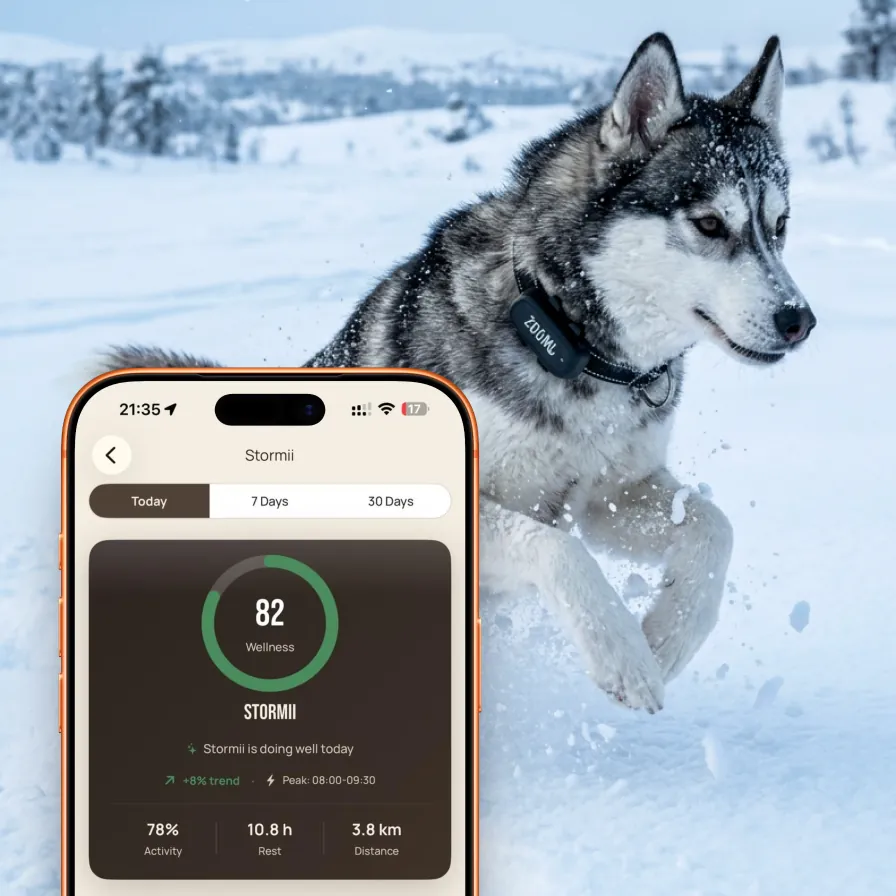
Because a GPS tag carries motion sensors anyway, the good ones put them to work between walks. ZoomiTag records daily activity and sleep quality alongside location, building a baseline of what normal looks like for your dog — which turns out to be one of the earliest ways to spot pain and illness. That's a whole subject of its own, covered in our guide to pet health tracking; the point here is simply that the tag on the collar has become more than a recovery device. It's the same hardware, doing useful work on the 364 days your dog doesn't go missing.
The Bottom Line
A dog tag used to be a promise to strangers: if you find him, please call. A GPS dog tag keeps that promise and adds a better one to you: you'll never have to hope a stranger finds him first. Keep the engraved details the law asks for, keep the microchip current — and let the tag itself finally earn its place on the collar. If fireworks season is on your mind (it should be — it's weeks away), a GPS tag is also the single most effective piece of the escape-night safety net; our seasonal guides cover the rest.
Frequently Asked Questions
A tag-shaped device that hangs on the collar like an ordinary ID tag but contains a live GPS tracker. It combines identification anyone can read with a real-time location you can follow on your phone — and modern versions add a scannable digital profile, so a finder taps the tag to reach you while you watch the dog's position on the map.
Because reporting a position over any real distance needs a mobile data connection — the tag is effectively a tiny phone, and the subscription is its network access. "No-subscription GPS" almost always means a Bluetooth tag with a range of a street or two. ZoomiTag's is £49 a year for unlimited UK tracking.
An AirTag contains no GPS — it borrows the location of nearby iPhones, which works on busy streets and fails in fields, woods and riverbanks, exactly where dogs go missing. A GPS tag calculates its own position from satellites and reports it over 4G, continuously, wherever there's mobile signal. Full comparison here.
No. UK law requires a microchip and, in public, a collar tag with the owner's name and address — the GPS layer sits alongside both. They're complementary: engraving satisfies the law, the chip proves ownership at a scanner, and GPS is the only layer that works while your dog is still out there running.
Tag-format trackers are built to ID-tag proportions, and the working rule is to keep any tracker under roughly 5% of the dog's body weight — which modern tags meet for most small breeds. For toy breeds, check the gram weight before buying and fit the tag to a snug flat collar.
Days in everyday standby; hours in continuous live-tracking mode — which is fine, because live mode is for the moments that matter. Charge it routinely like a toothbrush, and start high-risk evenings (fireworks nights, house moves, holidays) at full charge.