Visit a doctor and the first questions they'll ask are always the same: how you've been moving, how you've been sleeping, whether your routine has changed. Those three things sit upstream of almost everything else. But now picture being unable to answer those questions — that's your dog. They will never mention the stiffness that arrived last month, the shorter self-directed play sessions, the nights spent repositioning instead of sleeping. They will simply adjust, quietly, and count on you to notice.
Pet health tracking exists because owners mostly don't notice — not through carelessness, but because gradual change is precisely what human attention is worst at. We adapt to the slightly slower dog without registering it. Health tracking turns those invisible gradients into visible lines, and this guide is about how to read them: what the data actually measures, which changes carry meaning, and where the threshold for a vet visit sits.
More than half of your dog's life happens while you're asleep, at work, or simply not watching — which is why serious changes in rest and movement so often go unseen until they're advanced. Continuous tracking watches the hours you can't.
What Pet Health Tracking Actually Is (and Isn't)
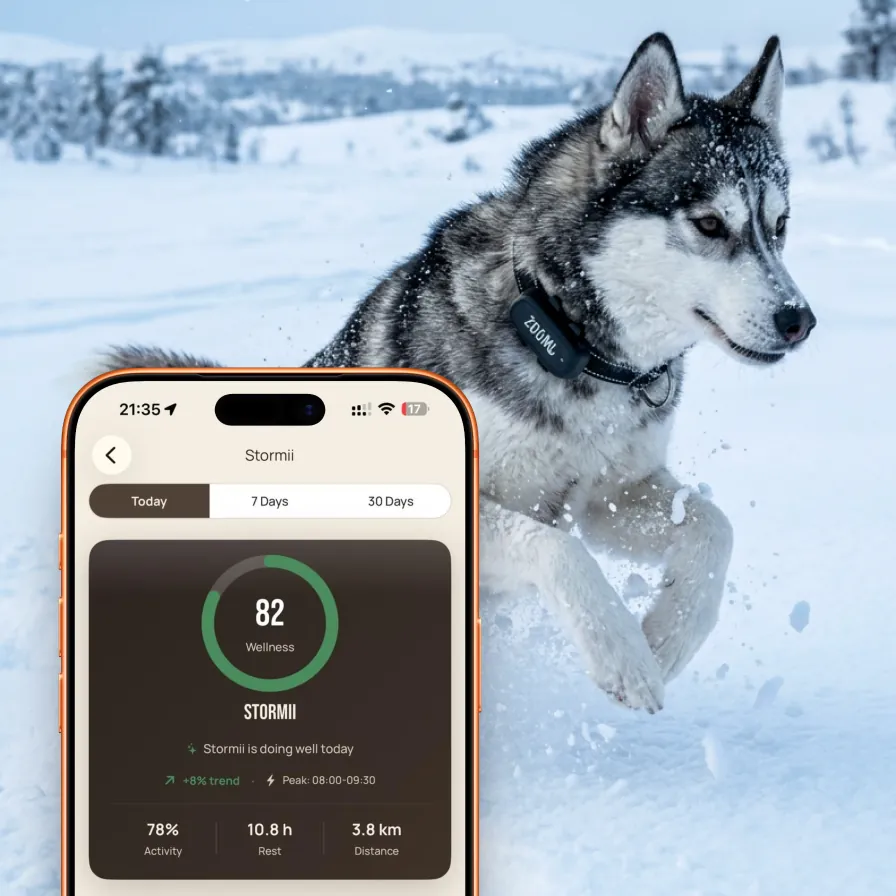
A pet health tracker is, mechanically, straightforward: a motion sensor on the collar samples movement continuously, classifies it — walking, running, playing, resting, sleeping — and aggregates it into daily measures. Active minutes. Rest quality. Night-time disturbance. Over weeks, those daily measures become something more useful than any single number: a baseline unique to your dog.
What it is not is a diagnostic device. No collar sensor can tell you your dog has arthritis, dental disease, or a thyroid condition — and any product implying it can deserves scepticism. The honest claim, and the genuinely valuable one, is different: health tracking detects deviation from normal, and in dogs, deviation from normal is very often the first — sometimes the only — early sign that something is wrong. Vets can't examine what nobody brings in. The tracker's whole job is to get the right dog into the consulting room weeks earlier.
That framing matters because it changes how you use the data. You are not looking for a magic number. You are looking for change that persists — and the rest of this guide is about which changes, and how much persistence, should move you to act.
The Four Signals Worth Watching
1. Daily activity — the headline number
Total active time (or distance) per day is the single most informative measure a tracker produces, because pain suppresses movement before it produces any visible symptom. A dog developing joint disease doesn't limp first — they trim the edges of their own activity: fewer garden patrols, shorter bursts of play, choosing to lie down where they once pottered. Owners rarely see this because walk time is fixed by the lead; it's the self-initiated movement that erodes. The data sees it clearly. As a rule of thumb used throughout our guides: a sustained drop of 20–30% against baseline, without an obvious cause, is a finding — not a curiosity.
2. Sleep quality — the night-time tell
Healthy dogs sleep deeply and mostly still. Painful dogs don't — joint discomfort worsens after lying still, so an arthritic dog spends the night in a cycle of settling, stiffening, and repositioning. Restlessness rising across a week or more is one of the most specific signals in the whole dataset, and it happens in the hours you're least equipped to observe. Our guide to dog sleep patterns covers the full picture, including how to separate ordinary dreaming (twitching, paddling, brief vocalising — harmless) from genuine disturbance.
3. Routine consistency
Dogs are metronomic. They wake, eat, patrol, and rest on schedules more regular than most owners realise, and that regularity is itself a health measure. A routine coming apart — activity migrating to odd hours, the morning energy peak flattening, pacing appearing at 3am — flags trouble even when the daily totals still look respectable. Night pacing in particular has two classic drivers: pain, and anxiety. If your dog's data shows disturbed nights around fireworks season, storms, or changes at home, our guide to dog anxiety symptoms is the companion read.
4. Weight — the slow variable
No collar measures weight, but it belongs in the same logbook. Monthly weighing catches the slow drift — muscle loss from declining activity, gain from overfeeding a dog who's quietly moving less — that monthly eyes never do. The combination is powerful: falling activity plus falling weight is a pattern that should always be put in front of a vet.
Reading a Change: Pattern → Likely Meaning → Action
Data only helps if you know what to do with a given shape. This table covers the patterns that matter most, and the honest interpretation of each:
| Pattern in the Data | Common Causes | What to Do |
|---|---|---|
| Gradual activity decline over 2–4 weeks | Joint pain, dental pain, early illness, weight gain | Vet check — bring the trend, not just the feeling. Don't accept "just ageing" without an exam |
| Sudden activity drop (1–2 days) | Injury, acute illness, GI upset — or simply weather and a quiet weekend | Context first; if unexplained or paired with other signs, vet within 24–48h |
| Rising night restlessness over a week+ | Musculoskeletal pain (classic for arthritis), anxiety, itching/skin disease | Vet visit — describe the sleep pattern specifically; it localises the differential |
| Sleeping much more, moving much less | Pain, infection, metabolic illness, low mood after a household change | Vet if it persists past 48h — lethargy plus reduced appetite escalates to same-day |
| Restless nights + normal days | Early joint pain (worse after stillness), night-time anxiety triggers | Watch for one week; if the pattern holds, vet — this one is easy to dismiss and shouldn't be |
| Activity normal, behaviour "off" | Data lags some conditions — behaviour change can come first | Trust the behaviour. Our guide to signs of pain in dogs covers what to look for |
What "Normal" Looks Like — a Rough Guide by Life Stage
Baselines are individual, but expectations should still be calibrated. Broad reference points, for a medium-sized, healthy dog:
| Life Stage | Typical Daily Pattern | Watch For |
|---|---|---|
| Puppy (to ~12 months) | Short intense activity bursts; 18–20h total sleep in young puppies | Lethargy is never normal in puppies — low-energy days warrant quick vet advice |
| Adult (1–7 years) | 1–2h+ purposeful activity; 12–14h sleep; strong daily rhythm | The 20–30% sustained decline rule; disturbed nights; flattening routine |
| Senior (7+ years) | Gently reduced totals — but the rhythm should remain | Sharp drops blamed on age (arthritis is treatable, ageing isn't a diagnosis); night restlessness; confusion patterns like evening pacing |
Breed changes the numbers enormously — a working Spaniel's normal would flag as mania on a Basset profile, which is exactly why per-dog baselines beat universal thresholds. For a deeper dive on how much movement different dogs actually need, see how much exercise does a dog need.
Veterinary surveys suggest around one in five UK dogs lives with arthritis — most undiagnosed, because the early sign isn't limping: it's a quiet, gradual reduction in movement that owners attribute to age. It's also precisely the change a tracked baseline makes impossible to miss.
Turning Data into a Better Vet Visit
There's a version of this that vets quietly dread — the owner scrolling through six weeks of graphs in the consulting room. Don't be that. The skill is summarising: "Her activity is down about a quarter over three weeks, and she's restless at night — here's the trend if useful." Two sentences like that transform a consultation. They replace "she seems a bit off" (unactionable) with a timeline and a pattern (highly actionable), they help localise the problem — night restlessness points at joints; flattened peaks with normal totals points elsewhere — and they give the vet a before/after measure for whether treatment is working, which is data almost no owner can otherwise provide.
That last use is underrated. Start pain relief for an arthritic dog and the graphs answer the question "is it helping?" objectively within a fortnight — activity recovering and nights settling is the treatment working; no change is a reason to go back and adjust, not to give up.
One Device, the Whole Picture
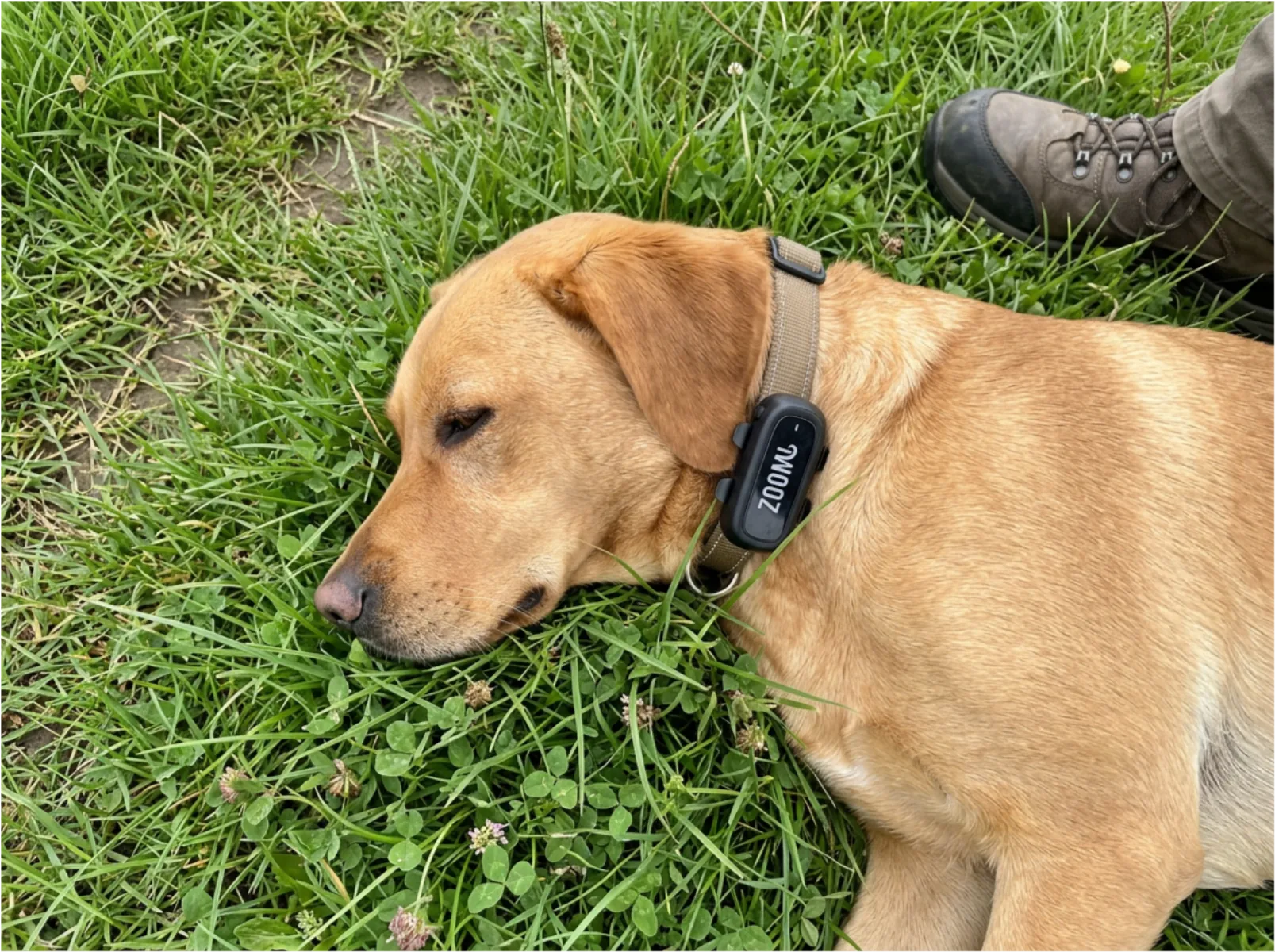
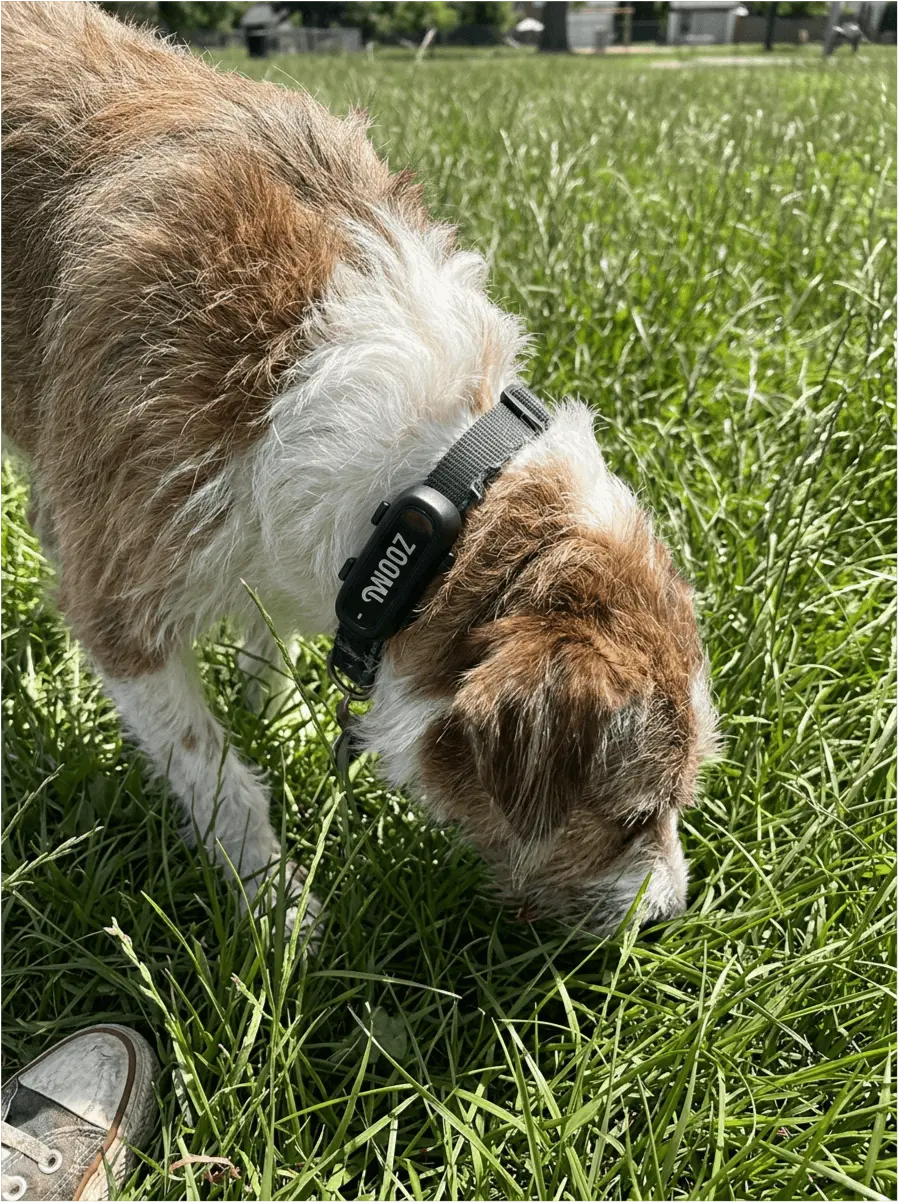
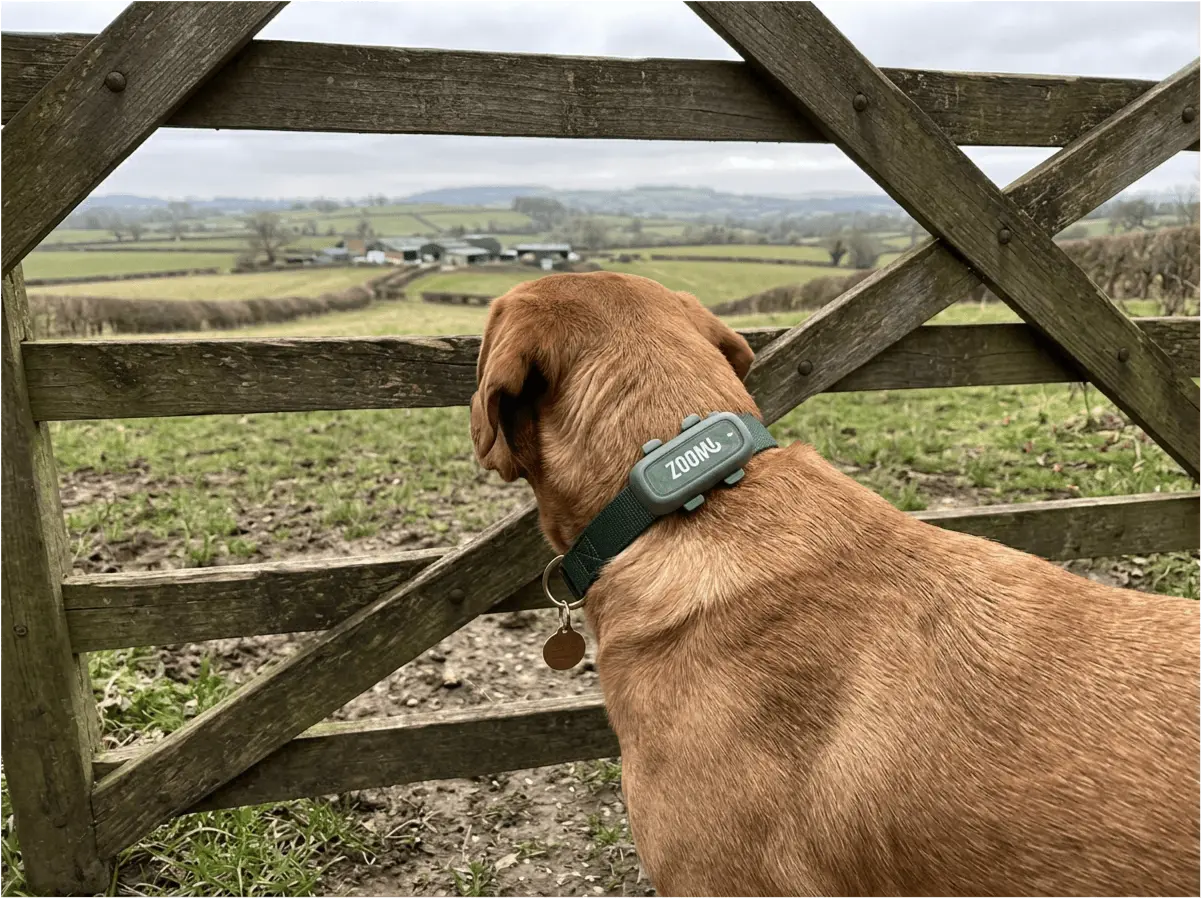
ZoomiTag tracks live GPS location, daily activity, and sleep quality from a single tag on the collar — building your dog's health baseline automatically, so change shows up as data instead of hindsight.
About Health MonitoringWhen the Data Says "Vet" — the Thresholds
To collect the rules from this guide in one place — book an appointment when you see:
- A 20–30% sustained decline in activity over two or more weeks without an obvious external cause
- Night-time restlessness rising across a week or more — especially in dogs over five
- A sudden, unexplained activity collapse that lasts beyond 48 hours
- Marked increase in total sleep paired with reduced appetite or engagement — same-day advice, not a routine booking
- A routine falling apart — activity migrating to strange hours, pacing at night, the daily rhythm flattening
- Any trend plus a gut feeling — the data is there to support your instinct, never to overrule it
And the corollary, which deserves stating plainly: flat, boring data is good news. A steady baseline is the everyday reassurance that the quiet dog in the corner is just having a quiet day — this week looks like every other week — and that reassurance is worth as much as any alert.
Frequently Asked Questions
A collar-worn device that records your pet's movement continuously and turns it into daily measures — active minutes, rest, and sleep quality — then watches how those measures trend over weeks. It doesn't diagnose anything. Its value is the baseline: it learns what normal looks like for your individual dog, so genuine change stands out as data rather than a vague feeling that something is off.
Not directly — no consumer device can diagnose illness. What a tracker reliably shows is deviation: a sustained activity drop, rising night-time restlessness, a routine falling apart. Those patterns are frequently the earliest visible sign of pain or illness, often appearing weeks before symptoms an owner would spot unaided. The tracker's job is to prompt the vet conversation earlier; the diagnosis is the vet's job.
Not any more. The same motion sensors that support GPS tracking also record activity and sleep, so combined devices like ZoomiTag do both from one unit: live location and escape alerts, plus continuous health monitoring. Two separate devices mostly means two subscriptions, two batteries, and extra weight on the collar. For the wider comparison of tracking technologies, see our guide to smart pet tags vs GPS trackers.
Rising night-time restlessness sustained over a week or more — frequent repositioning, repeatedly getting up and lying back down, difficulty settling. It's characteristic of joint pain, which worsens after lying still. Also significant: much more total sleep alongside less daytime activity, and disturbed nights paired with anxiety triggers. One bad night means little; a trend means a lot.
Good collar-worn trackers are highly consistent at what matters: relative change. Absolute counts are approximations — gait varies enormously between breeds — but because the same device measures the same dog the same way every day, the trends are trustworthy. A 30% measured decline is a real decline, whatever the absolute number, and trends are exactly what health tracking runs on.
Arguably more so — cats hide illness even more effectively than dogs, and their routines are largely invisible to owners. Activity and rest trends can reveal arthritis, restlessness linked to hyperthyroidism, and general decline in cats that appear outwardly fine. ZoomiTag for Cats brings the same tracking to smaller collars, launching fully in Q4 this year.