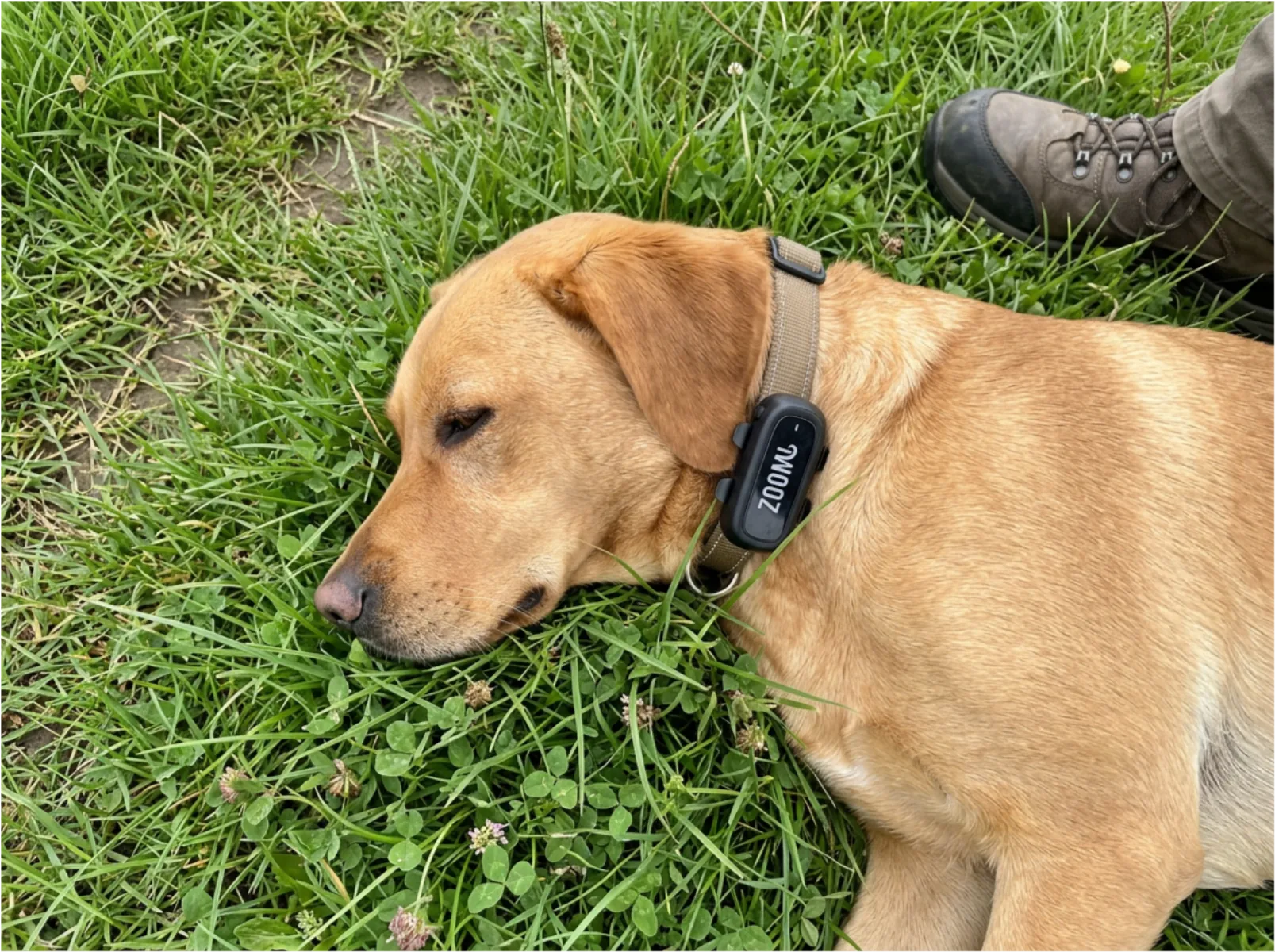
Walk into any pet shop, scroll through any dog owner forum, or ask a friend who's recently lost a pet — and you'll encounter the same confusing choice: smart NFC/QR pet tag or GPS tracker?
Both are marketed as essential pet safety tools. Both promise to bring your pet home faster. But they work in fundamentally different ways, serve different scenarios, and suit very different pets and budgets. Choosing the wrong one — or assuming one replaces the need for the other — can leave real gaps in your pet's protection.
This guide cuts through the marketing: exactly how each technology works, what you'll realistically pay over time, the specific scenarios where each genuinely outperforms the other, and whether the best answer is simply having both.
What Is a Smart Pet Tag?
A smart pet tag is a physical collar tag — typically circular and lightweight — that stores your pet's information digitally rather than engraved on the surface. Each tag contains two components:
- A QR code — scannable with any phone camera, including older devices
- An NFC chip — readable with a simple tap from any modern iPhone or Android phone
Both lead to the same place: your pet's cloud-based digital profile, which opens instantly in the finder's browser with no app download or account required.
That profile can contain everything a finder needs: your pet's name and photo, your mobile number as a one-tap call button, an emergency backup contact, medical conditions, behavioural notes, and dietary requirements. Because the information lives online rather than on the tag itself, you can update it instantly from any device — change of number, new address, updated medication — without ever touching the tag.
Basic smart tags use only NFC and QR (no battery, no subscription, no ongoing cost) — but the trade-off is they're reactive: they only work once someone has already found your pet.
How it works in practice
- Someone finds your dog — a neighbour, a dog walker, a passing stranger
- They tap their phone against the tag or point their camera at the QR code
- Your pet's name, photo, and your contact number appear instantly
- They call you — the window between "found" and "home" is often minutes
The important limitation to understand: a smart tag is reactive. It works brilliantly when someone finds your pet — but it cannot tell you where your pet is right now.
What Is a GPS Pet Tracker?
A GPS pet tracker is a small device attached to your pet's collar that uses cellular GPS technology to transmit your pet's real-time location to your phone via an app. Unlike Bluetooth trackers (like Apple AirTag), a true GPS tracker uses the mobile network — meaning it works anywhere with signal, across any distance.
Modern GPS trackers for pets typically offer:
- Live map tracking — see exactly where your pet is, updated every few seconds
- Geofence alerts — instant notification when your pet leaves a defined safe zone
- Route history — a log of where your pet has been throughout the day
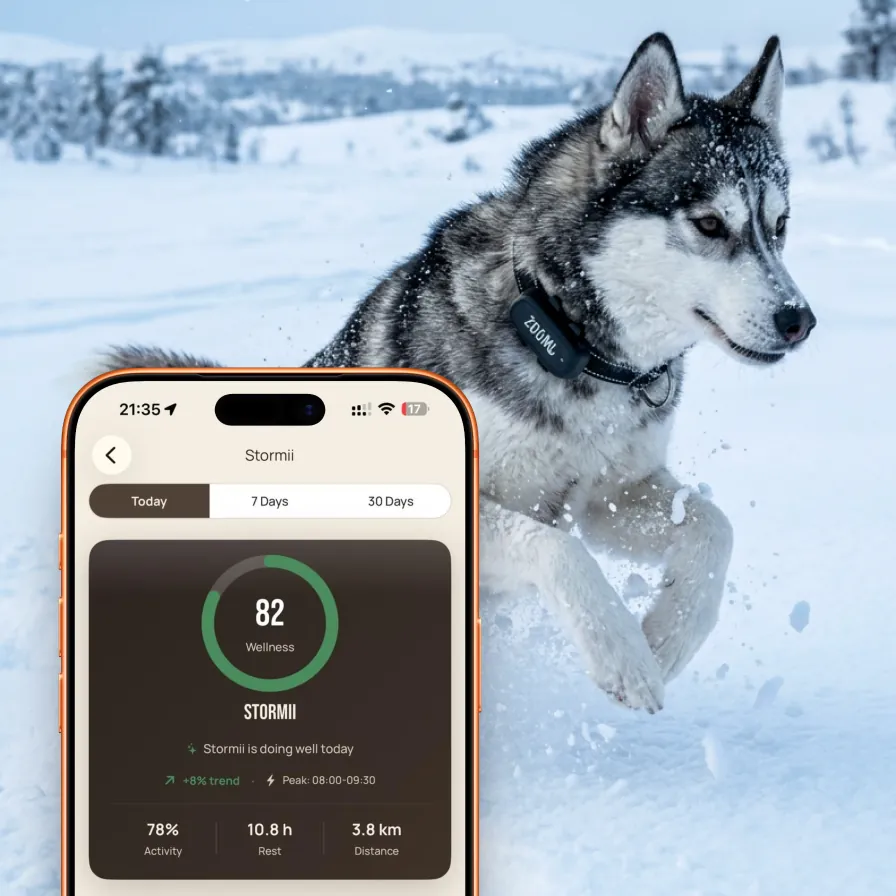
- Activity monitoring — step counts, active versus rest time
- Health monitoring — sleep quality, wellbeing trends (on advanced models like ZoomiTag)
The practical implication is significant: if your dog bolts from the garden, you don't wait to be called — you open the app and walk directly to where they are.
A visible smart tag on the collar means the public can contact you before your pet ever reaches a shelter. It's the fastest possible path back to you.
The trade-offs are real, however. GPS trackers need charging — typically every 2 to 7 days depending on usage. They require a monthly or annual subscription for the cellular data. Most weigh 30–80 grams, making them impractical for cats and small breeds. And in areas with poor mobile coverage — remote countryside, dense buildings — accuracy can degrade.
The Critical Difference: Proactive vs Reactive
This single distinction explains everything about these two technologies:
Smart tag = reactive. Works when someone else finds your pet and reads the tag.
GPS tracker = proactive. Works so you can find your pet yourself.
They don't compete — they operate in entirely different scenarios. A GPS tracker doesn't help when your pet loses their harness mid-chase. A smart tag doesn't help when no one is around to find your pet (an open field at dusk, for example).
The real question isn't "which is better?" — it's "which gap am I filling, and does my pet's lifestyle require both?"
Side-by-Side Comparison
Here's a comprehensive breakdown across every meaningful dimension:
| Feature | Basic Smart Tag | Smart Tag + GPS (ZoomiTag) |
|---|---|---|
| Upfront cost | £10–£25 | £44.99 |
| Ongoing cost | None | £49/year |
| 3-year total cost | ~£20 | ~£192 |
| Requires charging | ✗ Never | ✓ Every 2–7 days |
| Works without mobile signal | ✓ Yes | ✗ No |
| Weight | 8g | 34g |
| Suitable for cats | ✓ Yes | ✗ Too heavy |
| Real-time location | ✗ No | ✓ Yes |
| Geofence escape alerts | ✗ No | ✓ Yes |
| Health & activity monitoring | ✗ No | ✓ Yes |
| Any phone can read it | ✓ Yes | ✗ App required |
| Finder can contact owner instantly | ✓ Yes | ✗ Not directly |
| Profile updateable remotely | ✓ Yes | ✓ Yes |
| Waterproof | ✓ Yes | ✓ Yes |
The cost difference over three years is significant: a smart tag costs roughly £20 once, while a GPS tracker — factoring in subscriptions — can cost £225–£335. That's not a reason to avoid GPS tracking; it's a reason to understand exactly what you're paying for and whether your pet's lifestyle justifies it.
When a Smart Tag Is the Right Choice
Your pet is a cat
Most GPS trackers weigh 35g or more — a significant portion of a cat's total collar weight, and uncomfortable for small animals. A passive NFC/QR tag is much lighter and removes that concern. Lost cats are also almost always found close to home — smart tags work perfectly for this scenario because any neighbour, vet, or passer-by can contact you directly.
Budget matters
If a monthly subscription isn't viable, a smart tag provides meaningful protection for a single one-time purchase. A registered tag with an accurate profile gives a finder everything they need to return your pet quickly — no ongoing commitment required.
Your pet rarely escapes
Not every pet needs live location tracking. A dog with a secure garden and low escape history benefits enormously from a smart tag — the finder protection is real and immediate — without needing the GPS overhead. For an indoor cat or a calm, leash-trained dog, a smart tag is the proportionate choice.
As a critical layer in a GPS setup
Even owners who already have a GPS tracker should also have a smart tag on the same collar. GPS trackers run out of battery. They can lose signal. They don't help a finder who finds your pet without knowing they're lost. A smart tag is the safety net that covers every failure mode.
When a GPS Tracker Is the Right Choice
Your dog has a history of escaping
If your dog routinely finds gaps in fencing, bolts through open gates, or slips leads during walks, GPS tracking gives you the ability to act immediately rather than waiting for a call. The geofence alert alone — notifying you the moment they leave your garden — is often enough to catch them before they've gone more than a street away.
You do outdoor activities with your dog
Running, hiking, cycling, or working with dogs off-lead across open terrain — GPS tracking is insurance against the worst moments. If they chase wildlife into dense woodland or disappear over a hill, you have a live map to follow rather than a blind search.
You want to monitor health trends between vet visits
Advanced GPS trackers like ZoomiTag go beyond location. Daily activity levels, sleep duration and quality, resting heart rate trends — this data creates a baseline picture of your dog's normal health. When something changes, you notice it before it becomes an emergency. For older dogs or breeds prone to health issues, this monitoring is genuinely valuable.
Large and active breeds
For Labradors, German Shepherds, Border Collies, Vizslas, and other high-energy or working breeds, the weight and battery trade-offs are minor. A 35g tracker on a large dog is negligible. For a breed that regularly ranges widely, the benefit of live location tracking is substantial.
ZoomiTag: GPS tracking and smart tag in one
Real-time location, geofence alerts, health monitoring, and an instant-access finder profile — all in one device for your dog.
The Case for Having Both
The honest answer for most medium and large dog owners is: both.
Consider what a GPS tracker alone can't cover:
- Battery dies mid-day → no location data
- Poor signal in an area → location unavailable
- Dog loses harness → device gone
- Finder doesn't know the dog is lost → doesn't contact you
And what a smart tag alone can't cover:
- Dog disappears into open countryside → no way to locate them proactively
- No one is around to find them → tag never gets scanned
- Pet is frightened and running → you're waiting for a call that might come too late
Used together, they eliminate almost every failure scenario:
- Geofence alert fires → you open the app and go directly to your dog
- GPS battery dies → smart tag means any finder can still contact you instantly
- Dog loses harness with GPS → smart tag on collar is the backup
- Finder doesn't know your number → tap the tag, your details appear
ZoomiTag is designed for owners who want both without the hassle of two separate products — combining a cellular GPS tracker, health monitor, and smart NFC/QR finder profile into a single device with one subscription.