"How much exercise does a dog need?" is one of the most commonly searched questions by dog owners in the UK — and the answer you will find most often is frustratingly vague. "It depends on the breed." "Every dog is different." Both true, but not very useful when you are standing in the hallway wondering whether a 20-minute loop around the park is enough for your two-year-old Labrador.
The truth is that exercise requirements are more specific and more consequential than most owners appreciate. Getting it right is not just about preventing obesity — though that matters a great deal. Adequate exercise affects joint health, cardiovascular fitness, digestive regularity, sleep quality, emotional regulation, and behaviour. A dog that does not get enough exercise is not just unfit; it is often anxious, destructive, and difficult to live with. A dog that gets too much of the wrong kind of exercise — particularly as a puppy — can develop orthopaedic problems that last a lifetime.
This guide provides specific, practical recommendations by breed group, life stage, and exercise type. It is not a substitute for veterinary advice on individual health conditions, but it will give you a reliable framework for working out what your dog actually needs.
Veterinary data consistently shows that around 25% of UK dogs are carrying excess weight. Obesity is now the most common nutritional disorder in companion dogs, and insufficient exercise is a primary contributing factor alongside overfeeding. Overweight dogs live an average of two years less than dogs at a healthy weight, and they are significantly more likely to develop arthritis, diabetes, and cardiovascular disease.
Why Exercise Matters More Than You Think
Most owners think of exercise primarily in terms of weight management. If the dog is not overweight, the exercise must be sufficient. This is a significant oversimplification. Exercise affects nearly every system in a dog's body, and the consequences of insufficient activity go well beyond the scales.
Joint and musculoskeletal health. Dogs need regular movement to maintain joint fluid production, cartilage integrity, and muscle tone. Muscles support joints — a dog with weak, underused muscles places more stress on the joint structures themselves, accelerating wear. This is particularly important for breeds predisposed to conditions like hip dysplasia and cruciate ligament disease. Paradoxically, the right exercise protects joints; it is the wrong kind (excessive impact, too young) that damages them.
Mental health and behaviour. Exercise is the single most effective behavioural intervention for the majority of common problem behaviours in dogs — barking, destructive chewing, hyperactivity, excessive mouthing, and difficulty settling. A dog that has had adequate physical and mental stimulation is calm, content, and far easier to train. An under-exercised dog is a frustrated dog, and frustration manifests as what owners describe as "bad behaviour." The solution is rarely more training — it is more activity.
Digestive health. Regular exercise promotes healthy gut motility. Dogs that are sedentary are more prone to constipation and irregular bowel habits. Movement after meals — a gentle walk, not vigorous activity — supports normal digestion.
Sleep quality. Dogs that get sufficient exercise sleep more deeply and more restfully. Poor sleep in dogs is often linked to insufficient daytime activity rather than a sleep disorder. If your dog is restless at night, the first thing to assess is whether their exercise needs are actually being met.
Emotional regulation. Exercise triggers the release of endorphins and serotonin in dogs, just as in humans. Dogs with regular, adequate exercise are measurably less anxious and better able to cope with stressful situations — separation, fireworks, visitors, vet visits. Exercise is not a cure for clinical anxiety, but it is a prerequisite for any behavioural programme to work effectively.
Exercise by Life Stage
Puppies: The 5-Minute Rule
Puppies are not small adults. Their bones, joints, and growth plates are still developing, and excessive or inappropriate exercise during this critical window can cause lasting damage. Growth plate injuries, osteochondrosis, and developmental joint disease are all associated with over-exercising young dogs — particularly large and giant breeds, whose skeletons take longer to mature.
The widely accepted guideline is five minutes of structured exercise per month of age, twice daily. A three-month-old puppy gets two 15-minute walks. A five-month-old gets two 25-minute walks. This applies to lead walks and structured exercise — free play in the garden at the puppy's own pace, where they can stop and rest when they choose, is generally fine in addition.
What to avoid with puppies: forced running (including jogging alongside you), prolonged fetch sessions on hard surfaces, repetitive jumping (in and out of cars, on and off furniture), and long hikes. Puppies will often keep going past the point of fatigue because they are excited — they cannot self-regulate, so you need to manage the duration and intensity for them.
Large and giant breeds (Great Danes, Bernese Mountain Dogs, Newfoundlands) should be particularly careful, as their growth plates may not close until 18–24 months. Most vets recommend avoiding sustained running, agility jumps, and other high-impact activities until the skeleton is fully mature. Ask your vet for breed-specific guidance at your puppy's health checks.
Adult Dogs: Matching the Need
Once a dog has finished growing — typically 12–18 months for most breeds, up to 24 months for giants — their exercise needs reach full adult level. This is where breed group becomes the primary guide (see the table below). Most healthy adult dogs need somewhere between 30 minutes and two hours of daily exercise, but the range is wide, and getting it wrong in either direction has consequences.
The adult period is when exercise habits are established and where the consequences of insufficient activity accumulate most visibly. An adult dog receiving inadequate exercise will steadily gain weight, lose muscle tone, and develop behavioural problems that worsen over time. By the time most owners recognise the pattern, it has often been building for months.
One common mistake is assuming that garden access equals exercise. A dog with a large garden and a dog flap may get very little meaningful exercise if they spend most of their time lying on the patio. Dogs are social exercisers — they need to go places with you, encounter different environments and scents, and be actively engaged. A structured walk of 45 minutes provides more physical and mental value than eight hours of nominal garden access.
Senior Dogs: Adapting, Not Stopping
The biggest mistake owners make with ageing dogs is reducing exercise too aggressively. A dog that went from two 45-minute walks to a single 10-minute shuffle around the block has not had a kind adjustment — it has had its physical and mental stimulation decimated.
Senior dogs still need daily exercise. Movement maintains muscle tone, supports joint health, promotes cardiovascular fitness, and — critically — helps maintain cognitive function. Dogs that become sedentary in old age experience faster cognitive decline. The parallel with human ageing is direct and well-documented.
What changes is the type, not the principle. Senior dogs benefit from shorter, more frequent walks rather than one long outing. Two or three gentle 20-minute walks are typically better than one hour-long session. The pace should be led by the dog. High-impact activities — jumping, sustained running, rough play — should be replaced with gentler alternatives. Swimming is particularly valuable for senior dogs as it provides full-body exercise with almost no joint impact.
Watch for signs that exercise is causing discomfort: stiffness after rest, reluctance to start walks, slowing significantly on inclines, or needing a long recovery period after moderate activity. These are indicators that the exercise programme needs further adjustment — and potentially that pain management should be discussed with your vet.
Exercise by Breed Group
Breed group is the most useful predictor of exercise needs, because breeds within each group share common traits — energy level, stamina, drive type — that were selected for over generations. Individual variation exists within every breed, but the group baseline is a reliable starting point.
| Breed Group | Example Breeds | Daily Exercise (mins) | Notes |
|---|---|---|---|
| Working / Herding | Border Collie, German Shepherd, Australian Shepherd, Belgian Malinois | 90 – 120+ | Need mental stimulation as much as physical. Without a job, these breeds become anxious and destructive. |
| Sporting / Gundog | Labrador, Golden Retriever, Springer Spaniel, Vizsla, Weimaraner | 80 – 120 | Bred for sustained activity in the field. Thrive on retrieving, swimming, and long countryside walks. |
| Terriers | Jack Russell, Staffordshire Bull Terrier, Border Terrier, Fox Terrier | 60 – 90 | High energy relative to size. Need outlet for prey drive — scent work, digging pits, and chase games work well. |
| Hounds | Beagle, Whippet, Greyhound, Basset Hound | 45 – 90 | Varies widely. Sight hounds (Whippet, Greyhound) sprint then rest; scent hounds (Beagle) prefer sustained exploration. |
| Pastoral / Guardian | Bernese Mountain Dog, Newfoundland, Great Pyrenees, St Bernard | 45 – 75 | Large but not high-energy. Moderate, steady exercise suits them. Avoid overheating in warm weather. |
| Toy / Companion | Cavalier King Charles Spaniel, Maltese, Chihuahua, Pomeranian | 30 – 45 | Lower total duration but still need daily activity. Short walks and indoor play often sufficient. |
| Brachycephalic | Bulldog, French Bulldog, Pug, Pekingese | 20 – 40 | Compromised airways limit exercise tolerance. Avoid heat, humidity, and intense exertion. Monitor breathing closely. |
These figures represent total daily exercise including walks, active play, and structured activities. They assume a healthy adult dog in normal body condition. Adjust downward for dogs with health conditions, and upward for dogs that are clearly not satisfied by the minimum.
PDSA research has consistently found that a significant minority of UK dogs are not walked daily. Among those that are, many receive considerably less than the recommended duration for their breed. The gap between what dogs need and what they receive is one of the most significant welfare issues in companion animal care.
Types of Exercise: Not All Activity Is Equal
A common misconception is that exercise means walking — and that if the walk is long enough, the dog's needs are met. In reality, dogs benefit from a mix of exercise types, each serving a different purpose.
Walking
The foundation. Walking provides cardiovascular exercise, joint mobility, sensory enrichment (every walk is a landscape of scent information), and social bonding. Vary routes regularly — the same loop every day becomes mentally unstimulating. Let your dog sniff. Sniffing is not misbehaviour or dawdling; it is intensive mental processing and is genuinely tiring for dogs. A 30-minute "sniff walk" where the dog leads and explores can be as satisfying as a 45-minute brisk march.
Mental Stimulation
This is the most undervalued form of exercise. Twenty minutes of scent work, puzzle feeding, or training drills can tire a dog as effectively as an hour-long walk. For high-drive breeds (Border Collies, Malinois, Spaniels), mental stimulation is not optional — it is as critical as physical activity. Without it, these dogs direct their intelligence toward solving problems you did not want solved, like how to open the bin or dismantle the sofa.
Practical options: scatter feeding in the garden (forcing the dog to use their nose to find each piece), frozen Kongs, puzzle feeders, hide-and-seek with toys or treats, basic obedience training sessions, and scent detection games. These are particularly valuable on days when weather or circumstances limit outdoor exercise.
Play
Off-lead play with other dogs provides exercise that is difficult to replicate on a lead — sprinting, turning, chasing, wrestling. It also provides social stimulation. Not every dog enjoys or benefits from dog-to-dog play, and forced socialisation with unfamiliar dogs is a common source of stress. But for dogs that do enjoy it, regular play sessions with known, compatible dogs are excellent exercise.
Interactive play with you — fetch, tug, flirt pole — provides both physical exercise and relationship-building. Keep sessions short and varied rather than marathoning a single activity, and be conscious of the surface (grass over concrete, to protect joints).
Swimming
Swimming is the closest thing to a perfect exercise for dogs. It provides a full cardiovascular and muscular workout with virtually no impact on joints. It is particularly valuable for dogs with arthritis, recovering from orthopaedic surgery, or breeds prone to joint problems. Many dogs take to water naturally (Labradors, Spaniels, Newfoundlands), but even those that do not can often be introduced gradually. Hydrotherapy centres offer supervised, temperature-controlled sessions and are increasingly used by vets as part of rehabilitation and fitness programmes.
Signs of Over-Exercise and Under-Exercise
Signs Your Dog Is Getting Too Much Exercise
- Stiffness or limping after exercise — particularly the following day; this is the canine equivalent of DOMS and suggests the session was too intense or too long
- Excessive panting that takes more than 10 minutes to resolve after exercise ends
- Reluctance to start walks — a dog that was once enthusiastic but now hesitates at the door may be anticipating discomfort
- Worn or damaged paw pads — cracking, bleeding, or tenderness underfoot
- Behavioural changes after exercise — a dog that is irritable, restless, or unsettled after activity rather than calm
- Muscle tremors or stiffness during or immediately after exertion
Over-exercise is a particular risk for puppies, senior dogs, brachycephalic breeds, and dogs with undiagnosed joint conditions. It is also common in very willing, handler-focused breeds (Labradors, Spaniels, Collies) that will push through pain and fatigue to keep working with their owner.
Signs Your Dog Is Not Getting Enough Exercise
- Weight gain — the most obvious indicator, but often the last to be acknowledged
- Destructive behaviour — chewing furniture, shredding items, digging indoors
- Hyperactivity and inability to settle — particularly in the evenings
- Excessive barking or attention-seeking
- Restless sleep — a dog without adequate daytime activity often sleeps poorly at night
- Mouthing and rough play — especially in young adult dogs whose energy has no outlet
- Withdrawal or depression — chronic under-stimulation can lead to learned helplessness and apathy, sometimes mistaken for being "a calm dog"
Track Your Dog's Activity Levels Automatically
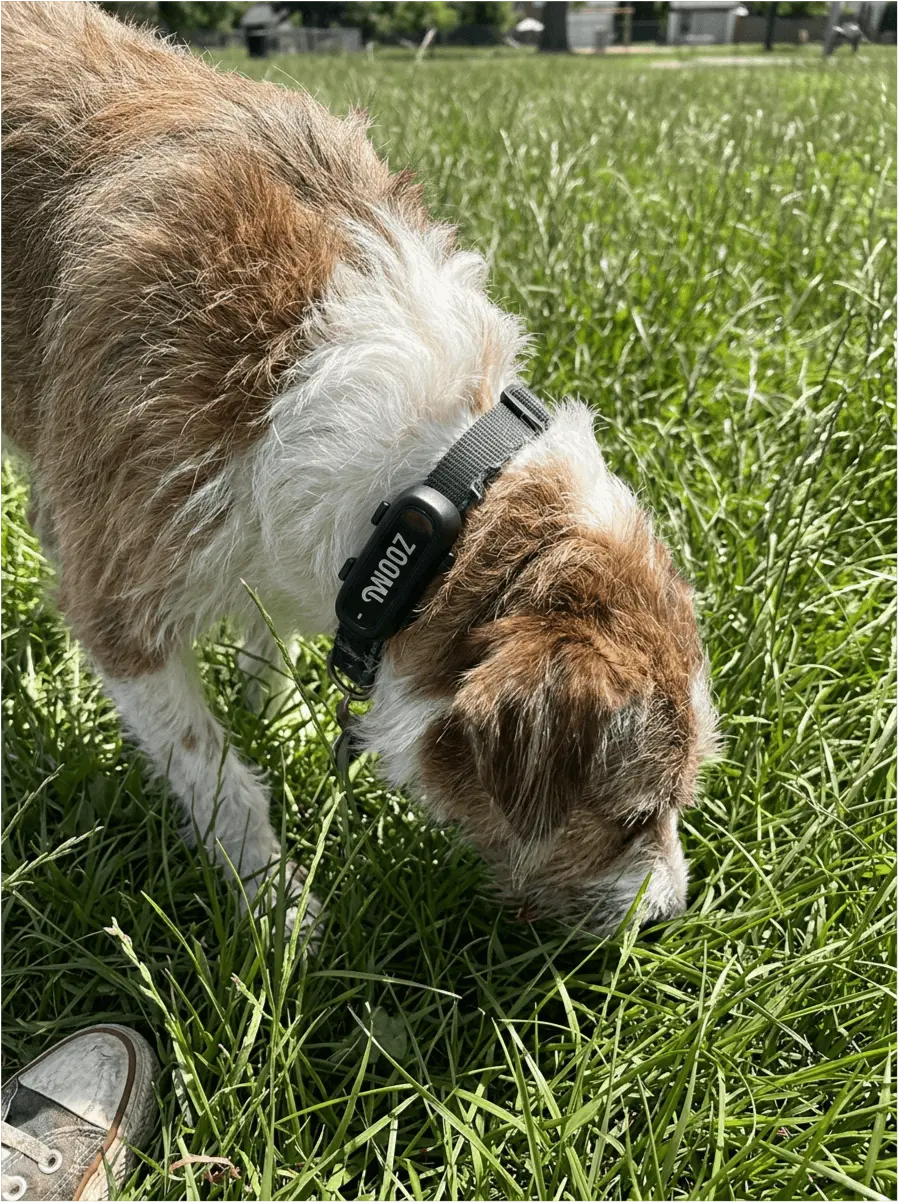
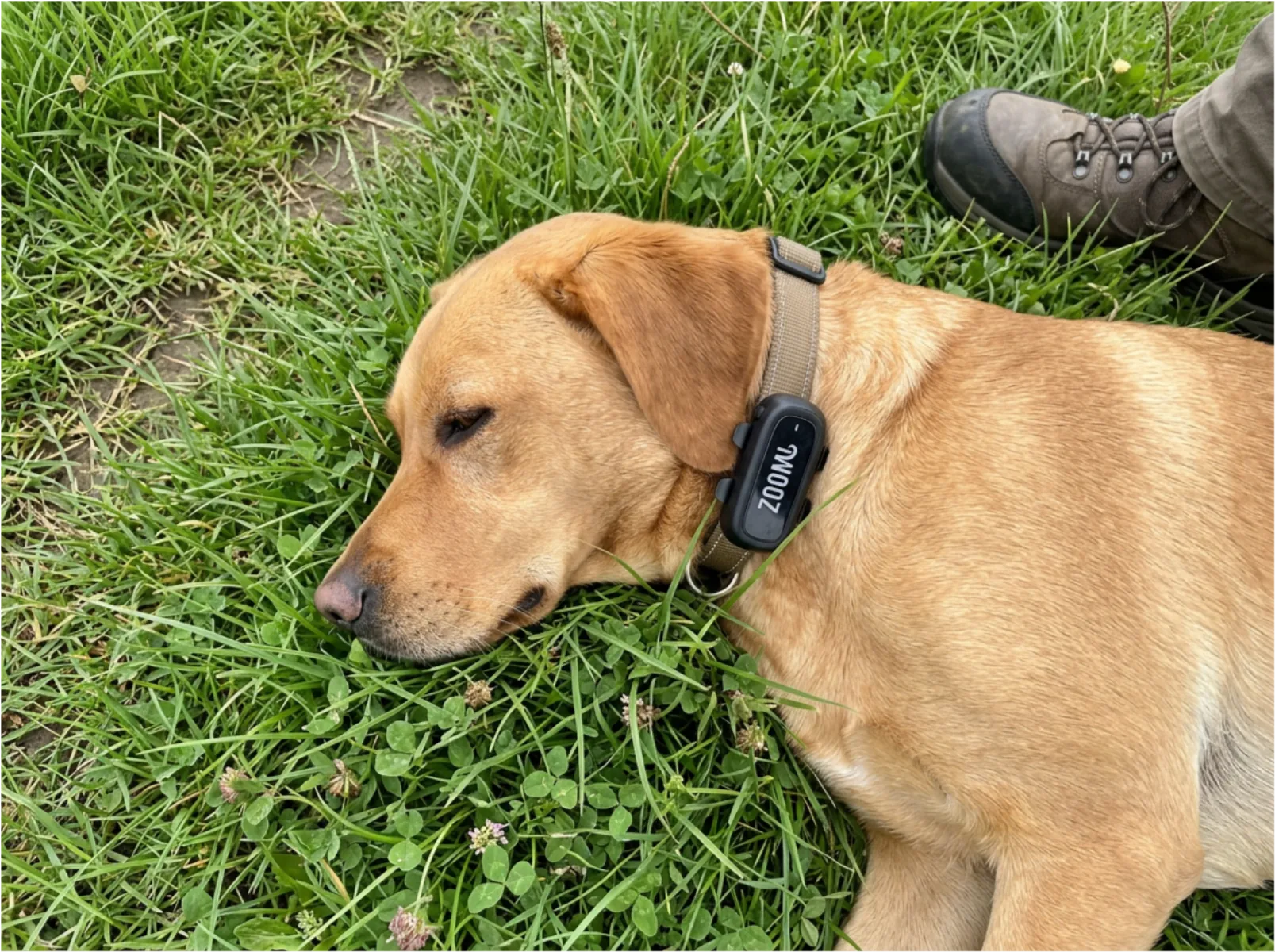
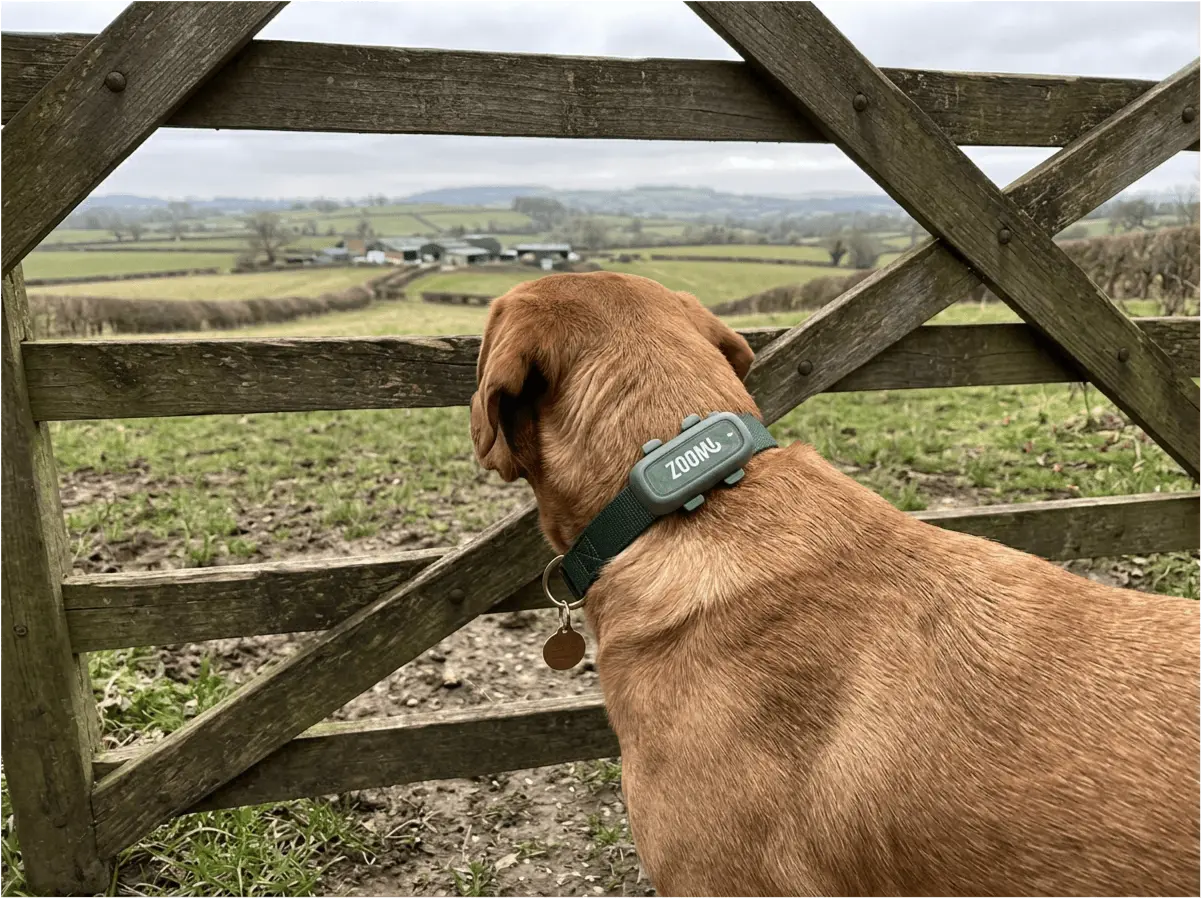
ZoomiTag monitors daily activity patterns and builds a picture of your dog's exercise over time — so you can see whether they are getting what they need, and spot drops before problems develop.
About Health MonitoringHow Tracking Exercise Helps
One of the practical difficulties with exercise management is that humans are poor at estimating duration and intensity. A walk that felt like 45 minutes was 28. A "quiet day" where the dog "did nothing" actually included 40 minutes of garden pottering. Conversely, a day that felt active may have provided less structured exercise than you assumed.
This is where objective tracking becomes genuinely useful. Wearable activity monitors for dogs — including ZoomiTag — log daily movement, rest periods, and active minutes automatically. Over weeks and months, this data builds a picture of your dog's real activity levels, not your impression of them.
The value is threefold. First, it establishes a baseline. You know what your dog's normal activity level actually is, in numbers. Second, it detects decline. A gradual reduction in daily activity — the kind that happens slowly enough to be invisible to human perception — shows up clearly in trend data. A 20% drop in active minutes over three weeks is easy to miss subjectively but impossible to miss in a graph. Third, it gives you data to share with your vet. "He seems a bit less active" is a starting point. "His average daily active minutes have dropped from 85 to 62 over the past month" is a data point that changes the clinical conversation.
Activity decline is one of the earliest indicators of pain, illness, and age-related conditions. Dogs do not announce that their hips hurt — they simply move less, gradually, over time. Tracking catches that shift when it is still early and actionable.
Practical Guidelines for Getting It Right
Exercise management does not need to be complicated. A few principles cover most situations:
- Use breed group as your starting point, then adjust for your individual dog's age, health, and temperament
- Split daily exercise into at least two sessions — one longer, one shorter — rather than one single outing
- Include mental stimulation alongside physical exercise, especially for working and herding breeds
- Let your dog sniff on walks — it is not wasting time; it is providing essential mental enrichment
- Adapt for weather — reduce intensity in hot weather (dogs overheat far more easily than humans) and compensate with indoor mental exercise on days when outdoor activity is limited
- Watch the dog, not the clock — a dog that is still pulling at the lead and full of energy at the end of a walk needs more; a dog that is lagging behind and slowing down has had enough
- Build up gradually — a previously sedentary dog should not go from minimal walks to two-hour hikes overnight; increase duration and intensity by 10–15% per week
- Track objectively — whether with technology or a simple log, know what your dog is actually getting, not what you think they are getting
Frequently Asked Questions
Most healthy adult dogs need between 30 minutes and two hours of walking per day, depending on breed, size, and individual temperament. High-energy breeds like Border Collies and Springer Spaniels typically need 90-120 minutes. Medium-energy breeds do well with 60-90 minutes. Lower-energy or brachycephalic breeds may only need 30-45 minutes. Split the total across two or more outings rather than one long session, and adjust for age, weather, and health conditions.
Yes, and it is a genuine risk. Puppies' bones, joints, and growth plates are still developing and are vulnerable to repetitive impact. The widely used guideline is five minutes of structured exercise per month of age, twice daily. A four-month-old puppy would get two 20-minute walks. Free play in the garden at the puppy's own pace is generally fine in addition to structured walks. Large and giant breeds should be particularly cautious, as their growth plates may not close until 18-24 months.
A well-exercised dog is generally calm and settled at home, sleeps well at night, maintains a healthy weight, and does not exhibit destructive or attention-seeking behaviours driven by frustration. Signs of insufficient exercise include restlessness, hyperactivity indoors, destructive chewing, excessive barking, weight gain, and difficulty settling in the evening. If your dog is persistently wound up, try adding mental stimulation before simply adding more physical exercise.
Not necessarily. Size alone is a poor predictor of exercise needs — breed type and individual temperament matter far more. A Jack Russell Terrier weighs 6-8 kg but needs significantly more exercise than a Great Dane at 50+ kg. Many small terrier and working breeds are extremely high-energy. That said, toy breeds bred primarily for companionship generally do need less total exercise than large sporting or working breeds. Judge by breed group and your individual dog's behaviour, not by weight alone.
For most adult dogs, one walk per day is the minimum, not the optimum. A single 30-minute walk may suffice for a senior dog or a low-energy breed, but most healthy adult dogs benefit from at least two outings daily. Beyond physical exercise, walks provide mental stimulation through new scents, environments, and social encounters that a single short outing cannot fully deliver. If your schedule only allows one walk, make it longer and supplement with garden play, training, or puzzle feeders at home.
Senior dogs still need daily exercise — stopping entirely accelerates muscle loss, joint stiffness, and cognitive decline. Most senior dogs do well with two to three shorter, gentle walks of 15-30 minutes each rather than one long outing. Avoid high-impact activities like jumping and sustained running. Swimming is excellent for older dogs as it provides exercise without joint stress. Watch for signs of discomfort during or after exercise and adjust accordingly. A vet check is worthwhile if exercise tolerance drops noticeably.