Most people can picture an anxious dog: the one cowering behind the sofa during fireworks, or the one whose owner comes home to find the door frame shredded. Those are real examples of canine anxiety, but they represent only the most visible end of a much wider spectrum. The majority of anxious dogs do not destroy furniture or howl for hours. They pace quietly. They pant when nothing is happening. They follow their owner from room to room with a tension that looks like devotion but is actually distress. They lick their paws until the fur stains brown. They cannot settle, even when nothing obvious is wrong.
These dogs are frequently described as "a bit nervous" or "just their personality" — and their anxiety goes untreated for years, sometimes for life. That matters, because anxiety is not a neutral state for a dog. It involves chronic physiological stress, elevated cortisol, disrupted sleep, and a quality of life that is measurably reduced. It is a welfare issue, and in most cases, it is treatable.
This guide covers what anxiety actually looks like in dogs, the different types and triggers, the behavioural and physical symptoms to watch for, and when and how to get help.
A 2020 study of over 6,000 dogs published in Scientific Reports found that nearly three-quarters displayed at least one anxiety-related behaviour. Noise sensitivity was the most common, followed by fearfulness and separation-related distress. The prevalence suggests anxiety is not an exception in the pet dog population — it is closer to the norm.
Why Anxiety Is Under-Recognised in Dogs
There are several reasons canine anxiety flies under the radar so consistently. The first is that many anxiety behaviours overlap with things owners consider normal. A dog that follows you everywhere seems loyal. A dog that pants a lot seems hot. A dog that is restless at night seems like a light sleeper. None of these are inherently alarming — until you recognise them as part of a pattern.
The second reason is that anxiety in dogs is often intermittent. A dog with separation anxiety may seem perfectly fine when you are home. A dog with noise phobia may go weeks between episodes. A dog with social anxiety may only show symptoms at the park. The intermittent nature makes it easy to dismiss each incident as a one-off rather than recognising the pattern.
Third, many owners understandably anthropomorphise in the wrong direction. Because anxious humans can articulate their feelings, and dogs cannot, it is easy to assume that a dog who is not visibly panicking is not anxious. But dogs experience anxiety somatically — through their bodies — rather than cognitively. They do not worry in the way humans do, but their physiological stress response is essentially identical. Elevated heart rate, cortisol release, digestive disruption, muscle tension: the body of an anxious dog is under genuine stress, whether the outward signs are dramatic or subtle.
Types of Anxiety in Dogs
Separation anxiety
The most commonly discussed form, and one of the most distressing for both dog and owner. Separation anxiety is characterised by extreme distress when separated from an attachment figure — typically the primary owner, but sometimes any human presence. It is not a preference for company; it is an inability to cope with being alone. Signs usually begin within minutes of departure (often before the owner has left) and can include destructive behaviour focused on exit points, persistent vocalisation, house-soiling despite being fully toilet-trained, excessive drooling, and self-harm from escape attempts. Estimates suggest it affects 14 to 20 per cent of pet dogs.
Noise phobias
Fear of specific sounds — fireworks, thunder, gunshots, construction noise — that triggers a disproportionate panic response. Unlike a normal startle reaction (which resolves quickly), a noise phobia produces sustained terror: trembling, hiding, attempts to escape, panting, and sometimes destructive behaviour or self-injury. Noise phobias tend to worsen with each exposure rather than improving, because the dog never learns that the noise is not dangerous — they simply endure it and develop a stronger fear association. If storms are your dog's trigger, our guide to helping a dog scared of thunder covers desensitisation and storm-night routines step by step.
Generalised anxiety
The canine equivalent of generalised anxiety disorder in humans. Dogs with generalised anxiety are in a near-constant state of low-level arousal: hypervigilant, easily startled, unable to fully relax, and reactive to minor stimuli that other dogs would ignore. These dogs often cannot settle in new environments, show displacement behaviours (lip-licking, yawning, scratching when not itchy), and may have chronically disrupted sleep. Because their anxiety is not tied to one specific trigger, it can be harder to identify — the dog simply seems "wired" or "intense" all the time.
Social anxiety
Fear or severe discomfort around unfamiliar people, other dogs, or both. Socially anxious dogs may cower, hide behind their owner, freeze, or become defensively reactive (barking, lunging) when approached. This is often mislabelled as aggression, but the underlying emotion is fear, not hostility. Social anxiety frequently stems from inadequate socialisation during the critical developmental window (3 to 14 weeks), but can also develop after negative experiences at any age.
Behavioural Symptoms of Anxiety
Destructive behaviour
Anxiety-driven destruction has a particular pattern. It tends to be focused on doors, windows, and exit points (separation anxiety) or occurs in a frantic, indiscriminate way — not the methodical, exploratory chewing of a bored puppy. Scratched door frames, damaged crates, chewed window sills, and torn blinds are classic separation anxiety markers. The destruction often happens within the first 30 minutes of the owner leaving and may be accompanied by self-injury (broken nails, bloodied paws, damaged teeth).
Excessive barking and vocalisation
Anxiety-related vocalisation differs from territorial barking or attention-seeking. It tends to be persistent, repetitive, and often has a higher pitch or more desperate quality. Separation anxiety commonly produces sustained howling or whining rather than barking. Some anxious dogs vocalise under their breath — quiet whimpering that owners may not hear unless they are paying attention. Neighbours often report the barking that owners are unaware of.
Pacing and restlessness
Repetitive, purposeless movement is one of the most reliable indicators of anxiety. An anxious dog may walk the same circuit through the house repeatedly, pace back and forth at windows or doors, or be unable to lie down for more than a few minutes before getting up again. This is different from a dog that is physically restless because it needs exercise — pacing from anxiety continues even after physical needs have been met and often has a repetitive, almost compulsive quality.
Hiding and avoidance
Dogs that retreat to small, enclosed spaces — under beds, behind furniture, into wardrobes — are seeking safety. This is a common response to noise phobias and generalised anxiety. Some dogs develop preferred hiding spots that they return to predictably. While this behaviour may seem benign (the dog is quiet, not causing problems), it represents a dog in a state of fear significant enough to override normal behaviour. A dog that regularly hides is not a dog that is coping well.
Clingy or velcro behaviour
Following the owner constantly, becoming distressed when the owner moves to another room, needing physical contact at all times, and showing visible agitation if the owner prepares to leave (picking up keys, putting on shoes). This hyper-attachment is often the precursor to separation anxiety and can exist on its own as a form of anxiety. Owners sometimes find the behaviour endearing — the dog that "loves them so much" — but constant, anxious attachment is stressful for the dog and often indicates an inability to self-soothe or feel safe independently.
Physical Symptoms of Anxiety
Panting and drooling
Panting is a normal thermoregulatory behaviour, but anxious panting is different: it occurs when the dog is not hot, has not exercised, and is in a cool environment. It is often faster and shallower than normal panting and may be accompanied by a tense facial expression. Excessive drooling — beyond what is normal for the breed — is another autonomic stress response. Dogs with separation anxiety often leave pools of saliva near doors or in their crate.
Trembling and shaking
Whole-body trembling in the absence of cold is a clear stress signal. It is most commonly seen during noise phobias (fireworks, thunder) but also occurs in dogs with generalised anxiety during periods of heightened arousal. Some dogs tremble subtly enough that it is only visible when they are lying still. Like panting, trembling is an involuntary physiological response — the dog is not choosing to do it and cannot stop on command.
Digestive issues
The gut-brain connection in dogs is well-documented. Chronic anxiety frequently manifests as intermittent diarrhoea, soft stools, loss of appetite, or vomiting — particularly around known triggers. A dog that consistently has loose stools on days when fireworks are expected, or loses its appetite every time the household routine changes, is showing a physical stress response. Chronic stress-related digestive issues can also cause weight loss and poor coat condition over time.
Excessive licking and self-grooming
Repetitive licking — of paws, flanks, or surfaces (floors, furniture, walls) — is a well-documented displacement behaviour in anxious dogs. Lick granulomas (raised, thickened lesions on the legs caused by obsessive licking) are strongly associated with anxiety and compulsive behaviour. Surface licking — repeatedly licking floors, walls, or furniture — has been linked to gastrointestinal discomfort in some studies, but is also a recognised anxiety behaviour. If your dog licks compulsively and the vet has ruled out skin conditions and allergies, anxiety should be considered.
Research across multiple countries estimates that roughly one in six dogs shows clinically significant separation-related behaviour. Because many owners are not home to witness the symptoms, and because some signs (drooling, pacing) leave minimal evidence, the true figure is likely higher. Separation anxiety is one of the most common reasons dogs are surrendered to shelters.
Anxiety Triggers and Patterns
Understanding what triggers your dog's anxiety — and when it occurs — is essential for both management and treatment. Anxiety triggers broadly fall into two categories:
Situational triggers are linked to specific events or environments: being left alone, encountering other dogs, visiting the vet, car journeys, loud noises, or changes in household routine. These are often the easiest to identify because the anxiety is clearly tied to the event.
Time-based patterns are subtler. Some dogs become more anxious in the evening (when they anticipate being left in the night), during specific seasons (firework season, storm season), or on days when the household routine differs from normal (weekends versus weekdays, days when a family member is absent). These temporal patterns are harder to spot in the moment but become clear when you track behaviour over weeks.
Keeping a simple log — even a mental note of when your dog seems most unsettled and what was happening at the time — can reveal patterns that are invisible day-to-day. Was the dog more restless on the three days this week when you worked late? Did the panting increase the week the building work started next door? Patterns point to causes, and causes point to solutions.
How Activity and Sleep Data Reveal Anxiety Patterns
One of the limitations of relying on direct observation is that you are not always there. You do not see what your dog does when you leave the house. You do not know how many times they woke during the night. You may not notice that their daily activity has been trending downward — or spiking erratically — over the past month.
This is where objective data becomes valuable. A dog that paces anxiously while you are out will show elevated daytime activity on days they are left alone — even though they had no walk. A dog with disturbed sleep will show frequent nighttime waking and reduced sleep quality. A dog whose anxiety is worsening over time will show a gradual shift in their activity and sleep patterns that might take weeks to notice through observation alone.
Activity tracking can reveal the difference between a dog that is calm while you are out and one that is pacing constantly. If your dog's activity data shows significantly higher movement on days when they are left versus days when someone is home, that is a data-driven indicator of separation distress — even if you have never witnessed it directly.
Sleep tracking captures what happens at night. Anxious dogs frequently have fragmented sleep: shorter sleep bouts, more frequent waking, more position changes, and less time in deep sleep. Over time, this sleep disruption compounds, contributing to irritability and reduced resilience — creating a cycle where poor sleep makes the anxiety worse, which further disrupts sleep.
Neither activity nor sleep data diagnoses anxiety on their own. But they provide the kind of longitudinal, objective evidence that makes patterns visible — and gives your vet or behaviourist concrete information to work with rather than a subjective description of "he seems a bit unsettled sometimes."
Track Activity and Sleep Patterns to Spot Anxiety Early
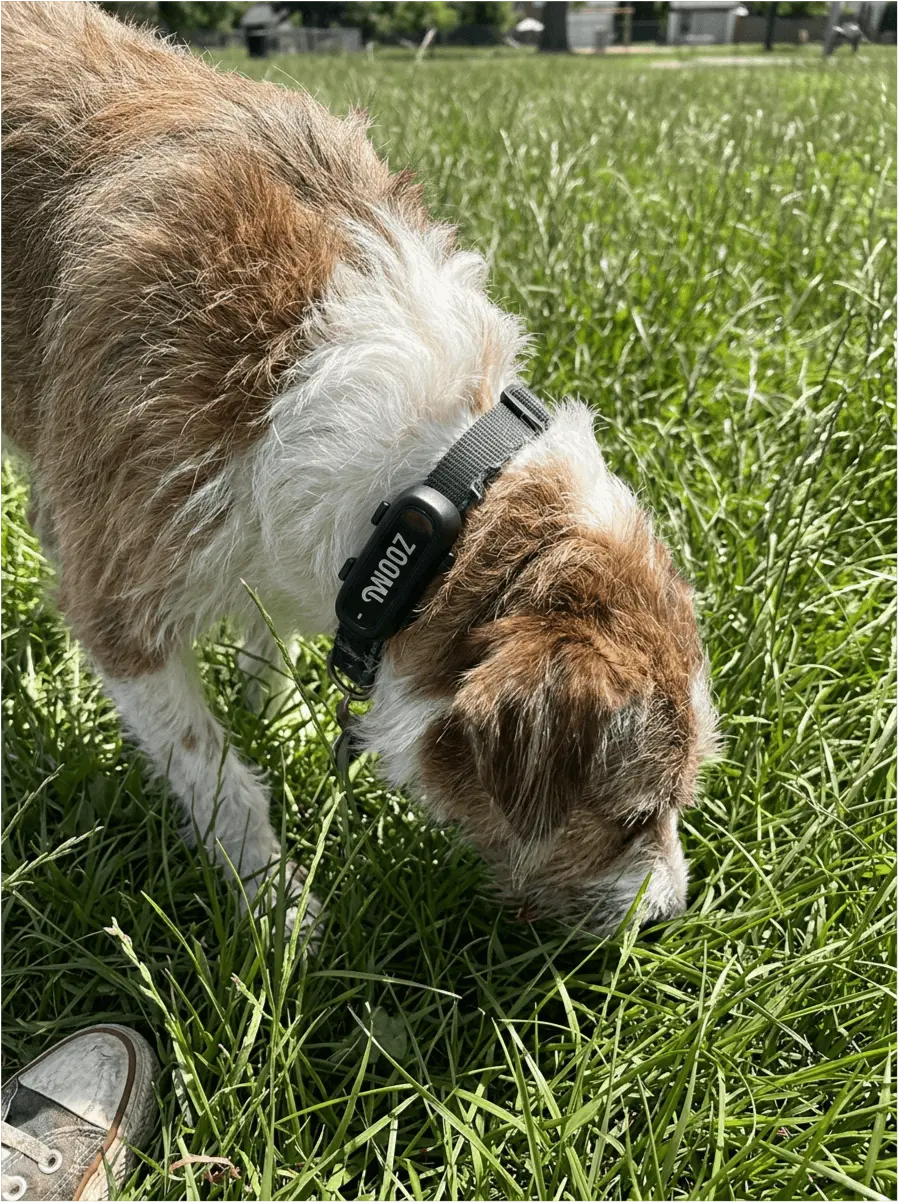
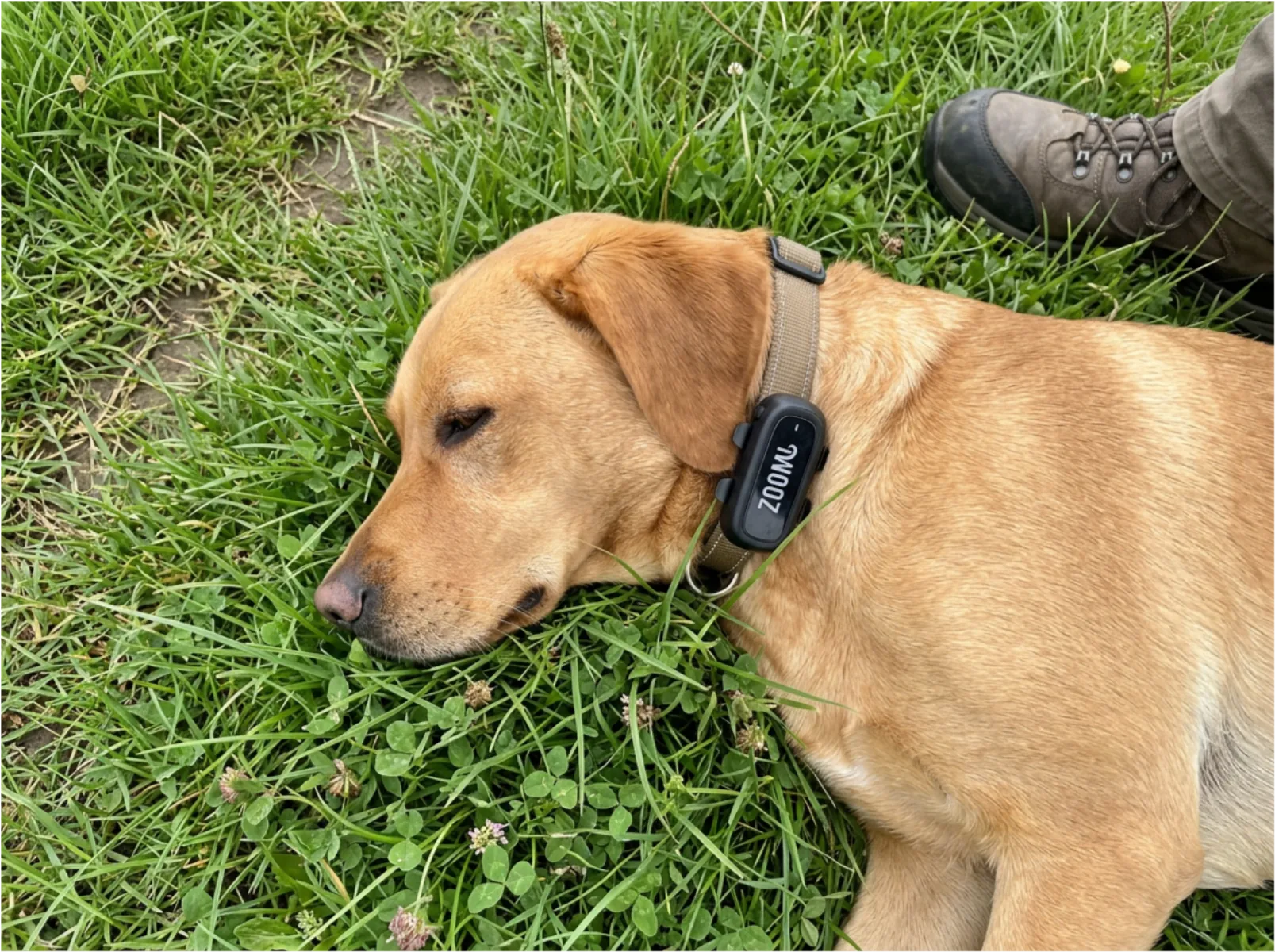
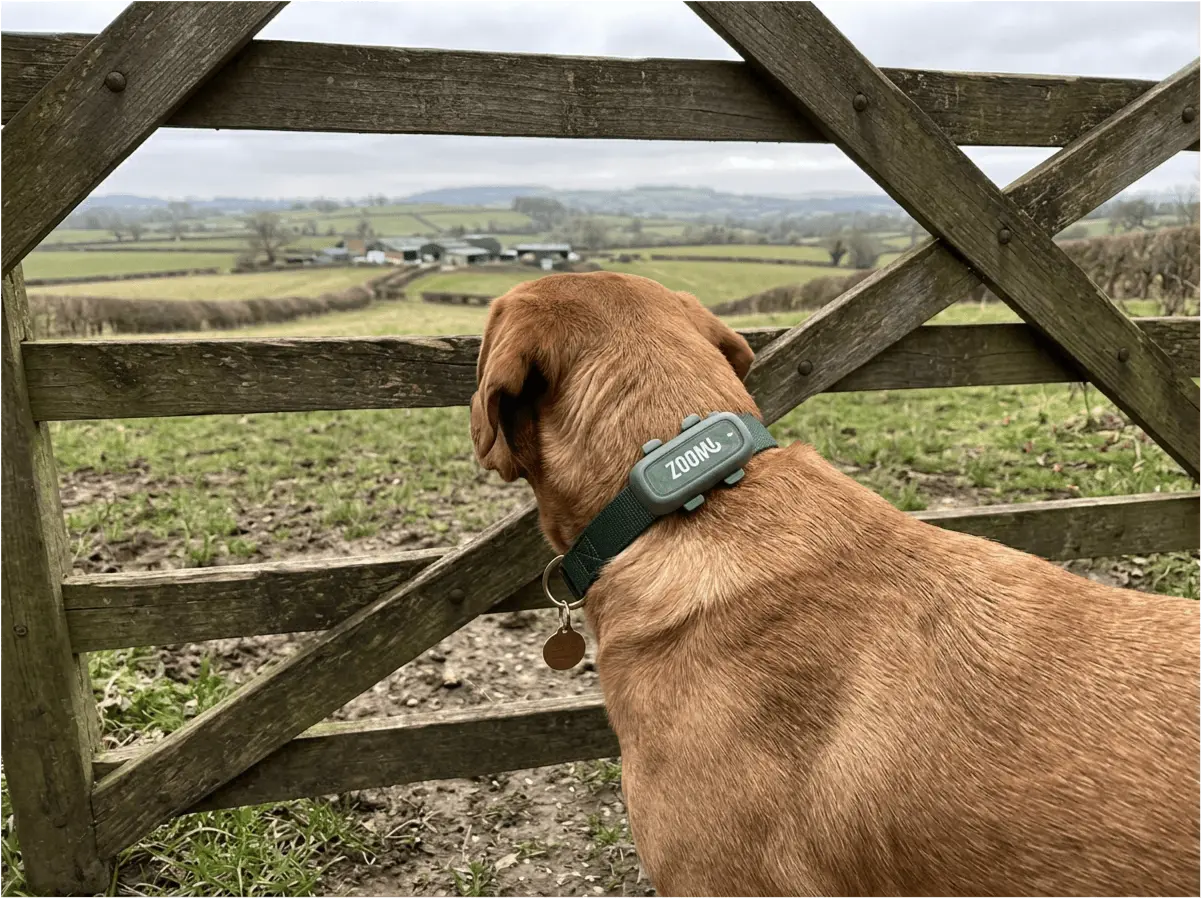
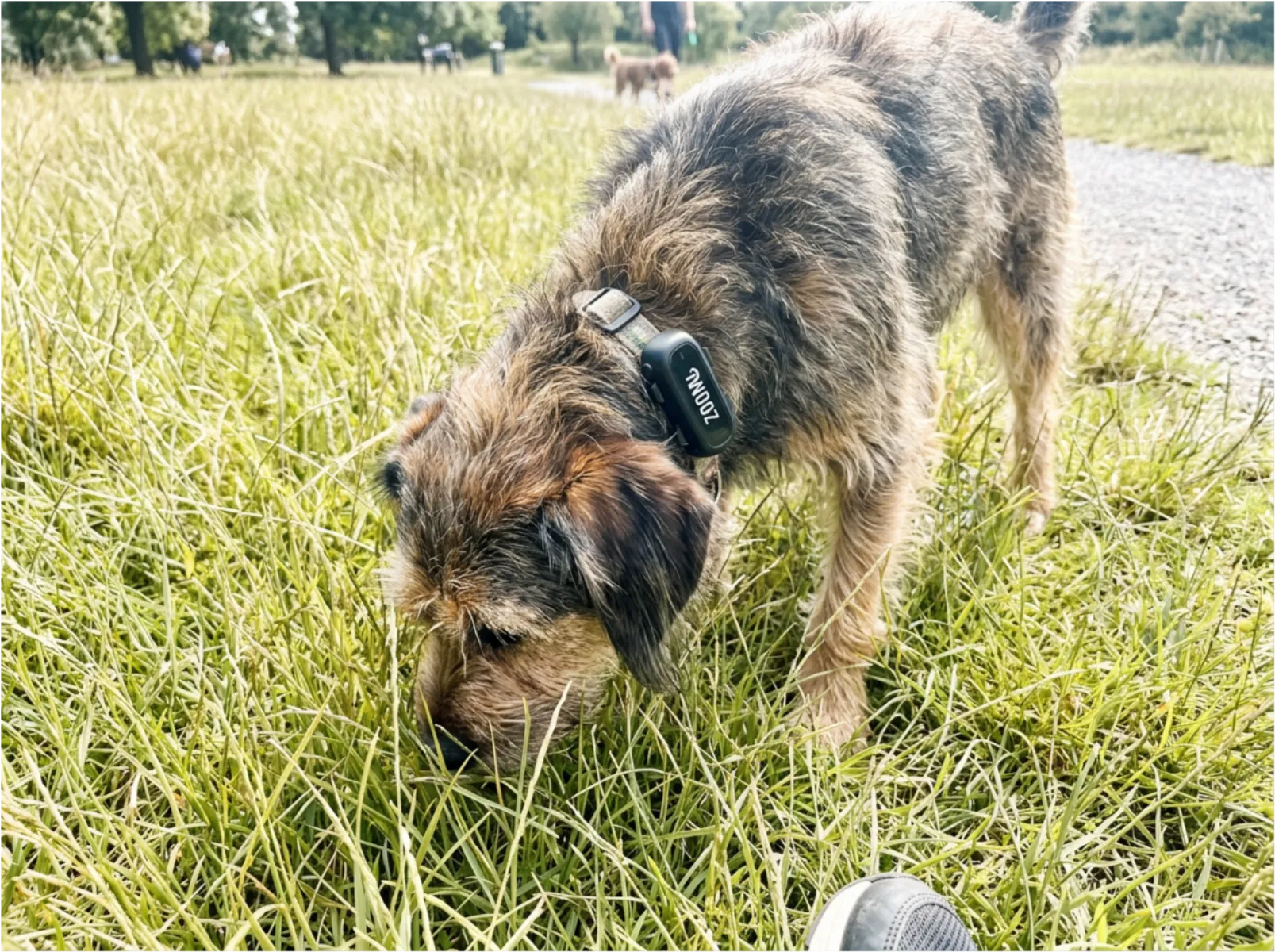
ZoomiTag monitors your dog's daily activity and sleep automatically, building a baseline so you can see changes in behaviour patterns — even when you are not there to observe them directly.
About Health MonitoringWhen to See a Vet vs a Behaviourist
This is a common source of confusion, and getting the sequence right matters.
See a vet first. Always. Many anxiety symptoms overlap with medical conditions. Panting can indicate pain or respiratory issues. Restlessness can stem from gastrointestinal discomfort. Sudden onset anxiety in an older dog can be a sign of cognitive dysfunction syndrome. Thyroid imbalances (hypothyroidism in particular) can cause anxiety-like behaviour. A thorough veterinary examination rules out — or identifies — physical causes before you invest time and money in behavioural interventions that will not work if the root cause is medical.
Your vet can also prescribe anxiolytic medication if appropriate. For moderate to severe anxiety, medication is not a shortcut or a failure — it is a clinically validated tool that reduces the intensity of the anxiety response enough for the dog to benefit from behaviour modification. Expecting a severely anxious dog to respond to training alone is like expecting a person having a panic attack to benefit from a calm conversation about coping strategies.
See a behaviourist for the structured programme. A qualified clinical animal behaviourist (in the UK, look for ABTC-registered practitioners or veterinary behaviourists) will assess your dog's anxiety type and severity, identify triggers, and design a desensitisation and counter-conditioning programme tailored to your dog. This is specialist work — generic advice from the internet or well-meaning friends is unlikely to be sufficient for a genuine anxiety disorder, and some common advice (such as ignoring a panicking dog, or using flooding techniques) can make the problem significantly worse.
The ideal approach for moderate to severe anxiety is collaborative: your vet manages the medical and pharmacological side, the behaviourist designs the behaviour modification programme, and you implement it consistently at home. Mild anxiety may respond well to environmental management and simple training adjustments without specialist involvement — but if you are unsure about the severity, a professional assessment is always the better starting point.
Frequently Asked Questions
Look for patterns of behaviour that occur repeatedly in specific contexts. A dog who paces, pants, drools, or becomes destructive every time you leave the house is showing separation anxiety. A dog who trembles and hides during thunderstorms has a noise phobia. Generalised anxiety tends to present as persistent restlessness, hypervigilance, difficulty settling, and an exaggerated startle response. Clusters of symptoms — three or four anxious behaviours occurring together in a predictable pattern — are more significant than any single behaviour in isolation.
Yes, though it often appears sudden because early signs were subtle enough to miss. A single traumatic event — a dog attack, a nearby firework, a house move — can trigger anxiety that seems to come from nowhere. Medical conditions can also cause sudden-onset anxiety: pain, cognitive decline in older dogs, and thyroid imbalances all present with anxiety as a symptom. If your dog's behaviour changes abruptly, a vet check should be the first step to rule out a physical cause.
No, and the distinction matters because the solutions differ. A bored dog may chew things while you are out, but is generally calm, eats normally, and the destruction is opportunistic. A dog with separation anxiety enters genuine distress the moment they realise you are leaving. The behaviour is typically frantic — scratching at doors, destroying exit points, howling — and is often accompanied by drooling, panting, or house-soiling. Boredom responds to enrichment; separation anxiety requires structured behaviour modification.
Generally, no. Without intervention, most forms of canine anxiety either persist or worsen. Some puppies with mild anxiety around novel experiences may improve with proper socialisation, but established anxiety disorders in adult dogs rarely resolve on their own. Early intervention produces the best outcomes. A dog that has been anxious for years can still improve significantly with the right combination of behaviour modification and, where appropriate, medication — but it requires more patience than addressing the issue early.
Research identifies certain breeds as more predisposed, though any dog can develop anxiety. Breeds frequently cited include German Shepherds, Australian Shepherds, Border Collies, Cocker Spaniels, Labrador Retrievers, and many toy breeds (Chihuahuas, Cavalier King Charles Spaniels). Working and herding breeds may be more prone to generalised anxiety, while breeds with strong attachment drives are more susceptible to separation anxiety. However, individual temperament, early socialisation, and life experiences are at least as influential as breed genetics.
Medication is not a first resort, but neither should it be a last resort. For mild anxiety, behaviour modification and environmental management often produce good results alone. For moderate to severe anxiety, medication prescribed by a vet can significantly improve quality of life and make behaviour modification more effective. Modern anxiolytic medications do not sedate or change your dog's personality — they reduce the intensity of the anxiety response so the dog can learn new coping strategies. The decision should be made in partnership with your vet or a veterinary behaviourist.