Somewhere around the middle of October, it begins: a distant crack during the evening walk, a whistle-and-thump from three streets over — and your dog's evening changes shape. Ears back, tail down, a sudden urgent interest in being somewhere else. For the next month, this is the weather. Fireworks fear is the most common behaviour problem reported by UK dog owners, and the advice that actually helps is not, on the whole, the advice that gets passed around.
This guide is the night-of manual: why fireworks outrank every other noise in a dog's threat system, how to read the fear (including the quiet versions owners miss), what genuinely works once the sky starts, what reliably makes things worse — and the escape-proofing that matters more than any calming technique, because a frightened dog at home is a bad evening, and a frightened dog through the fence is an emergency. If Bonfire Night is still a couple of weeks out as you read this, there's also still time for the short version of preparation — our 4-week fireworks preparation plan compresses surprisingly well.
Why Fireworks Beat Everything Else on the Fear Scale
Dogs cope with plenty of loud things — bin lorries, motorbikes, your vacuuming. Fireworks are different because they stack every property a canine threat system is built to flag, all at once: sudden onset (no build-up, no warning), extreme volume against hearing several times more sensitive than ours, unpredictable rhythm (no pattern to habituate to), plus flashes and drifting burnt-powder smell — from a source the dog can neither see nor locate nor do anything about. Compare thunder, which at least announces itself: pressure falls, rain arrives, the rumbles build. Storm-phobic dogs get a warning window; fireworks dogs get an ambush. (The two fears overlap heavily, though — if your dog struggles with both, our storm anxiety guide is the companion piece.)
Intense, unpredictable, uncontrollable: in behavioural terms that triad is the recipe for fear that grows rather than fades. Which is why "he'll get used to it" is the single most expensive assumption in this subject — unmanaged fireworks fear typically worsens season on season, each November teaching the lesson more deeply.
Half the country's dogs, every November — and behaviourists believe the true number is higher, because the quiet responses (freezing, hiding, clinging) are routinely read as "coping fine".
Reading the Fear — Including the Quiet Versions
The dramatic signs need no guide: shaking, panting, pacing, barking at the sky, scrabbling at doors. But fear wears quieter costumes too, and these are the ones owners miss:
- Freezing and stillness — a dog who "just went to sleep" rigidly, mid-evening, facing the wall
- Shadowing — following you room to room, pressed to your calf, unable to settle anywhere
- Displacement behaviours — sudden intense lip-licking, yawning, scratching, "checking" behaviours with no target
- Refusing food — a dog too frightened to take a treat is telling you their stress level precisely
- Hiding — bathroom, behind furniture, under beds; fine if chosen freely, informative either way
- Toileting indoors — a house-trained dog who has an accident on a fireworks night wasn't being naughty
Wearable data tells the same story from another angle: on fireworks nights, tracked dogs show sharply elevated night restlessness and disturbed sleep — often for a night or two after the noise as well. If your dog wears an activity tracker, those graphs are a useful honesty-check on how well they're actually coping; our anxiety symptoms guide covers the full behavioural picture.
The Night-Of Protocol: What Actually Works
Before dark
The evening is decided in the afternoon. Long walk before dusk — a physically tired dog has less fuel for panic, and after dark there should be no walking at all on likely-fireworks nights. Dinner early, since frightened dogs won't eat. Final toilet break on the lead, garden or not — more on that below. Then the house goes into evening mode before the first bang: curtains closed (kills the flashes and muffles sound), lights on (flashes read less starkly against a lit room), and background sound running — TV, radio, music with some bass in it. Sound established early reads as normality; sound snapped on at the first whistle reads as alarm.
Once it starts
Be home if you possibly can — on the big nights (31 October, 5 November, and the weekend after Bonfire Night), an empty house is where fear does its worst work. Then: let your dog choose their strategy, and support it. If they head for the den or burrow behind the sofa, good — that's instinct working; don't extract them, even kindly. If they come to you, comfort them — calmly, in an ordinary voice, like it's any other evening. A long-lasting chew is worth offering once the initial spike passes; chewing is itself a down-regulating behaviour and a dog who'll take a chew is a dog beginning to cope. Your overall performance matters more than any technique: be boring. Dogs read us constantly, and an owner radiating watchful concern confirms that something is indeed wrong.
The comforting myth, retired
You will still hear it every November: "don't comfort him, you'll reward the fear." It's wrong, and it's been wrong for as long as we've had the science: fear is an emotion, not a behaviour, and emotions cannot be reinforced into recurring. You cannot make a dog more afraid of fireworks by being kind to them during fireworks — but you can make a frightened dog's night longer and lonelier by pointedly ignoring them on the advice of a myth. If they seek you out, that's a coping strategy. Let it work.
What Makes It Worse
- Taking the dog to a display — never; not even the "quiet local one"
- Forcing exposure — dragging a dog toward windows or outside to "see it's fine" is flooding, and it entrenches phobia
- Punishment — scolding barking or an accident adds your displeasure to their terror
- Walking after dark in season — a firework overhead on a walk is how many bolt stories start
- Non-prescribed sedatives — older options sedate the muscles while leaving the panic wide awake inside; medication is a vet conversation, and a good one to have (see below)
The Panic You Can't Always Prevent
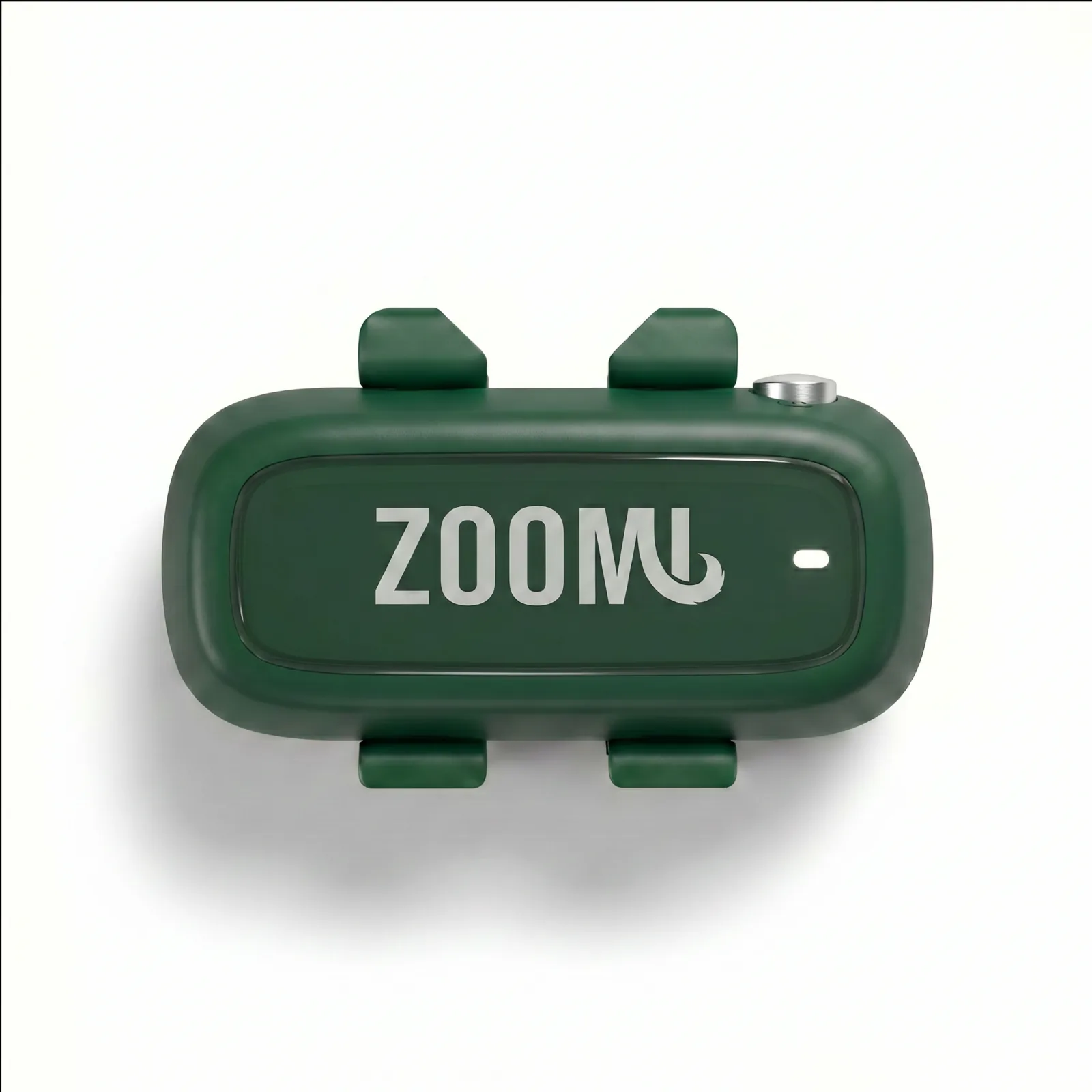
Half of fireworks safety is calming; the other half is what happens if a frightened dog gets out anyway. ZoomiTag puts a live GPS map and a tap-to-scan ID profile on the collar — the difference between searching and following.
See ZoomiTagThe Bolting Risk: Escape-Proof the Evening
Here is the part of fireworks fear that turns a hard evening into a genuine emergency: panic makes dogs escape artists. A frightened dog will clear a fence they've never attempted, slip a collar that always fitted, and pass you at the front door faster than you can react — and once running, they don't navigate, they just go. Fireworks season is the busiest period of the year for missing-dog reports, and almost every one starts the same three ways:
- The garden — a dog let out "just for a wee" off-lead when a rocket goes up. Rule for the season: after dark, toilet breaks happen on a lead, even in a fenced garden.
- The front door — guests, deliveries, trick-or-treaters on the 31st. Rule: dog behind a closed internal door before the front door opens, every time.
- The walk — a bang overhead with a startled dog on a loose lead or, worse, off it. Rule: daylight walks only, and through the season a dog with any noise history stays on the lead.
Then assume the rules will fail once, because that's what rules do, and check the net beneath them: microchip record current, collar tag on and legible, and — the only layer that works while the dog is still running — GPS on the collar and charged. Our guide to GPS dog tags covers how the technology works; the seasonal habit is simpler: on the collar, fully charged, every evening from now to mid-November.
With the surrounding weekends close behind. Escaped fireworks-panic dogs travel far, fast, and in no particular direction — which is why prevention plus live GPS beats every poster campaign ever printed.
When It's Beyond a Bad Night: Getting Help
There's a line between fear and phobia, and it matters. Worried, pacing, clingy, recovers within the hour once the noise stops — that's fear, and the protocol above will carry you both through the season. Panicked, destructive, escaping, self-injuring, refusing food for hours, wrecked the next day — that's noise phobia, and it deserves the same seriousness as any medical condition, because it deepens every untreated year. The route is: vet first (pain screening — hidden joint pain is a known amplifier of noise sensitivity — plus modern, event-specific anti-anxiety medication that calms without merely sedating), then an accredited behaviourist for structured desensitisation in the off-season. Next year's November genuinely can be different; this year's job is safe passage through it.
Frequently Asked Questions
Fireworks stack everything a dog's threat system flags: sudden onset, extreme volume against far more sensitive hearing, unpredictable timing, flashes and burning smells — from a source the dog can't locate or act on. Intense, unpredictable, uncontrollable: the textbook recipe for fear, and unlike thunder there's no warning build-up at all.
Walk and feed before dusk, toilet break on the lead, then curtains closed, lights on and background sound running before the first bang. Once it starts: stay home, be calm and boring, let your dog choose their spot — den, sofa-burrow, or pressed against you — and comfort them if they seek it. Offer a long-lasting chew once the first spike passes.
No. Fear is an emotion, not a behaviour — it can't be rewarded into happening more. Calm comfort doesn't deepen fear; withholding it just leaves a frightened animal coping alone, which tends to make things worse over the seasons. If your dog comes to you, that's their best coping strategy working. Let it.
Taking them to displays, leaving them alone on the big nights, punishing fearful behaviour, dragging them out of hiding places, forcing them to "face" the noise, walking after dark in season, opening the front door with the dog loose in the hall, and any sedative that didn't come from your vet.
Panic is pure flight: away from the noise, in any available direction, over or through whatever's in the way. Panicked dogs clear unclimbable fences, slip collars, bolt through briefly-open doors — and don't respond to their name while running. It's why fireworks season is the year's peak for missing dogs, and why lead rules, door protocol and GPS on the collar matter as much as calming.
When it's panic rather than worry: escape attempts, destruction, self-injury, hours of shaking, food refusal, a wrecked next day. That's noise phobia — see the vet (pain screening plus modern event-specific medication), then an accredited behaviourist for off-season desensitisation. It worsens untreated, and it responds well to treatment.