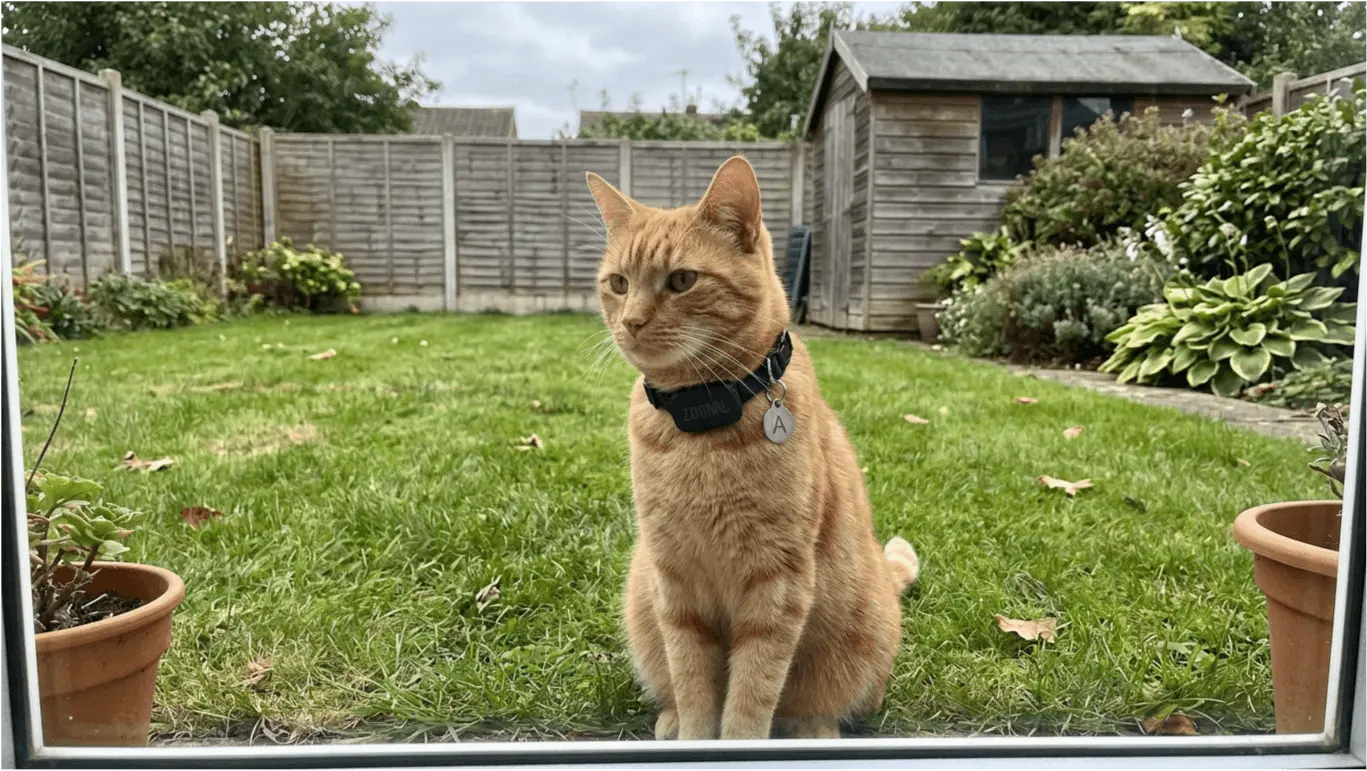
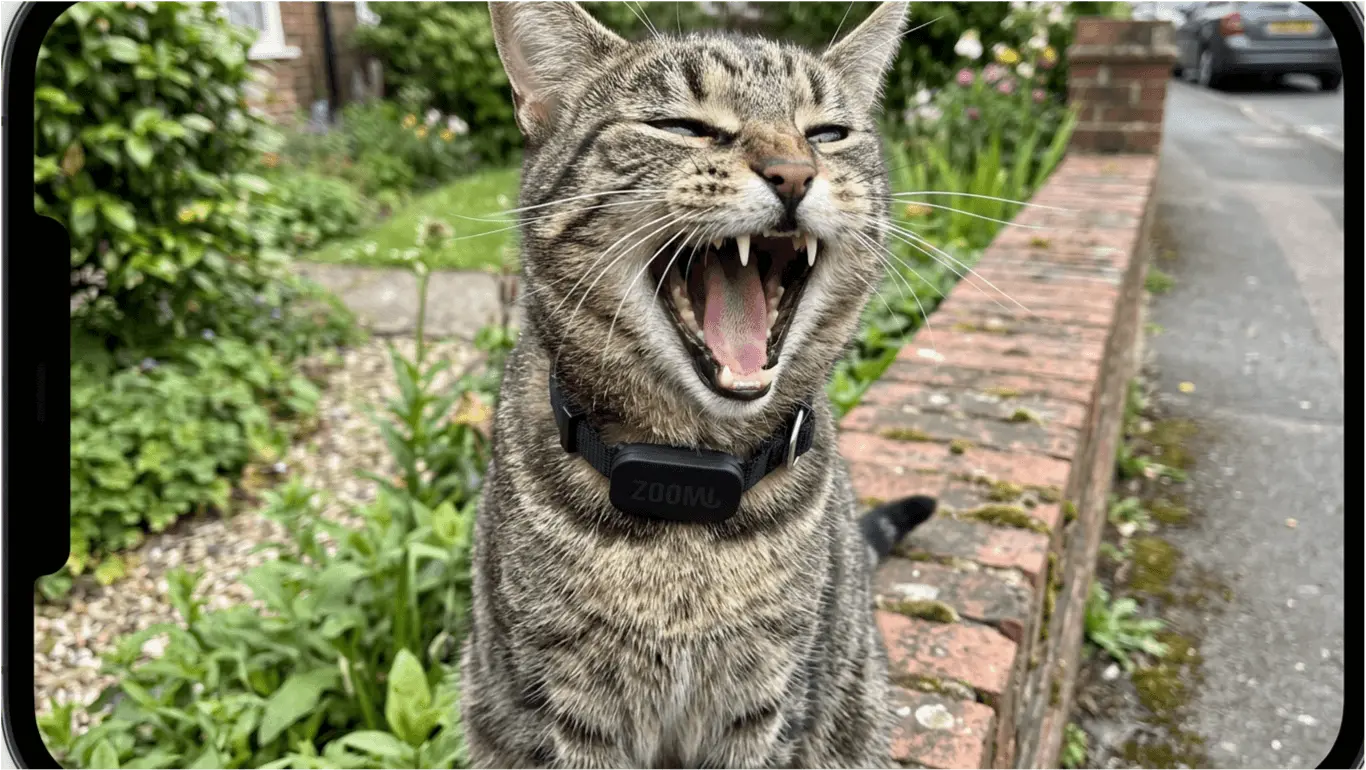
Fireworks advice is written for dogs, because dogs make their fear obvious — the trembling, the pacing, the wide-eyed wedge behind the sofa. Cats process the same terror differently: they disappear. Under the bed for three days. Into the back of a wardrobe. Or — the version that fills lost-pet groups every November — over the fence and gone, because they were outside when the first rocket went up over their territory.
That's the shape of the feline fireworks problem: quieter, easier to miss, and with a worse failure mode. A scared dog indoors is a hard evening. A scared cat outdoors is a missing cat. The plan below is built around that difference — and its centrepiece is one habit, started now, that prevents most of the season's disasters before they can begin.
How Firework Fear Actually Shows in Cats
The myth that "cats don't really mind fireworks" survives because frightened cats are silent. What fear actually looks like: hiding (the big one — small, dark, enclosed, often for hours after the noise stops); freezing low to the ground, ears flat; escape bolting at the first bang; refusing food; over-grooming (bald patches on the belly and legs appearing over the season); and toileting outside the tray. A cat who spends every November evening under the spare bed isn't unbothered — they're coping, alone, with something they can neither predict nor understand.
Two things follow. First, don't drag a hiding cat out to comfort them — the hiding is the coping, and interrupting it adds stress. Sit nearby, speak normally, let them own the choice. Second, take the season seriously even for a cat who "seems fine": the stress shows up sideways, in grooming, appetite and toileting, days later.
Fireworks are let off after dark. A cat who is indoors before dark — every evening from roughly 20 October to mid-November — cannot be caught outside by them. No calming product, plug-in or technique comes close to the value of this one boring habit.
The Dusk Curfew: The One Habit That Does Most of the Work
Start the routine this week, before the displays begin, so it's established by the time the season peaks. It's three moves:
- Shift the evening meal to just before dusk. Cats set their clocks by food. Fed indoors at dusk every evening for a week, most cats start presenting themselves at the door early. (Dusk moves fast in late October — and after the clocks change on the 25th it arrives around 4:45pm, so the meal moves with it.)
- Lock the flap once they're in. A microchip cat flap with a curfew mode does this automatically; otherwise, lock it manually and cover it — a cat who can see out and push at a locked flap frets more than one who can't.
- Keep them in until morning. The stragglers' fireworks go off at midnight; the garden can wait for daylight.
For the reluctant — the farm-born, the semi-feral, the stubborn — don't turn dusk into a chase, which teaches exactly the wrong lesson. Bring the meal earlier, use the irresistible ingredient (the fish, the pouch they never normally get), and accept that the habit takes a week or two to bed in. That's why October's first half is the time to build it. If your cat roams and you're genuinely unsure whether they're in range at dusk, this is where a live tracker changes the game — more below.
The Indoor Setup for Loud Nights
Once the household is sealed, the evening's job is simple: give the cat control. Hiding places at two heights — cats de-stress by getting up high (a cleared wardrobe top, a shelf) or into small dark spaces (an igloo bed, a box on its side lined with familiar bedding); make both available and let them choose. Muffle the outside: curtains closed, TV or radio at ordinary volume, lights on — flashes are half the fright. Litter logistics: a cat who normally toilets outdoors needs a tray on lockdown nights (one per cat plus one spare is the classic rule), placed somewhere quiet — a cat who won't cross the room to the tray will go behind the sofa instead. Pheromone plug-ins (the feline facial-pheromone type) have decent evidence for taking the edge off; they take days to build effect, so start them now, not on the night. And check the perimeter: windows, vents, the flap actually locked — a startled cat finds gaps you didn't know existed.
If Your Cat Is Outside When the Fireworks Start
It'll happen at least once this season — the display nobody announced, the cat who slipped the curfew. What matters is what you don't do: don't chase, and don't stand at the door calling in a panicked voice. A frightened cat goes to ground and stays there; pursuit and noise push them further out. Instead: leave the flap unlocked or a door ajar, put strong-smelling familiar bedding by it, and check your own garden's hiding spots — under the shed, in the hedge line — calmly, with a torch. The overwhelming pattern is that cats caught out by fireworks hide close to home and reappear in the small hours, once the world goes quiet. Your job is to make coming home easy, not to extract them mid-panic.
If They're Still Missing the Next Day
A cat missing after fireworks is almost never travelling — they're hiding silently nearby, in survival mode, usually within a few gardens' radius, and often won't answer calls for a day or two. So the search is local, quiet and repetitive: sheds, garages, under decking, dense shrubs; ask every neighbour to open their outbuildings (getting shut in a shed is the classic fireworks-week fate); search at dawn and in the dead of night with a torch, when the streets are silent and eyes reflect. Report the chip missing to your microchip database, post on the local groups with a clear photo — and keep the routine going for days, not hours; frightened cats surface on the fourth night as often as the first. Our complete lost-pet recovery guide covers the full playbook, hour by hour.
Or Skip the Search Entirely
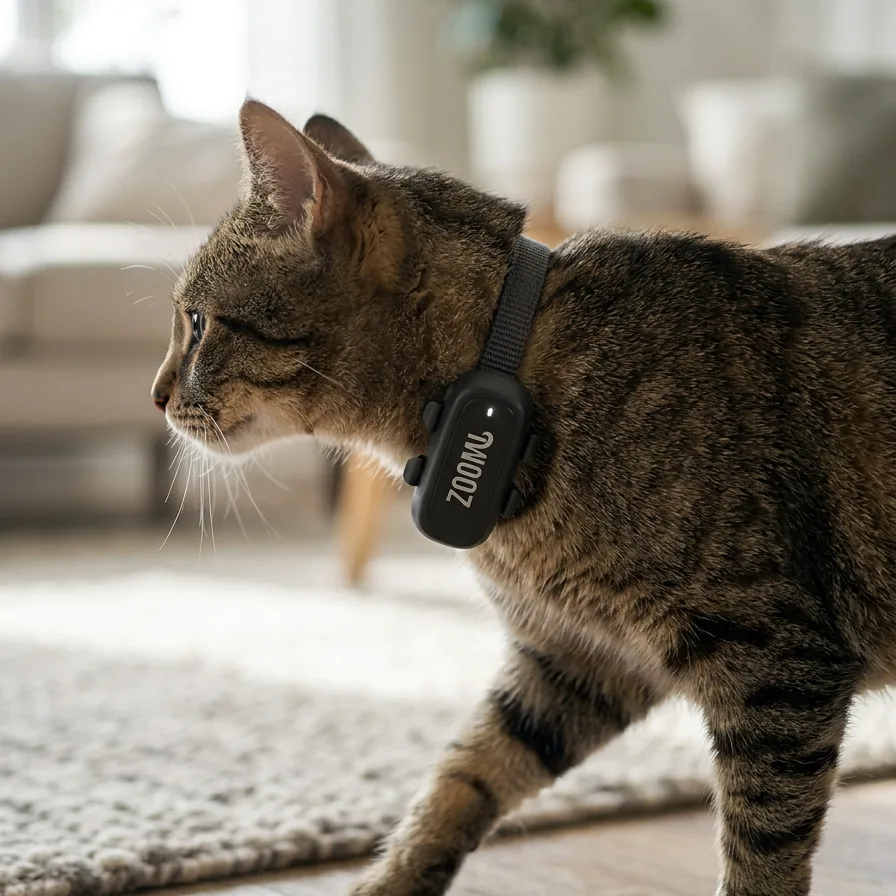
Every scenario on this page gets shorter with a live map. ZoomiTag for Cats puts real-time GPS on a quick-release safety collar — "is she in yet?" becomes a glance, and "she bolted" becomes a location. Fully launching this quarter.
See ZoomiTag for CatsA Word for the Black Cats
National Black Cat Day falls on 27 October — timely, because the season is hardest on them. The same fortnight that fills the sky with bangs also brings the clocks change, and with it dusk at teatime: a black cat crossing a road at 5pm in late October is close to invisible to drivers. The curfew habit protects them twice over — out of the fireworks and off the darkening roads. If any cat in the household earns the early call-in, it's the black one.
The ID Layer: Chip, Collar, GPS
Prevention first, but build the safety net too — in October, before the peak:
- Microchip — now the law. In England, pet cats must be microchipped and registered by 20 weeks old (since June 2024; fines up to £500). The legal minimum is also the practical one — but only if the database record carries your current phone number. Check it this week; it takes two minutes and it's the most common failure in reunification.
- Collar — quick-release only. If your cat wears a collar, it must be a safety quick-release design; a cat who panics through a hedge needs the collar to give way.
- GPS — the live layer. A chip identifies a cat someone else has found; a tracker finds the cat nobody has. During fireworks season that means confirming they're home before dusk without standing in the garden shaking biscuits, and — on the bad night — replacing a torchlit search of the neighbourhood with a dot on the map. Our guide to real-time cat tracking explains what genuinely live tracking requires (and why AirTags and microchips can't do it). ZoomiTag for Cats fully launches this quarter.
The Morning-After Sweep
Before the flap unlocks each morning during display season, thirty seconds in the garden: spent fireworks and sparklers (chemical residue, chewable casings), glow sticks and luminous jewellery from Halloween (the liquid is a nasty irritant cats bite into), bonfire debris, and anything dropped over the fence. Cats investigate novelty with their mouths at exactly cat height. Then unlock, and let the territory patrol resume.
The One-Screen Checklist
- This week: dusk feeding routine started · chip database record checked · pheromone plug-in in, if using
- By 20 October: curfew habit established · flap curfew mode set · indoor hiding spots ready · tray logistics sorted
- Every likely fireworks night (≈20 Oct – 15 Nov): in before dusk, flap locked, curtains closed, calm evening, in till morning
- If caught out: no chasing — door access, familiar bedding, quiet garden check, patience till the small hours
- Morning after: garden sweep before the flap opens
- Dog in the house too? The canine side of the season has its own plan — start with our 4-week fireworks preparation guide
Cats don't need much from fireworks season — no cupboard of calming products, no weeks of training. They need to be on the right side of the door when it starts, a place to hide that they chose, and an owner who doesn't take "hiding quietly" for "perfectly fine". Do the curfew, build the net, and let them spend November unimpressed instead of missing.
Frequently Asked Questions
Commonly, yes — they just show it silently: hiding, freezing, over-grooming, appetite loss, toileting outside the tray. Because there's no trembling or barking, feline firework fear is routinely underestimated. A cat under the bed all evening is coping, not indifferent.
Yes — in before dusk on every likely fireworks night, roughly 20 October to mid-November plus New Year. Fireworks happen after dark, so a cat home before dark can't be caught out by them. Shift dinner to dusk to make coming in automatic, then lock the flap till morning.
Don't chase and don't call frantically — pursuit pushes a frightened cat further out. Leave door or flap access, put familiar bedding by it, check your garden's hiding spots calmly with a torch, and expect them back in the small hours. Most cats caught out hide close to home until the noise stops.
Search close, quiet and repeatedly: frightened cats hide silently within a few gardens, in sheds and under decking, and often don't respond for a day or two. Get neighbours to open outbuildings, search at dawn and late night with a torch, report the chip missing, and keep going for days. Our lost-pet recovery guide covers the full plan.
In England, yes — cats must be chipped and registered by 20 weeks old, with fines up to £500. Fireworks season is when the chip matters most, and it only works if the database has your current phone number. Check the record now; it takes two minutes.
Yes — a genuinely cat-sized tracker on a quick-release safety collar gives you a live map: confirmation they're in before dusk, and a location instead of a search after a scare. ZoomiTag for Cats, the live-GPS smart tag built for cats, fully launches this quarter.