Every November, the same scene repeats in thousands of British homes: a shaking dog wedged behind the sofa, an owner googling "how to calm a dog during fireworks" while the sky detonates outside. And the honest, slightly uncomfortable truth about that scene is that most of what would have helped needed to start a month earlier. On the night itself you can manage fear. In the weeks before, you can actually reduce it.
This is the month-earlier guide. It's early October; Bonfire Night is roughly four weeks away, the first organised displays are three. That's precisely enough time to run a proper desensitisation programme, build a den your dog trusts, have the vet conversation if you need it, and close the gaps in your escape-night safety net. Week by week, here's the plan.
First, Know the Battlefield: When Fireworks Season Actually Runs
"Bonfire Night" is a polite fiction — the noise doesn't arrive on one date, it arrives in a wave that builds for three weeks. For 2026, plan around this shape:
| When | What's Happening | Noise Level |
|---|---|---|
| Sat 24 – Sun 25 Oct | First organised displays; sporadic garden fireworks begin | Moderate, patchy |
| Fri 30 Oct – Sun 1 Nov | Halloween weekend — parties, displays, garden fireworks | High |
| Thu 5 Nov | Bonfire Night itself | Peak |
| Fri 6 – Sun 8 Nov | The biggest display weekend of the year, plus Diwali celebrations | Peak |
| Mid-November onward | Stragglers and leftover boxes | Sporadic — the ambush phase |
Two planning consequences. First, your preparation deadline is around 20 October, not 4 November. Second, the season is long enough that management-only approaches (hiding, hoping) exhaust both of you — three weeks is a marathon for a frightened dog, which is exactly why reducing the fear beats merely surviving it.
Noise sensitivity is the norm, not the exception — and it worsens with each unprepared season, because every terrifying November teaches the fear more deeply. The good news runs the same direction: preparation compounds too.
The 4-Week Sound Plan, Week by Week
Desensitisation and counter-conditioning sound clinical; in practice they're ten minutes a day with a speaker and some dinner. The principle: play firework sounds too quietly to frighten, pair them with good things, and raise the volume only as fast as your dog stays genuinely relaxed. You're not toughening your dog up — you're changing what the sound predicts.
Week 1 (now): establish the game at whisper volume
Find a good firework soundtrack (free ones are widely available from animal charities and streaming services). Play it at barely-audible volume during something your dog loves — mealtimes are perfect. Watch closely: you want no reaction at all, or a glance and a shrug. Any freezing, ear-pinning or leaving the room means the volume is too high, full stop. Short sessions, five to ten minutes, once or twice daily.
Week 2: raise the floor, build the den
Nudge the volume up in small steps across the week, holding each level until it's boring. Meanwhile, build the den (details below) and start feeding chews in it, so the safe place and the sound game develop together. If your dog already shows noise worries, this is also the week to book the vet — appointments evaporate as November approaches.
Week 3: realistic volume, varied and brief
By now the track should be playing at genuinely noticeable volume while your dog eats, chews or plays undisturbed. Vary it: different recordings, different rooms, occasional single bangs rather than continuous crackle (single unexpected bangs are what real nights serve). Keep sessions short and keep them ending well. If progress stalls at some volume, stay there — a plateau held calmly is still progress.
Week 4 (w/c 26 Oct): consolidate and switch to logistics
Hold the gains with a few maintenance sessions, then shift energy to the practical layer: the escape audit, the charging routine, the evening protocol. Don't push volume in the final days — arriving at the real thing calm and rested matters more than one louder rehearsal.
A note on scope: this plan genuinely helps the large middle of the bell curve — dogs who startle, worry and pace. It is not a treatment for true noise phobia. If last year meant panic, escape attempts, destruction or self-injury, skip to the vet section; sound therapy alone is not fair on a phobic dog, and our guide to dog anxiety symptoms will help you judge which side of the line yours falls.
Build the Den Now, Not on the Night
When frightened, dogs seek small, dark, enclosed spaces — it's hardwired. A den simply makes sure the space they choose is a good one. The recipe: a covered crate, an under-stairs corner or a gap behind the sofa, in the room where the family usually is; thick blankets under and over (soft surfaces soak up sound); water within reach; one of your worn jumpers; door or entrance permanently open. Then make it ordinary — feed chews there, hide treats there, let it become furniture. By November it should smell of a hundred boring, happy days. That's what makes it work when the sky goes wrong.
The October Safety Audit, Made Simple
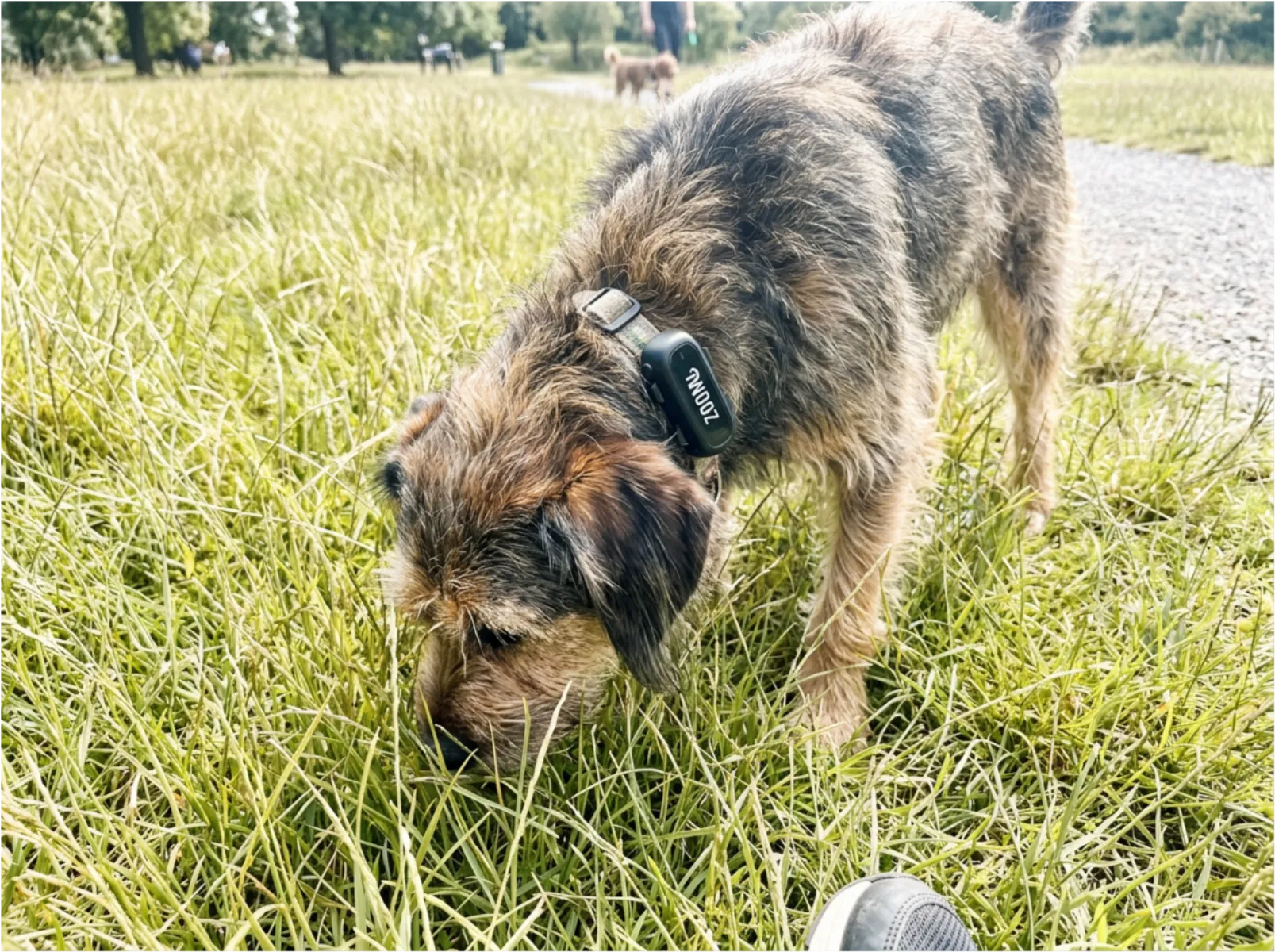
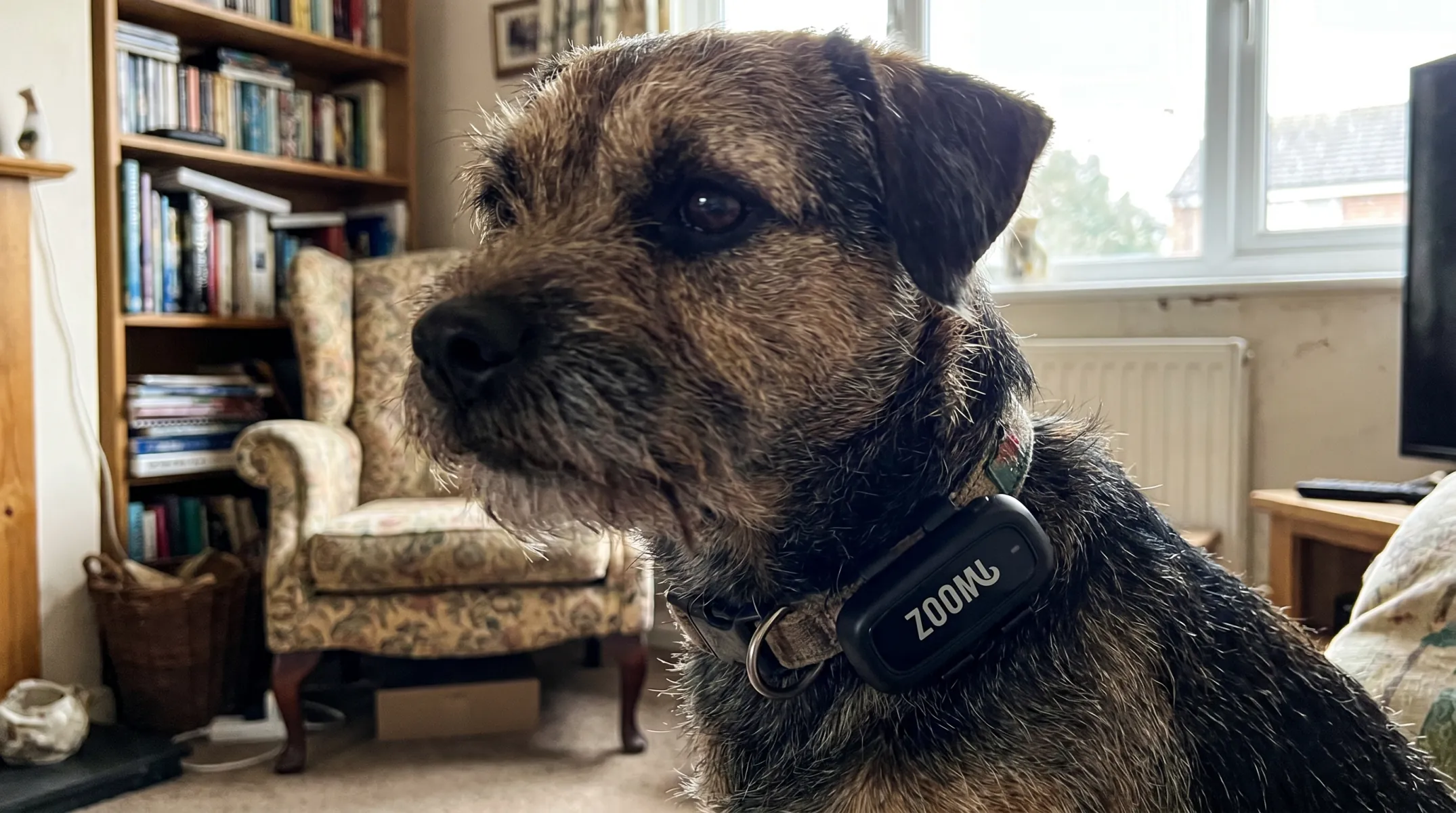
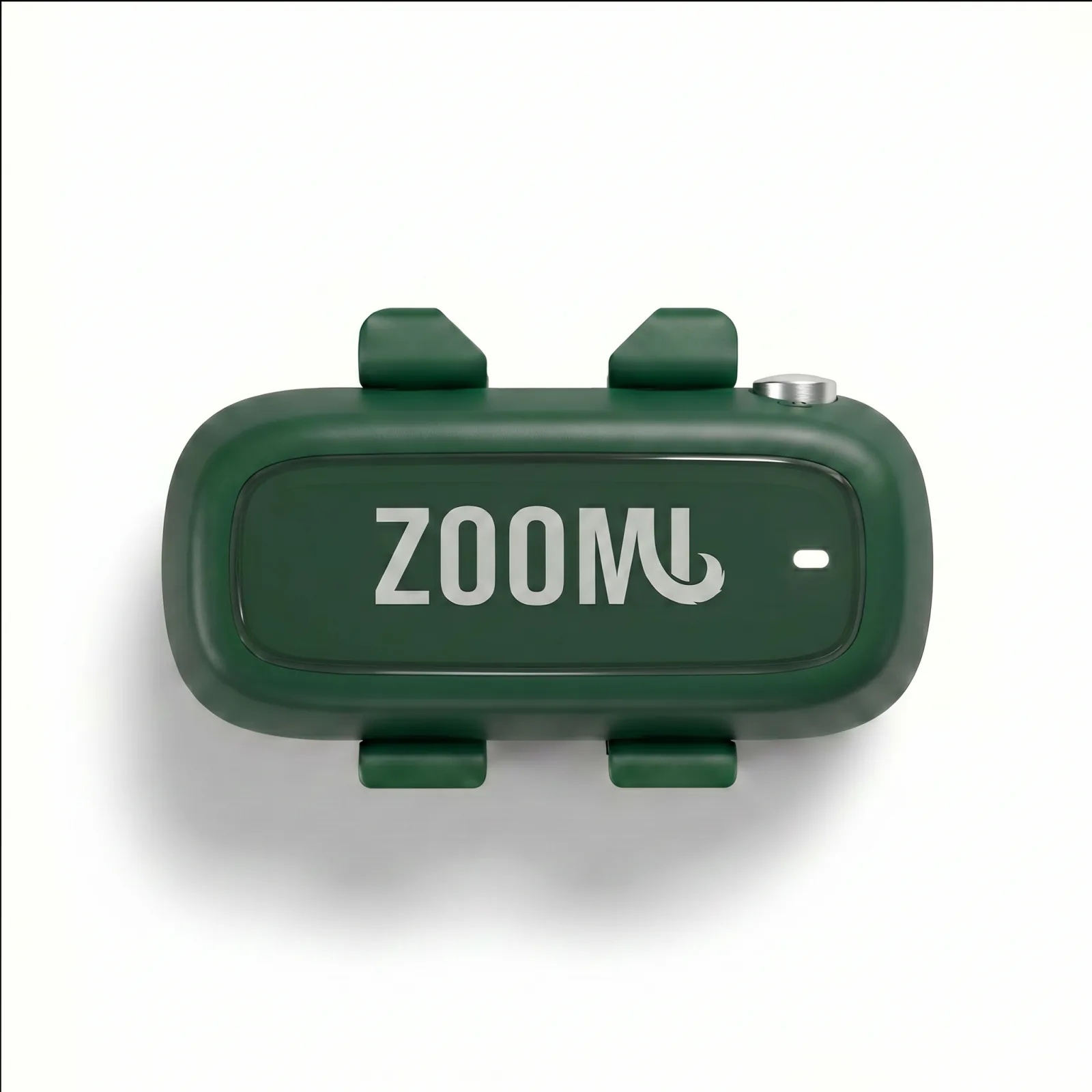
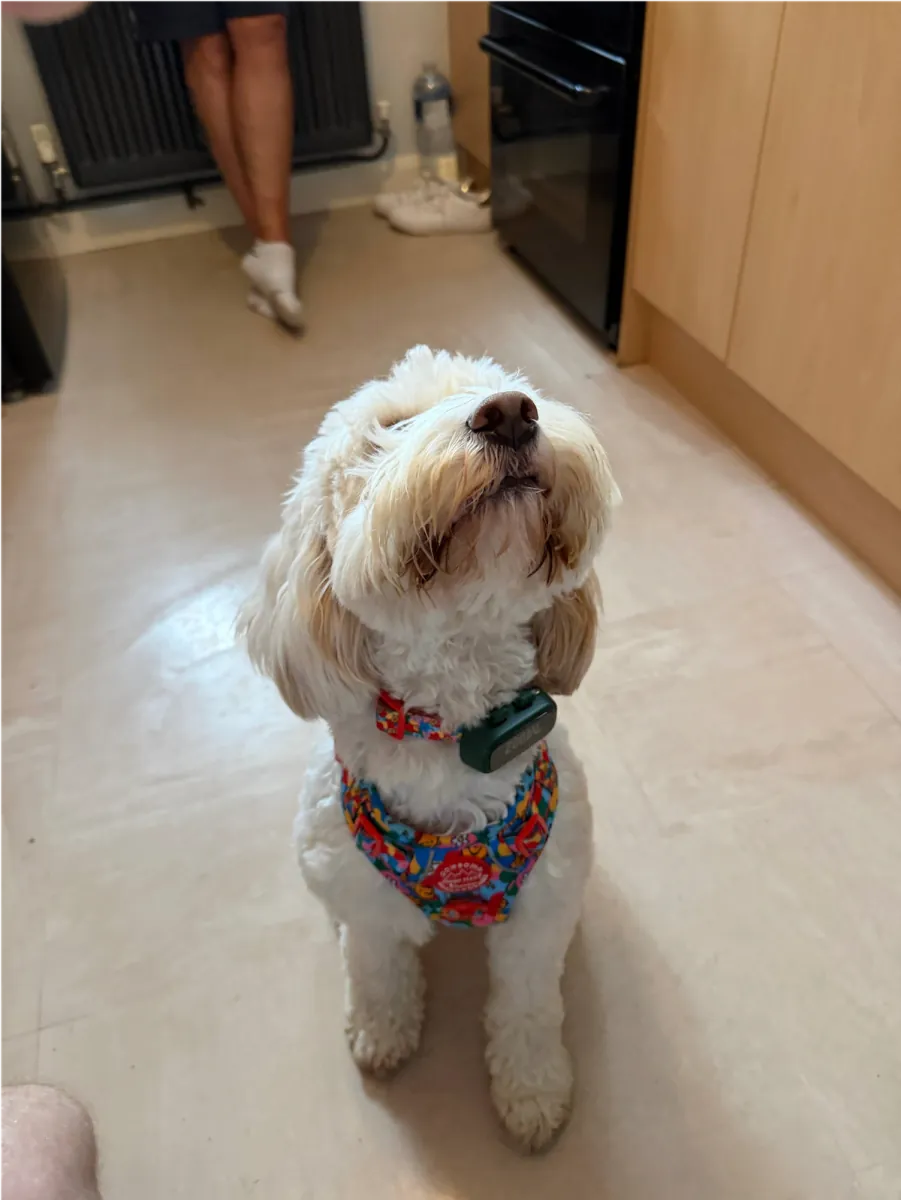
More dogs bolt in early November than at any other time of year. ZoomiTag puts live GPS tracking and a tap-to-scan ID profile on the collar — so if the worst night happens, you have a moving map, not a missing poster.
See ZoomiTagThe Vet Conversation (Book It in October)
Three reasons an October vet visit earns its fee for a noise-worried dog. First, pain screening: hidden pain — especially joint pain — measurably amplifies noise sensitivity, and treating it sometimes transforms a dog's November. Second, modern medication: there are now well-tolerated, event-specific anti-anxiety options a vet can tailor to your dog; the old approach of sedating a dog who remained terrified underneath is long outdated, and good practices will talk you through what's appropriate. Some plans benefit from a trial dose before the real night — another reason not to leave this to 4 November. Third, referral: for genuine phobia, an accredited behaviourist running a structured programme is the real fix, and vets are the gateway.
The Practical Layer: Your October Escape Audit
Preparation cuts the odds of panic; it doesn't cut them to zero. October is when you make the house and the paperwork bolt-proof:
- Microchip record — is the phone number on the database your current one? Two minutes to check, and the single most common failure in reunification.
- Collar and tag — present, legible, legally compliant (our dog tag guide covers what's required and what's wise).
- Garden survey — walk the fence line like a dog who's decided to leave: gaps, gates that don't latch, bins that make platforms. A panicked dog clears fences a calm dog never would.
- GPS tracking — a live-location layer on the collar is the one part of the stack that works while a dog is running, not after they're caught. If you use one, make the November rule simple: on the collar, fully charged, every evening. Our guide to GPS dog tags explains the technology.
- Walk schedule — from late October, shift the main walk before dusk. It's the cheapest risk reduction available.
Daily ten-minute sessions from early October arrive at Bonfire Night with real, measurable change. Starting on 4 November arrives with a speaker and regret. The calendar is the treatment — use it.
The One-Screen Checklist
- This week: start whisper-volume sound sessions · choose the den spot · check the microchip database record
- By mid-October: volume rising steadily · den in daily casual use · vet booked if last year was bad · garden audited
- By 20 October: realistic-volume sessions calm · tag and tracker checked · walks moving earlier
- Week of 26 October: maintenance only · charging routine locked in · evening protocol agreed with the household
- From 24 October: treat every weekend evening as a possible fireworks evening until mid-November
Do the plan imperfectly and it still beats not doing it. Ten minutes a day for a month, to change your dog's worst season of the year — it's the best-value training you'll do annually. And when the season itself arrives, our night-of guides will pick up exactly where this one leaves off.
Frequently Asked Questions
In practice, from mid-October: displays begin on the pre-Halloween weekends, build through Bonfire Night on 5 November and peak that following weekend, with Diwali adding dates in the same window. Treat roughly 20 October to 15 November as the season — and early October as preparation time.
Play recorded fireworks at a volume so low your dog barely notices, while good things happen — dinner, chews, play. Raise the volume in small steps over weeks, only ever at a level your dog stays relaxed at. The one rule that can't be broken: never jump to a frightening volume. A scared repetition teaches the wrong lesson deeply.
Three to four weeks of short daily sessions makes a real difference for mild-to-moderate noise sensitivity — which is why early October is the moment to start. True noise phobia needs longer and professional support; a month of sound therapy alone isn't a fair treatment for panic-level fear.
If your dog has ever truly panicked, yes — book in October. Vets can screen for pain (which amplifies noise fear), discuss modern event-specific anxiety medication (some plans benefit from a trial run), and refer to an accredited behaviourist for the structural fix.
Yes — dogs instinctively seek enclosed spaces when frightened, and a rehearsed den measurably lowers stress on loud nights. Build it weeks early, make it comfortable and dark, feed good things in it, and never shut the dog in. By November it should feel like furniture, not an emergency measure.
Microchip database record current (especially the phone number); collar tag present, legible and legal; GPS tracker — if your dog wears one — profile up to date and charged every evening through the season. The first two weeks of November are the year's peak for dogs going missing; the ID stack is the net beneath the training.