Ask any rescue centre, dog warden or missing-pet register to name their busiest fortnight, and you'll get the same answer: the run-up to the 5th of November. Every year, as the display weekends stack up, the reports pour in — dogs over fences, dogs through front doors, dogs who slipped a collar at the exact wrong moment and simply went. Most of these are loved, well-trained dogs with recall their owners would have sworn by. Fireworks don't care.
This guide is about that specific catastrophe: why panicked dogs bolt, how the escapes actually happen (the pattern is remarkably consistent), what to do in the first hour if it's your dog — and the three-layer safety net that decides whether a fireworks escape is a twenty-minute story or a three-day one. For calming the fear itself, start with our fireworks anxiety guide; this is the companion piece for when calming isn't enough.
What Panic Does: the Flight Response
A sufficiently frightened dog stops thinking and starts fleeing. This is not a training failure — it's neurology. Past a certain threshold of fear, the brain hands control to the flight system, and the flight system has exactly one instruction: away. Not "home". Not "to the park we know". Just away from the noise, in whatever direction is open, at whatever speed the body can produce.
That single fact explains everything odd about fireworks escapes. Why a dog clears a six-foot fence they've never attempted: adrenaline and desperation are remarkable athletes. Why they run through hedges and across roads rather than around: flight doesn't route-plan. Why your voice does nothing: a dog in full flight genuinely may not process their own name. And why they end up miles away in a random direction: away has no destination. A panicked dog can run flat-out until the adrenaline fades — recovered fireworks dogs are routinely found several miles from home, past every poster a search party would think to hang.
Bonfire Night at the centre, the big display weekends either side. The pattern repeats every year with grim reliability — and almost every case begins with one of just three escape routes.
The Three Escapes Behind Almost Every Case
1. The garden ("he was only out for a wee")
The classic. Dog let into the fenced garden for a last toilet break, rocket goes up two doors down, dog goes over — or under, or through — the fence. Owners are consistently astonished by what a panicked dog can climb. The rule that closes this route costs thirty seconds a night: from now to mid-November, after-dark garden breaks happen on a lead. Yes, even fenced. Yes, even "he never goes near the fence." The fence has never met this version of your dog.
2. The front door (guests, deliveries, trick-or-treaters)
Halloween is a fireworks night with a doorbell. Every knock is an airlock breach: door open, hallway lit, frightened dog behind you looking for an exit. The rule: dog behind a closed internal door before the front door opens — every single time, all evening, on the 31st and every display night. If you're hosting on the 5th, brief the guests: the kitchen door stays shut, whoever arrives.
3. The walk (the bang overhead)
A firework going off above a dog on a walk is how the worst versions start — because a bolting dog on open ground has no fence to slow them at all. Through the season: walks in daylight, and any dog with noise history stays on the lead — a straight swap of a few weeks' off-lead time for not spending the night searching field margins by torchlight. If your evening routine genuinely can't move, walk the well-lit, built-up route, not the fields.
The Recovery Stack: Three Layers, Three Different Jobs
Prevention will fail somewhere, some night — that's what the safety net is for. It has three layers, and they are not interchangeable:
| Layer | What It Does | When It Works | Its Limit |
|---|---|---|---|
| Engraved collar tag | Lets any finder contact you instantly (and it's the law in public) | After someone catches the dog | Does nothing while the dog is loose; collars can slip |
| Microchip | Tamper-proof ID and legal proof of ownership | After the dog reaches a scanner — vet, warden, rescue | No location; useless if the database record is stale |
| GPS tag | Live position on your phone, the whole time | While the dog is still running — the hours the other layers can't touch | Needs to be on the collar and charged (make it the evening routine) |
Notice the "when it works" column: the first two layers only activate after the running stops. Everything in between — the miles, the roads, the night — belongs to GPS alone. That's not a sales line so much as the shape of the problem: a fireworks escape is a location emergency, and only one layer produces a location. How the technology does it is covered in our GPS dog tags guide; check the microchip record and tag legibility this week if you haven't (our dog tag guide covers the legal details).
The Layer That Works Mid-Escape
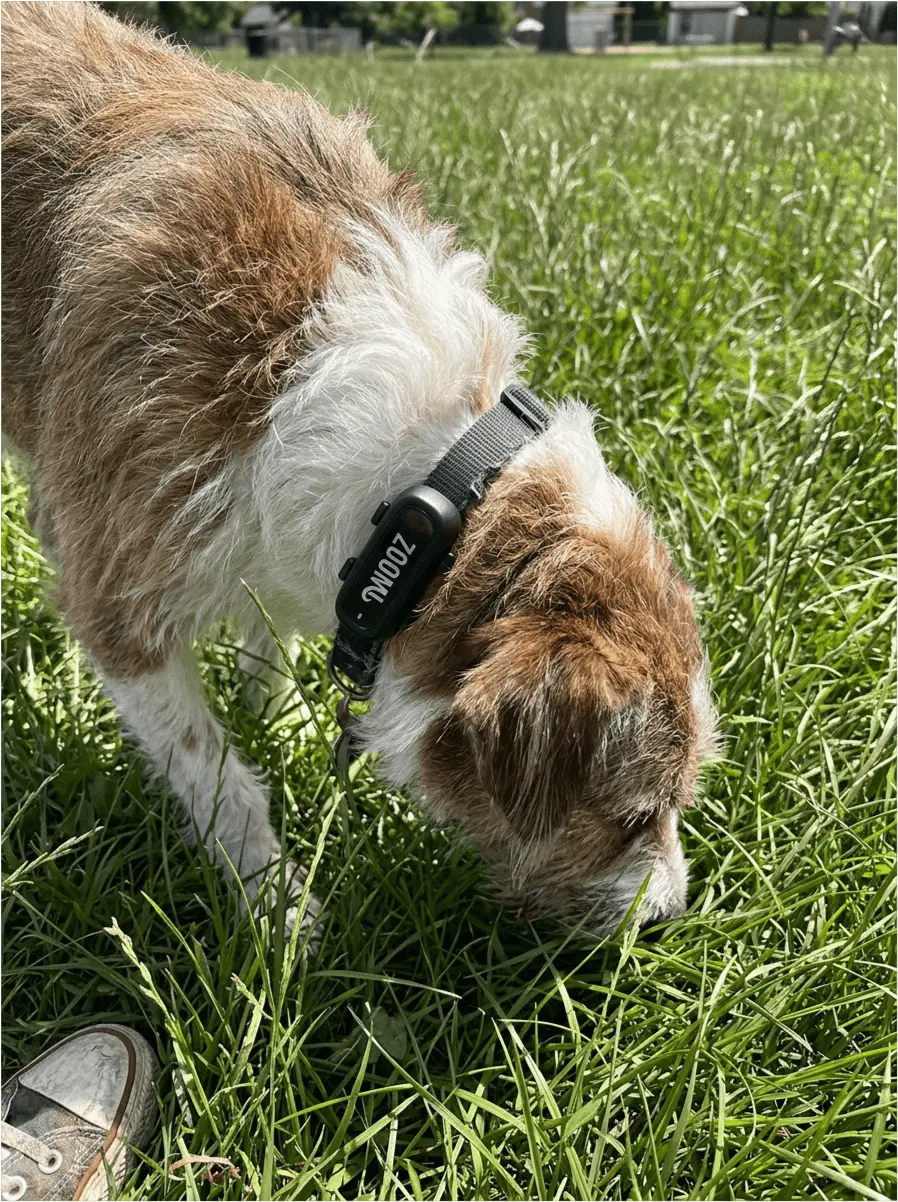
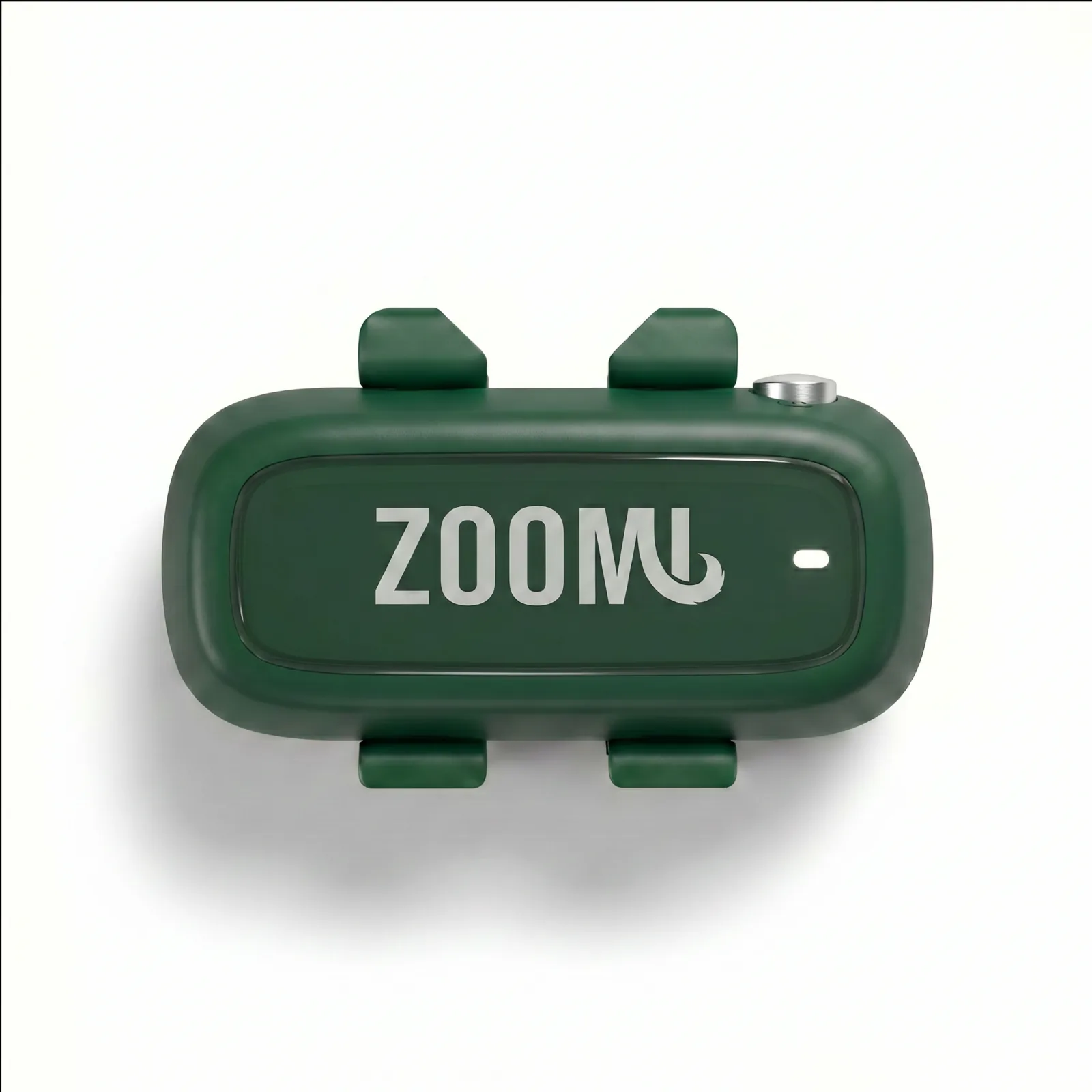
ZoomiTag is live 4G GPS and a tap-to-scan ID profile in one tag — safe-zone alerts the moment your dog leaves the garden, and a moving map for the minutes after. £38.99, on the collar before the display weekends.
See ZoomiTagIf It Happens: the First Hour
With a GPS tag: open the app before you open the front door. Watch the dot for thirty seconds — is it moving or settled? If moving, don't chase it on foot; get ahead of it, calmly, by car if the distance justifies. If settled, go to it directly, approach slowly, crouch, and call cheerfully — a post-panic dog may be too shut down to come even to you, so bring the lead and the good treats.
Without one: speed still matters more than anything. Leave your gate open and something strongly scented — their bed, your worn jumper — in the garden; panicked dogs frequently loop home once the noise stops, and many are found at their own back door in the early hours. Walk the area calling in your happy voice (a frantic voice reads as more danger). Ring neighbours, post to the local missing-pet groups with a clear photo and location, and report to your microchip database the same evening so any scanner hit routes to you instantly. Then it's the full playbook — our complete lost-pet recovery guide takes over from here, hour by hour.
One more, learned the hard way by many: don't chase, ever. To a frightened dog, a running human — even their own — is one more thing happening too fast. Sit down, side-on, treats out. Slow wins.
In the first hour a bolting dog is close, the trail is warm, and the noise that caused it all eventually pauses. Everything about the net — charged tag, current chip record, a plan you've already read — is about not wasting that hour setting up.
This Weekend's Checklist
- Tonight: microchip database record checked — current phone number, current address
- Every evening to mid-Nov: GPS tag on the collar, fully charged; collar snug (two fingers, no more)
- After dark: garden = lead. Front door = dog shut behind an internal door first. Walks = daylight, on-lead in season
- On the big nights: someone home if at all possible; den available; the calming protocol running
- In your head: the first-hour plan, so the worst five minutes of the season don't start with googling
Frequently Asked Questions
Sufficient fear hands control to the flight response, whose only instruction is "away from the noise" — not "home", just away. In that state dogs clear unclimbable fences, slip collars, and don't respond to their name. It's neurology, not disobedience: panic outranks training, every time.
Miles — flat-out, until the adrenaline fades, in an effectively random direction. Recovered fireworks-escape dogs are routinely found several miles from home, well beyond where posters go up. It's why on-foot searching alone is slow, and why a live GPS position changes the whole exercise.
With GPS: open the app first, read whether the dot is moving or settled, and get ahead of a moving dog rather than chasing it. Without: gate open and scented items out at home, search calling cheerfully, alert neighbours and local missing-pet groups, and report to the microchip database the same evening. Never chase — sit, side-on, treats out.
Close the three routes: after-dark garden breaks on a lead (even fenced); dog behind a closed internal door before the front door opens; walks in daylight and on-lead through the season. Those three rules, kept boringly, prevent almost every fireworks escape reported each November.
No — it identifies your dog after capture, at a scanner. Essential, legally required, and the wrong tool for the hours the dog is actually loose. The full stack is engraved tag (fast for finders), microchip (proof of ownership) and GPS (the only layer with a live location mid-escape).
Often — once the noise stops, many loop back and are found near their own door in the early hours, which is why the open gate and scented bedding genuinely work. But treat self-return as a welcome possibility while running the full response, not as the plan. Some dogs travel too far; roads don't pause for panic.