
One in three pets goes missing at least once during their lifetime. For most owners, that realisation — your dog has bolted from the garden, your cat hasn't come home, your pet has slipped out during a door delivery — is one of the most distressing moments imaginable.
The good news: most pets can be found. When owners act quickly and systematically, the majority of missing dogs and cats are reunited with their families within 24 to 48 hours. Speed, method, and preparation all matter enormously. Every minute spent in the first hour is worth an hour spent two days later.
This guide walks you through every stage of pet recovery: what to do right now if your pet is missing, how to expand your search effectively, which digital tools actually work, and — crucially — how modern smart pet technology like NFC tags and GPS trackers can compress the entire process from days into minutes.
Lost Pet Statistics: Why Speed Is Everything
Before diving into tactics, it's worth understanding the landscape. The statistics around lost pets are both sobering and — if you act correctly — encouraging.
Research from the ASPCA suggests approximately 15% of pet owners lose a dog or cat each year. Most missing pets are not permanently lost — they're found within a short distance, but only when owners act fast.
Here's what the data consistently shows:
- Distance matters less than you think. The majority of lost pets — especially cats — are found within a few hundred metres of where they went missing. Dogs can travel further, particularly if frightened.
- The first 24 hours are critical. Reunion rates drop significantly after the first day. A pet that has been missing for 72 hours is substantially harder to recover than one reported missing within the hour.
- Identification is the single biggest factor. Pets wearing visible ID — whether a traditional engraved tag, a microchip, or a smart digital tag — are reunited with their owners far more quickly than unidentified pets. One study found that fewer than 15% of dogs entering shelters without ID were returned to their owners, compared with over 80% of microchipped dogs.
- QR and NFC tags work instantly. Unlike microchips (which require a scanner at a shelter or vet), a smart tag with a QR code or NFC chip allows any member of the public to access your contact details immediately using their phone — no equipment needed.
Compared with under 15% for pets without any identification. Combining a microchip with a visible smart tag or engraved collar tag gives your pet maximum protection at every point in the recovery process.
The First 60 Minutes: Act Immediately
The actions you take in the first hour after realising your pet is missing have a disproportionate impact on the outcome. Here's exactly what to do — in priority order.
-
Stay calm and search your immediate area first
Panic slows you down. Begin by thoroughly searching within 100 metres of where your pet was last seen. Check under vehicles, behind garden sheds, inside bushes, beneath decking, and any gap a frightened animal might squeeze into. Call their name calmly and repeatedly — a distressed shout can cause a scared pet to freeze and hide further.
-
Alert everyone in your household immediately
Get everyone searching in different directions. Cover more ground in parallel. If you have children, assign them specific safe areas to check so they feel involved without wandering too far.
-
Knock on doors of all immediate neighbours
Personally visit your five or six nearest neighbours. Ask them to check their garages, sheds, and back gardens. Many pets are found locked in a nearby outbuilding within the first hour. Leave your phone number with each neighbour.
-
Find the most recent clear photo of your pet
You will need this immediately for social media posts, shelter reports, and flyers. Choose a photo that clearly shows your pet's face and any distinctive markings — a full-body shot in good lighting is ideal. Have it ready to share before you do anything else online.
-
Post on local social platforms right away
Don't wait until the physical search is done. Post simultaneously to your local Facebook community groups, Nextdoor, and any local WhatsApp groups as you search. Include the exact street or location your pet was last seen, the date and approximate time, their description, and your mobile number. Ask people to share immediately.
-
Walk your regular routes and call their name
Pets often follow familiar scent trails. Walk the routes you usually take with your dog, or in the direction your cat tends to roam. Bring a favourite toy or food that makes a distinctive sound. Check both sides of roads thoroughly — frightened animals often freeze at hedgerows and fence lines.
-
Leave familiar-scented items outside
Place your worn clothing, your pet's bedding, and their food bowl outside near the point they went missing. Your scent and familiar smells act as a beacon for animals trying to navigate home. This is especially effective for cats.
"The biggest mistake people make is spending the entire first hour driving around rather than making immediate, targeted social media posts. Every share on a local Facebook group can reach thousands of local people instantly. That coverage is impossible to replicate on foot."
Hours 2–24: Expanding Your Search Systematically
If the first-hour search hasn't found your pet, shift into a broader, more structured campaign. This phase is about maximising your digital footprint and professional reach.
-
File reports with every local rescue shelter and dog warden
Call or visit every local shelter, rescue organisation, and council dog warden within a 10-mile radius. Do not rely on a single call — many shelters are understaffed and online records aren't always updated in real time. Visit in person where possible, and ask to check their intake logs directly.
-
Contact local veterinary surgeries
Members of the public often take found animals to the nearest vet rather than a shelter. Call every vet within your area and email them a photo. Some practices maintain a 'found pets' noticeboard — ask to have your details added.
-
Register on dedicated lost pet platforms
In the UK: DogLost.co.uk, PetLogs, and MissingPets.co.uk. In the US and internationally: PawBoost, Petco Love Lost, and Finding Rover. These platforms alert local networks and integrate with shelter databases. Many have found tens of thousands of pets. Register on all of them — it takes minutes and costs nothing.
-
Mark your pet as missing on your microchip database
Log in to your microchip provider (Petlog, Microchip Central, HomeAgain, etc.) and mark your pet's status as missing. This flags a notification to any vet or shelter that scans your pet's chip — dramatically improving the chance of a call when they're found.
-
Create and distribute physical lost pet flyers
Print flyers at A5 or A4 size with a large photo and minimal text: pet's name, date and location last seen, your phone number, and a reward offer if appropriate. Distribute within a 1-mile radius — post them on lamp posts, community noticeboards, shop windows, and letterboxes. Target areas near parks, green spaces, and roads your pet might cross.
-
Search at dawn and dusk
Frightened animals are most active during the quietest times of day. Return to the search area at first light and again at dusk. Bring a torch and move slowly and quietly — a panicked pet will avoid loud, fast-moving humans.
-
Keep checking shelters — daily
Do not assume that a single report is sufficient. Animals can arrive at shelters days after going missing. Revisit or call shelters every 24–48 hours. Intake processes are often slow and online records are not always updated promptly.
-
Consider hiring a professional pet detective
For pets missing beyond 48 hours, professional pet search services use trained dogs and systematic mapping to track animals across larger areas. In complex cases or difficult terrain, this investment can be decisive.
Digital Tools That Actually Work
Technology has transformed pet recovery over the past decade. Here's an honest breakdown of which tools make a meaningful difference — and how to use them effectively.
Social Media: Still the Most Powerful Tool
Local Facebook community groups and Nextdoor remain the most effective digital tools for lost pet recovery. A single post shared across a few active local groups can reach tens of thousands of local people within minutes. The key is specificity: name the exact street, include a clear photo, and state whether the pet is nervous or friendly so finders know how to approach.
Dedicated Lost Pet Platforms
Platforms like DogLost (UK) and PawBoost (US/international) are purpose-built for pet recovery and maintain integrated networks of shelters, vets, and community members. Many have sophisticated matching algorithms that compare 'found' and 'lost' reports automatically. These platforms have collectively facilitated hundreds of thousands of successful reunions.
GPS Trackers
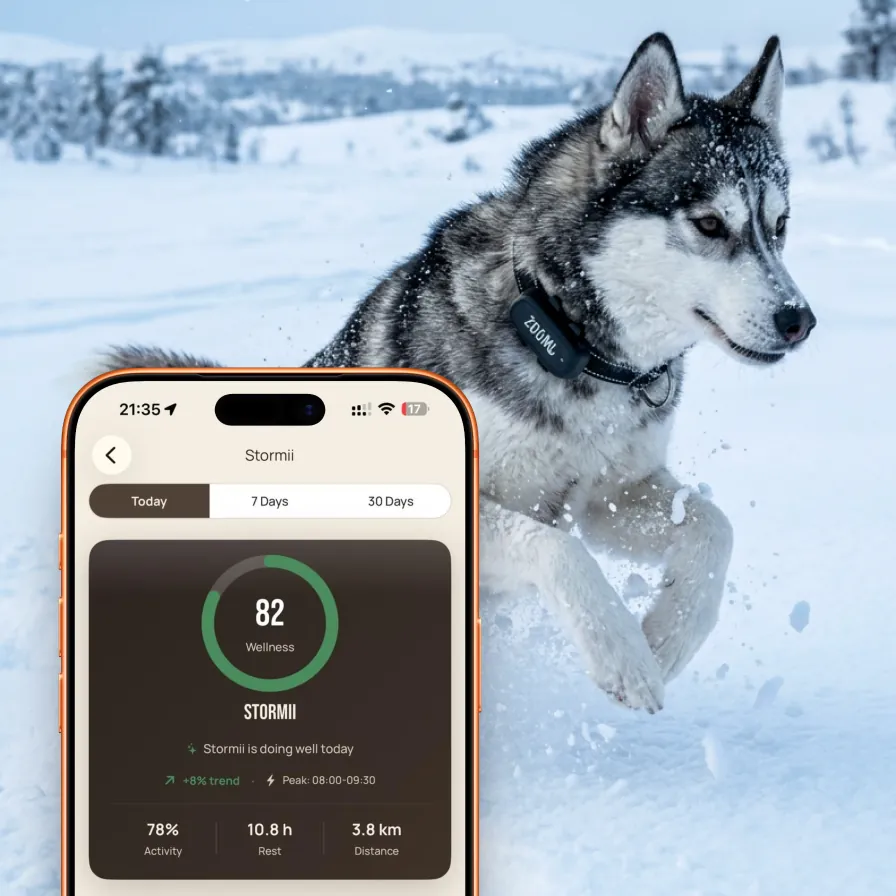
If your pet is wearing a GPS tracker at the time they go missing, recovery becomes dramatically simpler. Live location data allows you to pinpoint exactly where your pet is — or trace the route they took — rather than conducting a blind search. ZoomiTag provides cellular GPS tracking with real-time updates, geofence alerts, and activity monitoring. If your pet leaves a designated safe zone, you're notified before they've had a chance to travel far.
NFC and QR Smart Tags
Smart tags work differently from GPS — they don't track location, but they dramatically increase the chance of a fast reunion when your pet is found by a member of the public. Any finder can tap their phone against an NFC tag, or point their camera at a QR code, to instantly access your pet's profile and contact details — no app download required, no technical knowledge needed. This means the window between "found" and "owner contacted" can be minutes rather than days.
Your pet isn't wearing a smart tag yet?
ZoomiTag gives your pet a complete digital profile — emergency contacts, medical notes, and your number — accessible to any finder with a phone tap. No app needed. Setup takes under two minutes.
Microchips: Essential but Passive
A microchip is the most permanent form of pet identification and should be considered mandatory for all dogs and cats. In the UK, microchipping is a legal requirement for dogs. However, a chip can only be read with a scanner — it only activates the reunion process once a pet arrives at a shelter or vet. This makes it a vital backstop but a poor first line of defence. Always combine a microchip with a visible form of ID.
Smart Pet Tags: How the Technology Works
Traditional engraved pet tags are simple and effective, but they have significant limitations: details can't be updated when you move or change phone numbers, there's limited space for information, and they can become worn and illegible over time.
Smart tags address all of these problems. A smart tag like ZoomiTag stores your pet's information in a cloud-based digital profile — linked to the physical tag via a QR code and an NFC (Near Field Communication) chip. When a finder taps their iPhone or Android phone against the tag, or points their camera at the QR code, your pet's profile opens instantly in their browser.
That profile can include:
- Your pet's name, photo, breed, and age
- Your mobile number — displayed as a one-tap call button
- An emergency contact (family member, neighbour, or vet)
- Medical conditions, allergies, and medications
- Behavioural notes ("nervous around children", "don't approach from behind")
- Dietary requirements and feeding schedule
- Vet contact details
Because the profile is stored online rather than physically on the tag, you can update it instantly at any time — whether you've moved house, changed your number, or added a new medical condition. The tag itself never needs replacing.
For active dogs and outdoor cats, ZoomiTag adds a live GPS tracker to the picture. You can see your pet's real-time location on a map, receive alerts when they leave a safe zone, and review their activity and sleep patterns — all in one place.
Prevention: The Most Important Investment You'll Make
The most effective way to handle a lost pet is to ensure it never becomes a prolonged crisis. Every hour you invest in preparation before your pet goes missing is worth ten hours of searching after the fact. Here's a complete prevention checklist.
| Method | Cost | Works Without Equipment? | Tracks Location? | Recommended? |
|---|---|---|---|---|
| Engraved ID tag | £5–£15 | ✓ Yes | ✗ No | ✓ Basic |
| Microchip | £15–£30 (once) | ✗ Needs scanner | ✗ No | ✓ Essential |
| Smart pet tag (ZoomiTag) | £44.99 + £49/yr | ✓ Any phone | ✓ Live cellular | ✓✓ Excellent |
| GPS tracker + smart tag (ZoomiTag) | £44.99 + subscription | ✓ Any phone | ✓ Real-time | ✓✓✓ Best |
Beyond identification technology, your prevention checklist should include:
- Regularly check your garden fence and gate latches. Most dog escapes happen through gaps, damaged panels, or unlatched gates. A quick weekly check takes two minutes and prevents most escape routes.
- Update your microchip database whenever you move or change contact details. An outdated microchip record is almost as useless as no chip at all.
- Secure your front door during deliveries. Package deliveries are one of the most common triggers for accidental escape — use a stair gate or keep your pet in another room when you expect deliveries.
- Keep your pet's digital profile current. If you're using a smart tag, ensure your contact number, photo, and any medical details are up to date. A current, accurate profile means any finder has everything they need.
- Consider geofence alerts. ZoomiTag lets you define a safe zone — your garden, your street, your neighbourhood. You receive an immediate notification if your pet leaves that zone, often before they've gone more than a few metres.