If you're reading this in the UK in July 2026, you don't need telling that it's hot. This week's heatwave — the third of the summer already — has pushed temperatures to 35–36°C in parts of England, prompted the UK Health Security Agency to issue amber heat health alerts running through the weekend, and triggered the first hosepipe bans in years. The advice for humans is everywhere: stay hydrated, stay out of the midday sun, check on vulnerable people.
Dogs are on that vulnerable list — they just can't say so. A dog's ability to shed heat is dramatically worse than ours, their enthusiasm routinely overrides their self-preservation, and the early signs that they're struggling are subtle enough that most owners miss them until the situation is serious. Heatstroke in dogs is largely preventable, and yet UK vets see a surge of cases in every heatwave — most of them triggered not by hot cars, but by ordinary walks taken at the wrong time of day.
This guide covers what actually keeps dogs safe in extreme heat: when to walk (and when not to), how to spot trouble early, the cooling methods vets now recommend — some of which contradict the old advice — and which dogs need the most protection this week.
UK veterinary research (the VetCompass programme at the Royal Veterinary College) found that roughly three-quarters of heatstroke cases in dogs follow exertion — a walk, a run, a game of fetch — not hot cars, which account for a small minority. The most dangerous thing most dogs will do in this heatwave is their normal daily walk, taken at the normal time.
Why Heat Hits Dogs So Much Harder Than Us
Humans are exceptionally good at losing heat: we sweat over our entire body surface, and evaporating sweat carries heat away efficiently. Dogs have almost none of this. They sweat only minimally through their paw pads, and their primary cooling mechanism is panting — moving air rapidly over the moist surfaces of the tongue and airway to drive evaporation.
Panting has hard limits. It works poorly when the air is very warm, worse still when it's humid, and it costs energy — a dog panting hard is generating heat in the effort to lose it. Add an insulating fur coat, a body built close to hot pavement, and a temperament that will chase a ball to the point of collapse, and you have an animal that overheats faster than its owner in every scenario the two of them share.
The threshold matters too. A dog's normal body temperature is around 38–39°C — already higher than ours. Heat-related illness begins when the body can't shed heat as fast as it's gaining it, and above roughly 41°C internal temperature, organ damage begins. The gap between "panting a lot" and "medical emergency" is smaller than most owners realise, and it closes quickly.
When It's Too Hot to Walk: The Numbers
The single most protective decision you can make in a heatwave is when — and whether — to walk. Air temperature is only part of the picture; humidity, sun exposure, and the individual dog change the maths. But as a working guide:
| Air Temperature | Risk Level | What to Do |
|---|---|---|
| Up to 19°C | Low for most dogs | Normal walks fine; carry water on longer outings |
| 20–23°C | Moderate | Caution for flat-faced, overweight, elderly, and heavy-coated dogs; keep exercise gentle |
| 24–27°C | High | Short, shaded walks in early morning or late evening only; no ball games or running |
| 28–31°C | Very high | Most dogs should skip the walk; garden toilet breaks in shade instead |
| 32°C+ | Dangerous for all dogs | No walks. Keep dogs indoors in the coolest room during the heat of the day |
With this week's peaks of 35–36°C, that puts most of England firmly in the "no walks" zone during the day. The workable window is early morning — ideally before 8am, when overnight lows give you the coolest ground and air of the day. Evening feels cooler to us, but pavements and roads hold their heat for hours after sunset.
On pavements, use the seven-second test: press the back of your hand flat against the tarmac for seven seconds. If you can't hold it there comfortably, it's too hot for paw pads — dogs' pads burn and blister on hot ground, and they will often keep walking on burned pads without obvious complaint. Stick to grass and shade wherever possible.
And if the choice is between a hot walk and no walk: skip the walk. It bears repeating because guilt drives so many heatwave walks — a dog can miss several days of walks without harm. Swap physical exercise for mental work indoors: scent games, food puzzles, training sessions, a stuffed Kong from the freezer. Ten minutes of nose work tires most dogs as much as a half-hour walk.
Signs of Heatstroke: Early vs Emergency
Heatstroke is a progression, and the survival statistics track how early it's caught. Dogs cooled and treated at the first signs almost always recover; dogs that reach collapse before anyone intervenes often don't.
Early warning signs — act now
- Heavy, continuous panting that doesn't ease when the dog rests in shade
- Brick-red or very dark gums and a tongue that looks larger and flatter than usual
- Thick, ropey drool — saliva changes texture as dehydration sets in
- Slowing down, lagging behind, or lying down mid-walk — a dog stopping on a walk is telling you something
- Restlessness and seeking shade or cool floors, or frantically digging at the ground
Emergency signs — cool the dog and call a vet immediately
- Wobbliness, staggering, or a drunken gait
- Vomiting or diarrhoea, especially with blood
- Glazed eyes, confusion, or unresponsiveness
- Gums turning pale, blue-tinged, or bruised-looking
- Seizures or collapse
UK VetCompass research puts mortality for confirmed canine heat-related illness at around 14% — and far higher once a dog has collapsed. The same research shows outcomes depend overwhelmingly on how quickly cooling starts. Knowing your dog's normal — how hard they usually pant after exertion, how quickly they settle, how they behave on a typical evening — is what lets you spot "not right" in time. Owners who track their dog's activity and rest patterns day to day are working from data, not guesswork, when something changes.
How to Cool an Overheating Dog — The Advice Has Changed
For years, standard advice said to cool an overheating dog gradually with tepid water, because cold water would "cause shock" or trap heat by constricting blood vessels. That advice has been overturned. Current veterinary guidance, backed by research in both dogs and human athletes, is cool first, transport second:
- For young, otherwise healthy dogs: get them out of the sun and dowse or immerse them in cold water — a pond, a paddling pool, a hose, repeated buckets — avoiding the head. Cold-water immersion is the fastest way to bring core temperature down, and speed is what saves lives.
- For elderly dogs, dogs with heart or health conditions, or dogs with reduced consciousness: use cool (not ice-cold) water poured over the body, combined with air movement — a breeze, a fan, air conditioning in the car on the way to the vet.
- For every dog: offer small amounts of water to drink if they're alert, keep them out of direct sun, and get to a vet even if they seem to recover — internal damage from overheating isn't always visible.
What not to do: don't drape wet towels over the dog and leave them (a soaked towel warms up and starts insulating heat in — wet the dog directly instead, or re-wet towels constantly), don't force water into the mouth of a dazed dog, and above all, don't "wait and see". Every minute of elevated core temperature does damage.
The Dogs at Highest Risk This Week
Every dog can overheat, but some are running with a handicap, and heatwave rules should be strictest for them:
Flat-faced (brachycephalic) breeds. French Bulldogs, Pugs, English Bulldogs, and Boxers have compressed airways that make panting drastically less effective. UK research found brachycephalic dogs are more than twice as likely to suffer heat-related illness — in this week's temperatures they should barely leave air-conditioned or shaded spaces at all.
Overweight dogs. Fat is insulation. Carrying excess weight both generates more heat during movement and traps it afterwards.
Elderly dogs and puppies. Older dogs regulate temperature less efficiently and often carry heart or respiratory conditions that heat makes worse; puppies overheat quickly and haven't learned to self-limit.
Double-coated and dark-coated breeds. Huskies, Newfoundlands, German Shepherds, and thick-coated crosses hold heat; dark coats absorb more of it in direct sun. (Don't shave a double coat — it insulates against heat too, and shaving exposes skin to sunburn. Brush out the dead undercoat instead.)
Dogs that don't stop. Ball-obsessed collies, spaniels, and working breeds will run themselves into heatstroke without hesitation. In a heatwave, the ball stays in the cupboard — the dog will not make that decision for you.
Keeping the House, Garden, and Nights Manageable
Most UK homes aren't built for 35°C, and dogs spend the hottest hours of a heatwave indoors. What helps:
- Close curtains and blinds on sun-facing windows during the day — it's the single biggest factor in keeping rooms bearable — then open windows on opposite sides of the house after sunset for a cross-breeze.
- Give access to hard floors. Tiles and kitchen lino stay cooler than carpet or dog beds; many dogs will find them on their own. A cooling mat or a damp towel laid flat to lie on helps.
- Multiple water bowls, refreshed often, including one outside in the shade. Drop in a few ice cubes — they're safe, despite the persistent myth otherwise.
- Frozen enrichment: Kongs stuffed and frozen, ice-cube treats made with dog-safe stock, frozen carrot sticks. Cooling and entertaining in one.
- Paddling pools and shade in the garden — a shallow, cheap children's pool in a shaded corner lets dogs cool their paws and belly, the areas where heat exchange works best.
- Never rely on a fan alone in a closed room. Fans cool humans by evaporating sweat; they do much less for a dog unless the dog is wet. Air movement plus damp fur, or air movement plus an open cooler space, is what works.
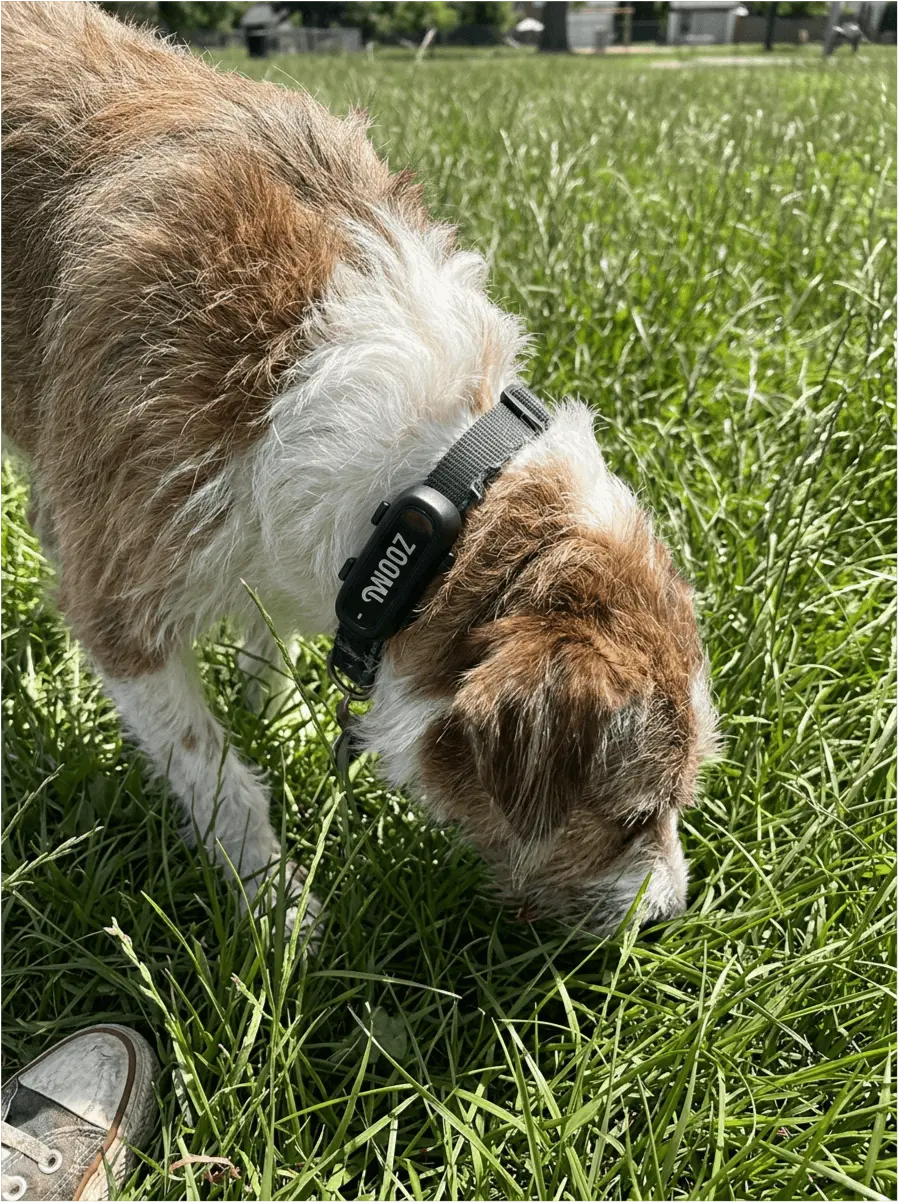
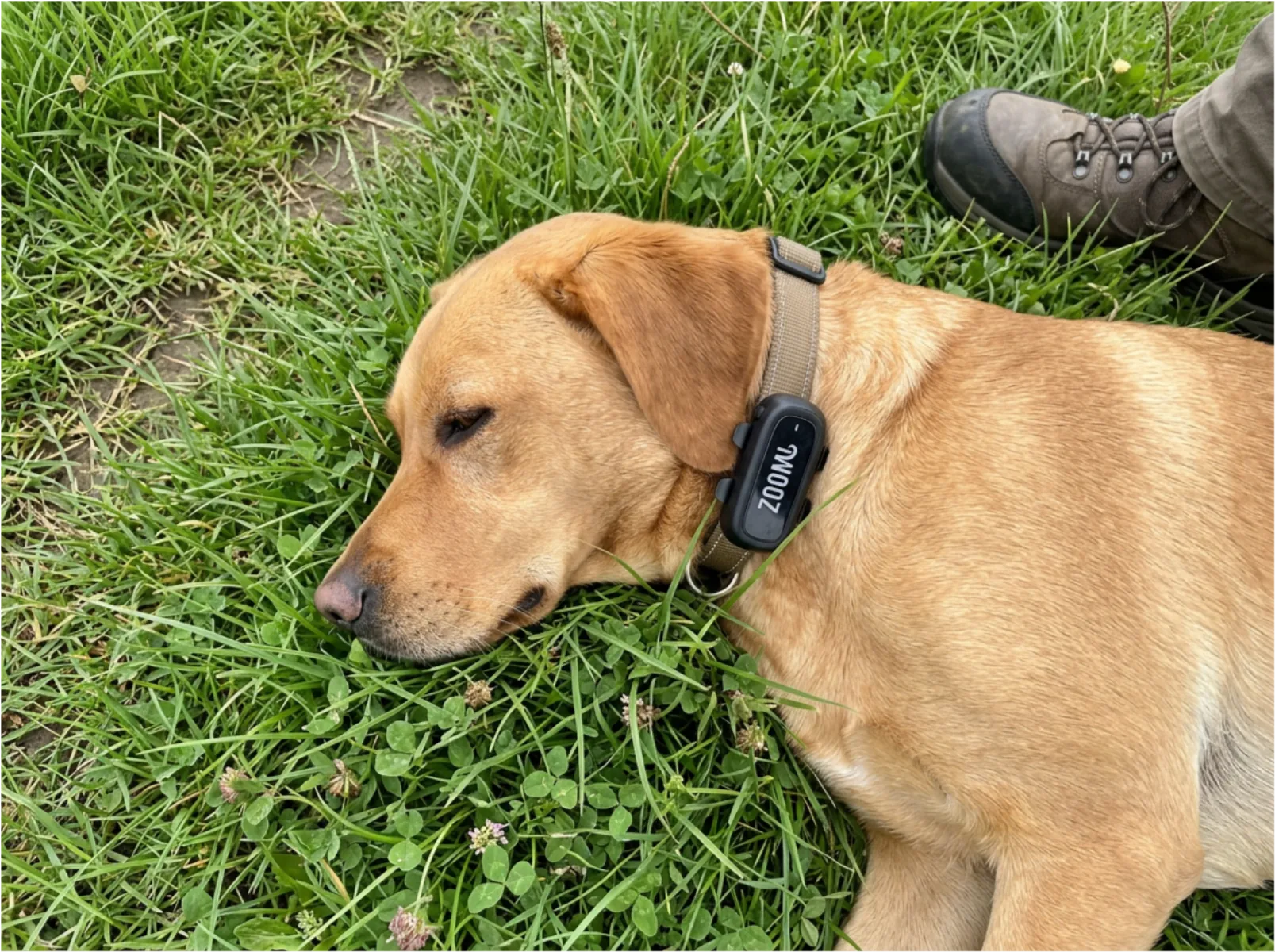
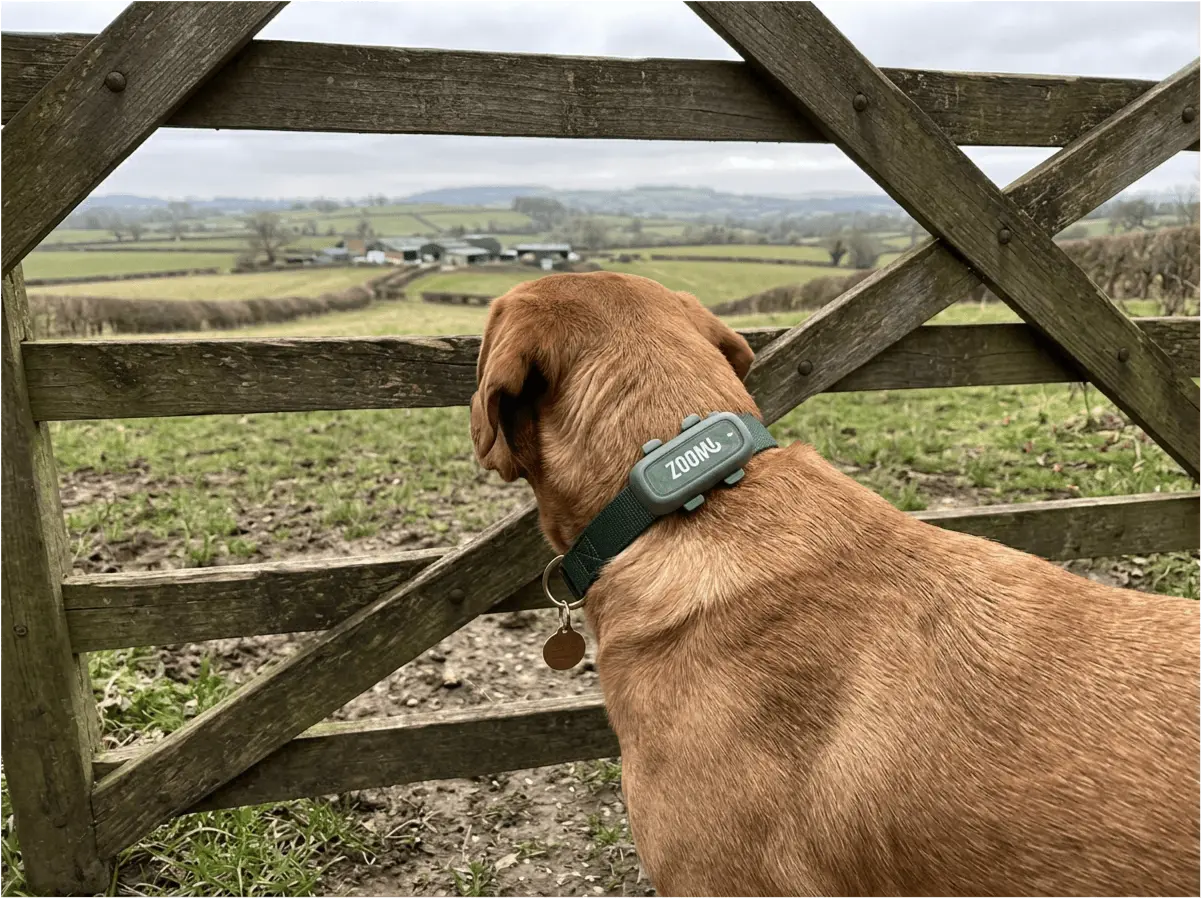
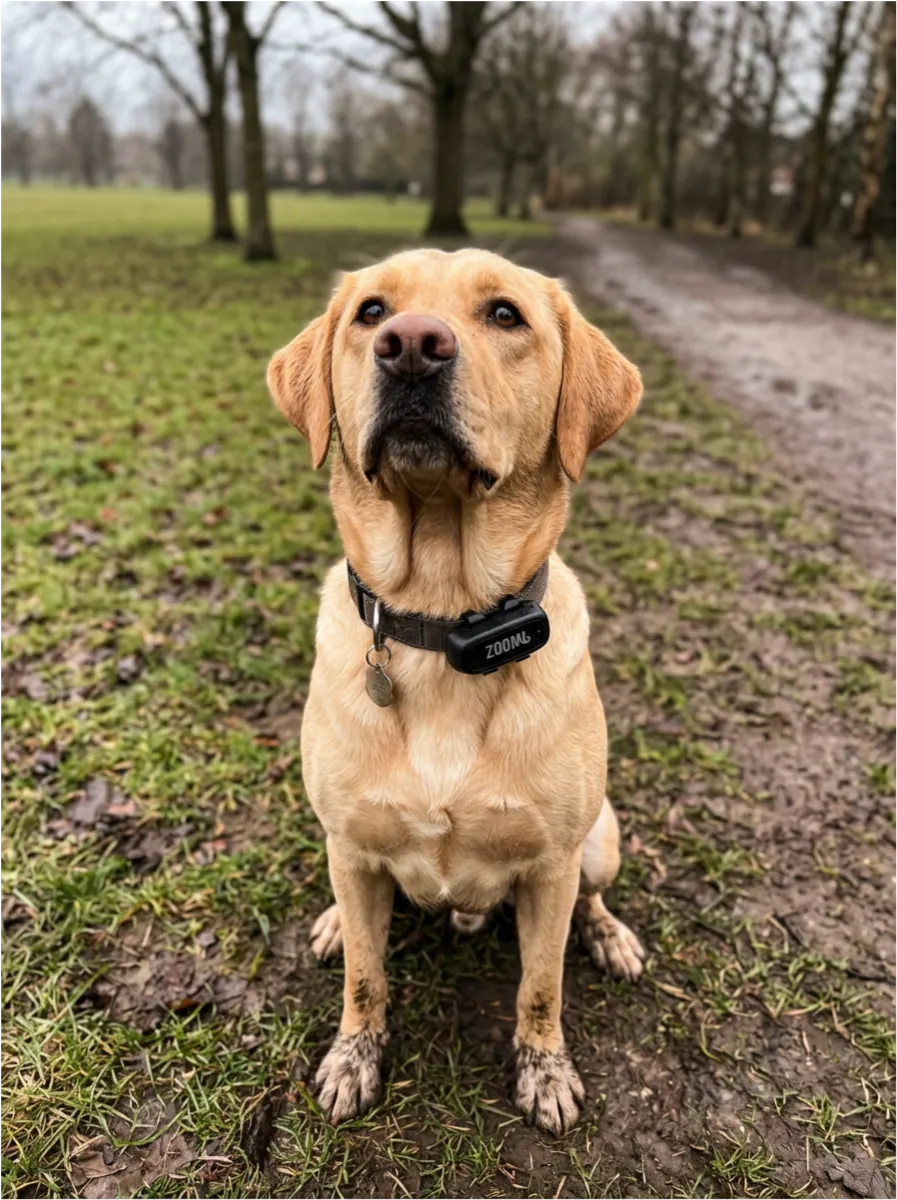
One heatwave hazard that catches owners out: open doors and gates. Houses get thrown open for airflow, garden gates get propped, and dogs slip out — lost-pet reports climb in exactly these weeks, and a dog loose in 35°C heat is in danger from more than traffic. Before the doors go open, it's worth checking your dog's ID tag and profile are up to date, so whoever finds them can reach you in minutes rather than hours. (If your dog wears a ZoomiTag, one scan of the tag shows your contact details and their medical notes instantly — worth thirty seconds to confirm the profile is current.)
Cars: There Is No Safe Version of This
Every UK summer, dogs die in parked cars, and almost every time the owner intended to be "just a few minutes". The physics doesn't negotiate: on a 25°C day, a parked car can reach 40°C inside within half an hour — windows cracked or not. At this week's 35°C, the interior of a car becomes lethal far faster than any errand takes.
In a heatwave, the rule is absolute: the dog doesn't come on the errand. If you see a dog in visible distress in a hot car, the RSPCA's advice is to dial 999 — the police can act faster than anyone else.
Travelling with your dog is different but still needs planning: air conditioning running before the dog gets in, shade blinds on windows, water available, and no travel in the hottest hours if it can move to morning or evening.
The Quiet Value of Knowing What's Normal
Almost every serious heat case begins the same way: a dog behaving slightly unusually, and an owner who — completely understandably — didn't clock it in time. The dog who was a bit slower on Tuesday's walk. The one who panted through the night instead of sleeping. The one who left half their breakfast during the hot spell and nobody connected the dots.
Heat stress rarely arrives from nowhere; it shows up first as deviations from your dog's baseline — less movement, more restlessness at night, slower recovery after mild exertion. That's easy to miss by feel across a hot, disrupted week, and much harder to miss as data. Owners who track activity and sleep (whether in a notebook or automatically, with a tracker like ZoomiTag Health that logs both) can see a hot week's toll building — three nights of disturbed sleep, activity down 40% — and adjust before it becomes a vet visit.
Know Your Dog's Normal — Especially in Weeks Like This
ZoomiTag tracks your dog's daily activity and sleep automatically, building a baseline so that a hot week's disturbed nights and dropped activity show up as data — not something you piece together afterwards.
About Health MonitoringYour Heatwave Checklist
For the rest of this heatwave — and the next one, because UK summers now reliably deliver several:
- Walk before 8am or not at all on days forecast above 28°C; test pavements with the seven-second hand test
- No ball games, running, or fetch until temperatures break — swap in indoor scent work and frozen enrichment
- Water everywhere: multiple bowls, refreshed often, one in the shade outside, one within reach overnight
- Curtains closed by day, cross-breeze by night; give access to hard floors and shade
- Extra caution for flat-faced, overweight, elderly, thick-coated, and ball-obsessed dogs
- Learn the early signs — relentless panting, dark gums, ropey drool, lagging behind — and act on them immediately with cold water and a vet call
- Never the car. Not in shade, not with windows cracked, not for five minutes
- Check ID and watch the open doors — escapes spike in hot weather, and a lost dog in this heat has less time
The heat is forecast to break within the week. Until it does, the kindest thing you can do for your dog is also the simplest: less, slower, earlier, cooler. They'd rather miss a walk than spend a night at the emergency vet — they just can't tell you that.
Frequently Asked Questions
There's no single cut-off, because risk depends on the dog as much as the thermometer. Below 19°C is fine for most dogs; 20–23°C calls for caution with flat-faced, overweight, elderly, or heavy-coated dogs; at 24–27°C walks should be short, shaded, and early or late; and at 28°C+ most vets advise skipping the walk for the majority of dogs. During an amber-alert heatwave like this week's, early morning or nothing is the safe answer. A missed walk never harmed a dog; a hot one can.
Heavy, continuous panting that doesn't settle with rest, brick-red or very dark gums, thick rope-like drool, restlessness, and slowing or lying down mid-walk. Progression brings wobbliness, vomiting, glazed eyes, and collapse. Heatstroke escalates fast — at the early signs, stop all activity, move to shade, start cooling with cold water, and call a vet. Don't wait to see if it improves.
Yes. The old warning that cold water causes shock has been overturned. Current veterinary guidance for young, healthy dogs is "cool first, transport second" — dowse or immerse in cold water (avoiding the head), then travel to the vet. For elderly dogs, dogs with health conditions, or dogs with reduced consciousness, use cool rather than ice-cold water plus air movement. The one thing you must not do is delay cooling.
Usually not. Double coats insulate against heat as well as cold — shaving removes that protection, risks sunburn, and can permanently damage the coat. Brush out the dead undercoat instead. Single-coated breeds can be clipped shorter by a groomer. Shade, water, and timing matter far more than fur length.
Move their bed to the coolest room — often a tiled floor downstairs — keep curtains closed by day, open opposite windows after sunset for a cross-breeze, run a fan at floor level, and leave water within reach. A cooling mat or damp towel to lie on (never draped over them) helps. Some restlessness on hot nights is normal; heavy panting at rest in the small hours is not, and warrants checking on your dog.
No — not in shade, not with windows cracked, not for five minutes. A car interior can hit 40°C within half an hour on a 25°C day, and far faster in this week's heat. Dogs die in hot cars every UK summer, almost always with owners who meant to be quick. If you see a dog in distress in a hot car, the RSPCA advises calling 999.