If you've landed here mid-crisis, here's the whole article in one line: note what chocolate, how much and when; keep the wrapper; phone your vet now — even if your dog seems completely fine; and don't try to make them sick. That's the protocol. Everything below explains it — but the phone call comes first, and early calls are what make chocolate incidents easy ones.
This is also Halloween week, which is not a coincidence: vets see chocolate cases spike every year around Halloween, Christmas and Easter — the weeks when the house fills with exactly the sweets dogs are best at finding. So once the crisis (real or drill) is handled, stay for the second half: the household habits that stop the sequel.
The First Ten Minutes, Step by Step
- 1. Secure the scene. Move the dog away from whatever's left; a second helping mid-phone-call genuinely happens.
- 2. Gather the four facts that drive every decision: chocolate type (white, milk, dark, baking/cocoa), amount (count the wrappers, weigh the remains against the pack size), timing, and your dog's weight.
- 3. Keep the evidence. The wrapper or box tells the vet the cocoa content — it's the difference between calculation and guesswork.
- 4. Phone immediately: your own vet in hours, the nearest emergency vet out of hours, or the Animal PoisonLine for triage. Phone before symptoms; that's the entire trick.
- 5. Do not induce vomiting at home. Home methods (salt especially) are dangerous in themselves. Vets have safe drugs for this, and the judgement about using them.
The silent window is the treatment window: a vet can often empty the stomach in the first couple of hours, before the theobromine is absorbed. Waiting for symptoms means volunteering to skip the easy version of this story.
Why Chocolate Poisons Dogs (and Not Us)
Cocoa contains theobromine (plus some caffeine) — a stimulant humans clear in a few hours. Dogs metabolise it far, far more slowly, so it accumulates and keeps working on the heart, gut, kidneys and nervous system for as long as three days. That slow clearance explains almost everything odd about chocolate incidents: the delayed symptoms, the dog who gets worse on day two, and why a "small" repeat helping on top of yesterday's raid isn't small at all.
It also explains the one genuinely useful rule of thumb: the danger lives in the cocoa solids. The darker and more cocoa-dense the chocolate, the smaller the dangerous amount.
How Much Is Dangerous? (Read, Then Phone Anyway)
This table is for orientation, not decision-making — cocoa content varies wildly between products, and individual dogs vary too. The four facts plus a phone call always beats home arithmetic.
| Chocolate Type | Theobromine (Roughly) | What That Means in Practice |
|---|---|---|
| White chocolate | Negligible | Not a theobromine risk — but fatty enough that a large raid can trigger vomiting, diarrhoea or pancreatitis. Big quantities still merit a vet call. |
| Milk chocolate | Low–moderate | The everyday case. A stolen square or two is usually mild for a medium dog; a whole sharing bar, a selection box or anything eaten by a small dog is a vet call. Quantity is everything. |
| Dark chocolate (50–90%) | High — several times milk | The dangerous shelf. Amounts that look trivial — a couple of squares for a small dog — can reach serious toxicity. Treat any dark chocolate theft as urgent. |
| Baking chocolate & cocoa powder | Very high | The most concentrated forms in the house. Small ingestions are potential emergencies for any size of dog — including licking out the brownie bowl. |
Two multipliers to keep in mind. Size: toxicity runs per kilogram of dog, so the same fun-size bar is a shrug for a Labrador and a genuine dose for a Chihuahua. And extras: chocolate-coated raisins, chocolate with sweeteners (see below), or a stolen dessert with alcohol or macadamias — each adds its own, sometimes worse, toxin to the sum. Mention every ingredient on the wrapper when you phone.
Symptoms and the Timeline
Early (2–12 hours): vomiting — sometimes with tell-tale foil — diarrhoea, unusual thirst, restlessness that looks like the zoomies with an edge, panting, a racing heart. Progressing (and into day two): agitation, wobbliness, muscle tremors, abnormal heart rhythm, and in severe cases seizures. Because clearance is so slow, signs can persist or escalate for up to 72 hours — a dog under treatment isn't "out of the woods" the same evening, which is why serious cases stay in on fluids and monitoring.
What the Vet Will Actually Do
Early and mild-to-moderate: usually an induced vomit with a fast, safe injection, often followed by activated charcoal to mop up what's already moving through (sometimes repeated, because theobromine recirculates). Larger or later cases add IV fluids, heart-rate and rhythm monitoring, and medication for tremors or arrhythmias as needed. The consistent theme across all of it: outcomes are excellent when treatment starts before symptoms. Chocolate is one of the most treatable poisonings vets see — provided the phone rings early.
The Days-After Watch, Made Easier
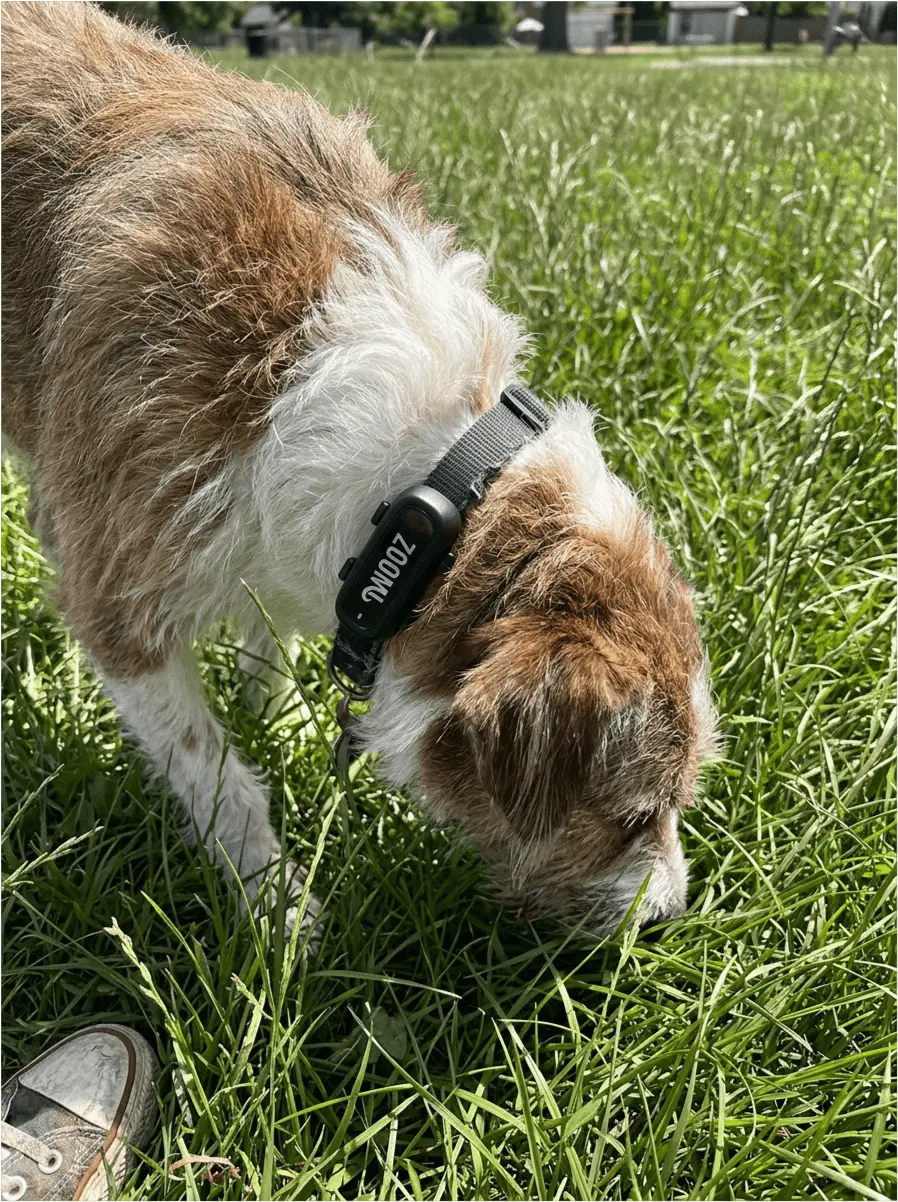
After any poisoning scare, what you're watching for is deviation — flatter walks, restless nights, appetite off. ZoomiTag's health tracking turns those into visible trends, so "is he back to normal?" has an answer that isn't a guess.
See ZoomiTagWhy This Week: The Halloween Problem (and Christmas Behind It)
Chocolate cases cluster hard around three dates, and Halloween opens the season. The house suddenly contains a sweet bowl by the front door — at perfect nose height, visited constantly, guarded by nobody; trick-or-treat hauls in children's bedrooms, in bags, on floors; and a fortnight later the first advent calendars and tree chocolates arrive at what is, from a dog's perspective, sofa height. Dogs are extraordinary at this specific heist: foil is no deterrent, and the classic case is the empty selection box discovered an hour after the quiet afternoon.
The fixes are unglamorous and total: sweets live high and behind doors, not on counters (counter-surfers know the counters); children's hauls get amnestied into a cupboard the same evening; the door-bowl gets a lid and a shelf. And on trick-or-treat night itself, remember the other risk of a constantly opening front door — our guide to why dogs bolt in fireworks season covers the door-dash protocol, because this week runs both risks at once.
The Other Sweets: Two Worse Than Chocolate
While the cupboard's open: xylitol (birch sugar), the sweetener in sugar-free gum, mints and some sweets and peanut butters, is dramatically more dangerous than chocolate — tiny amounts crash a dog's blood sugar within an hour and can injure the liver. And grapes and raisins — about to appear in every fruit cake, mince pie and snack box — can cause kidney failure with no reliable safe dose. Either one is an immediate vet call, ahead of even the dark-chocolate response. If this autumn's foraging risks are on your radar generally, our autumn hazards guide covers the outdoor list, from conkers to rat bait.
The One-Screen Version
- The protocol: four facts (type, amount, when, weight) · wrapper in hand · phone the vet now · never induce vomiting at home
- "Seems fine" means nothing yet: symptoms take 2–12 hours; the easy treatment happens before them
- Danger scale: baking & cocoa > dark > milk > white — and smaller dogs shift every threshold down
- This week: sweet bowl lidded and shelved · trick-or-treat hauls locked down nightly · door protocol agreed for the 31st
- Worse than chocolate: xylitol (sugar-free anything) and raisins — instant vet calls, no arithmetic
Chocolate toxicity is the rare pet emergency with a genuinely reassuring shape: owners almost always know it happened and when, treatment is straightforward, and outcomes are excellent when the call is early. The whole game is refusing to negotiate with "he seems fine". Save the vet's number and the out-of-hours number in your phone today — before the sweet bowl goes by the door.
Frequently Asked Questions
Gather four facts — chocolate type, rough amount, when, and your dog's weight — keep the wrapper, and phone your vet or the nearest emergency vet immediately, before any symptoms. Don't try to make your dog sick at home. Early calls make chocolate incidents easy ones.
It scales with cocoa content and dog size: baking chocolate and cocoa powder are dangerous in small amounts, dark chocolate in amounts that look trivial, milk chocolate in quantity, and white chocolate barely contains the toxin (though its fat can still cause trouble). Don't run the numbers yourself and relax — phone with the facts and let the vet decide.
From two to twelve hours after eating: vomiting, diarrhoea, thirst, restlessness, panting and a racing heart; serious cases progress to tremors, heart-rhythm problems and seizures, sometimes worsening into day two. Dogs clear theobromine so slowly that signs can run 72 hours.
Yes. "Fine" is what the first hours always look like, and they're exactly the hours in which a vet can empty the stomach before the toxin absorbs. Waiting for symptoms trades the easy treatment for the hard one.
No — home methods, salt especially, are dangerous in their own right. Vets have safe, fast drugs for emptying the stomach and the judgement for when it's appropriate. Your job is the quick phone call with the wrapper in hand.
Yes, at even lower doses — cats are mostly protected by indifference, since they can't taste sweetness. A cat who does get into chocolate (usually via baking or icing) needs the same response: phone the vet with type, amount and timing.